
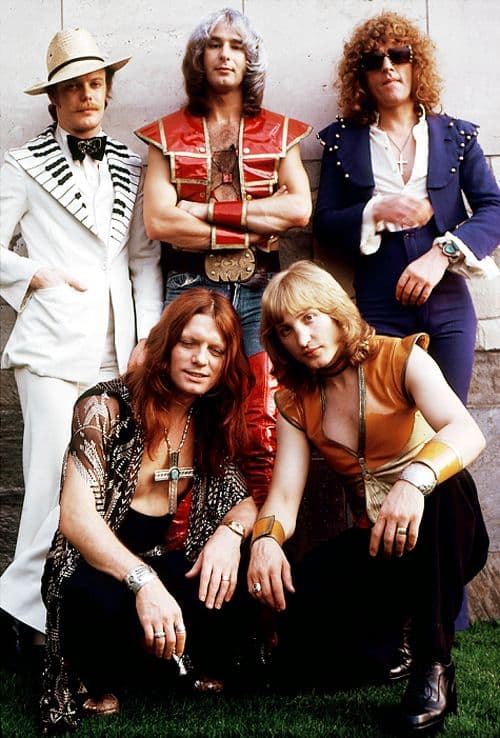
All the Way from Memphis — a wild, weary, and wonderfully human tale of rock ’n’ roll survival
There is a certain thrill the first time “All the Way from Memphis” bursts through the speakers — a swaggering blast of horns, piano, and grit that feels like the very heartbeat of 1970s rock. But beneath all that noise and bravado lives something more tender: a reminder of what it meant to chase a dream across endless miles, losing pieces of yourself along the way, and still finding the strength to laugh about it. For Mott the Hoople, this 1973 single wasn’t just another track. It was a lifeline — the song that kept the band alive.
When “All the Way from Memphis” arrived, Mott the Hoople had already been teetering on the edge of collapse. Their earlier records had earned them critical admiration but little commercial success. The band had even announced a breakup — until David Bowie, a fan of their raw spirit, stepped in, offering them “All the Young Dudes” and urging them not to quit. It was within this fragile rebirth that “All the Way from Memphis” was born.
The song is, at heart, a true story. Ian Hunter really did lose his guitar on the road during a chaotic tour — a moment that would have crushed a lesser soul. But instead of rage, he found humor. Instead of despair, he found melody. The absurdity of rock ’n’ roll life became the engine of the song: “You look like a star but you’re still on the dole,” he wails, capturing the strange mixture of glamour and struggle that defined the era.
What makes this track endure isn’t just its rollicking energy. It’s the honesty behind it. Hunter wasn’t trying to be a mythic rock god. He was telling the truth about broken vans, missing equipment, greedy promoters, and the constant bruising that came from chasing the next gig. For anyone who lived through those decades — who remembers the smell of vinyl sleeves, the long queues outside smoky clubs, the feeling that music was both salvation and chaos — this song hits home.
Beneath its humor lies a deeper ache. The journey “all the way from Memphis” becomes a symbol of the long road every musician must travel: the loneliness, the uncertainty, the stubborn belief that somewhere down that highway, the music will matter to someone. You can hear in Hunter’s voice the weariness of a man who has been knocked down too many times, and the fire of someone who refuses to stop.
The arrangement itself feels like a celebration of survival. The piano rolls forward like a runaway train. The saxophone cuts through the mix with sharp bursts of joy. The band sounds bigger than ever — as if they know this is their chance to shout their story out into the world. And when the chorus hits, it feels like a fist raised high, a roar against all the bad luck that ever tried to hold them back.
For listeners today, especially those who lived through the golden age of rock, “All the Way from Memphis” is more than nostalgia. It’s a reminder of a time when bands earned their stripes night after night on the road, when music felt dangerous and alive, when the journey itself mattered as much as the destination. It reminds us of the friends we saw concerts with, the records we wore out, the dreams we chased — sometimes losing our own “guitars” along the way.
And maybe that’s why the song still feels so fresh. Because even after all these years, we all know what it’s like to start over, to fight through chaos, to laugh at the absurdity of life — and to keep moving forward, all the way from our own Memphises.
A wild story, a weary heart, and a melody that refuses to die — that is the eternal magic of Mott the Hoople and “All the Way from Memphis.”