
A Gentle Reminder That Even in Darkness, Hope Still Listens
Few songs carry the quiet, luminous weight of “When You Wish Upon a Star”. And when Chuck Negron—the unmistakable voice of Three Dog Night—chose to sing it, he wasn’t merely covering a classic; he was stepping into a lineage of longing, redemption, and belief that stretches back nearly a century.
First written in 1940 for Walt Disney’s animated masterpiece Pinocchio, composed by Leigh Harline with lyrics by Ned Washington, the song was introduced on screen by Cliff Edwards as Jiminy Cricket. It went on to win the Academy Award for Best Original Song in 1941 and later became the signature theme of The Walt Disney Company—a melody that generations have associated with innocence, aspiration, and the fragile promise of dreams. In its original commercial form, the song reached No. 7 on the Billboard charts in 1940 in versions by Glenn Miller and others, embedding itself firmly in the American songbook.
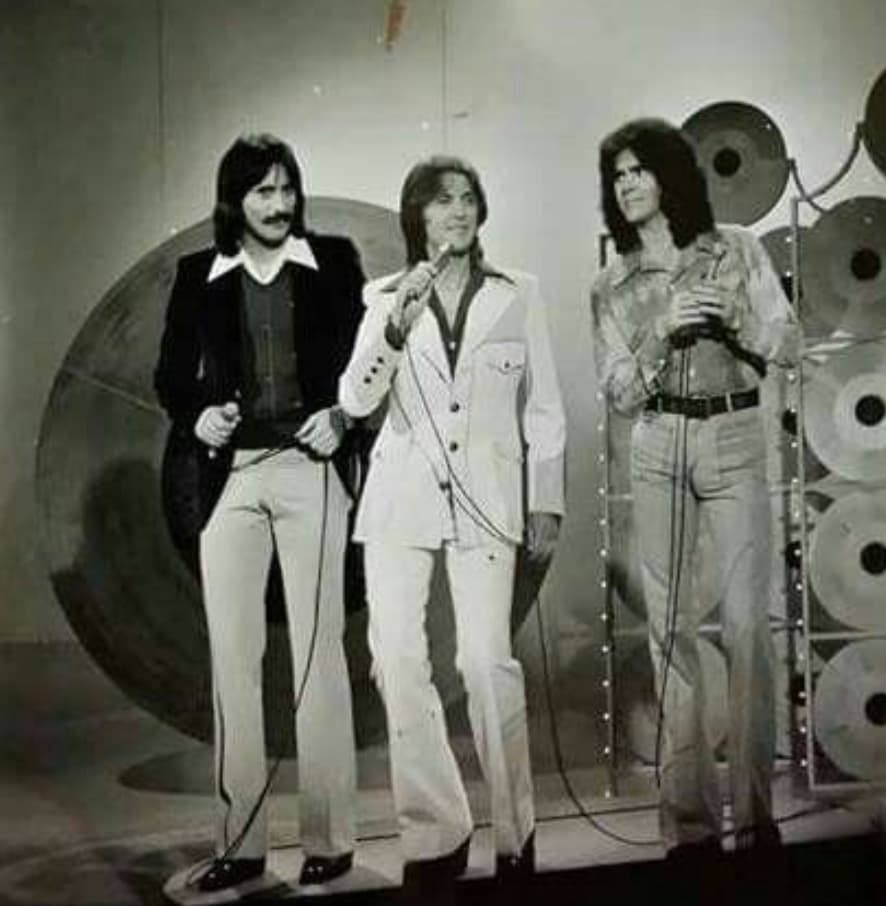
When Chuck Negron recorded “When You Wish Upon a Star”, it came long after his peak chart years with Three Dog Night, the group that dominated the American singles charts between 1969 and 1974 with 21 Top 40 hits and three No. 1 singles, including “Joy to the World” and “Mama Told Me (Not to Come)”. Negron’s solo interpretation of this Disney standard was not tied to a major chart run, but its significance lies elsewhere—not in peak positions, but in personal narrative.
To understand why this song matters in Negron’s voice, one must remember his life story. After achieving tremendous commercial success in the early 1970s, Negron struggled with heroin addiction, eventually parting ways with the band in 1976. His later years became a story not of stadiums and gold records, but of survival, faith, and recovery. When he sings “When You Wish Upon a Star, makes no difference who you are…”, it resonates differently. It is no longer a whimsical lullaby from a cricket perched on a windowsill—it becomes testimony.
There is a tenderness in Negron’s timbre that deepened with time. The bright, soaring tenor that once carried radio hits across AM frequencies mellowed into something more reflective. His phrasing in this song is deliberate, almost confessional. He does not rush the melody. Instead, he lingers on lines like “Fate is kind, she brings to those who love…” as though he has wrestled with fate himself—and lived to tell the tale.
The emotional architecture of “When You Wish Upon a Star” has always been deceptively simple. On the surface, it is about wishing. But beneath that simplicity lies a worldview shaped by wartime America in 1940—a nation yearning for reassurance. The lyrics suggest that hope is democratic: it does not discriminate by class, status, or circumstance. That message, sung in the aftermath of personal collapse and redemption, carries profound weight.
Negron’s rendition strips away some of the orchestral sparkle associated with Disney productions. Instead, it leans into intimacy. It feels less like a cinematic overture and more like a late-night reflection—one man looking back across decades, measuring the distance between youthful ambition and lived reality.
There is also something quietly moving about a former rock frontman choosing this song. During the golden years of Three Dog Night, Negron’s voice helped define a generation’s soundtrack—songs that blasted from car radios and echoed in arenas. But here, in this Disney standard, he connects to something older than rock & roll. He aligns himself with the Great American Songbook tradition, reminding listeners that even rock stars grew up believing in simple melodies and simple truths.
Ultimately, Chuck Negron’s interpretation of “When You Wish Upon a Star” is less about nostalgia for childhood and more about reconciliation with adulthood. It is a reminder that wishes are not naïve; they are acts of courage. To wish is to admit that one still believes in possibility.
And perhaps that is why the song endures. Long after chart positions fade and headlines dim, what remains are these melodies—gentle, unwavering, quietly luminous. In Negron’s voice, the song feels like a conversation across time: from the hopeful young dreamer to the seasoned survivor.
It tells us that even when the stage lights go dark, the star is still there—waiting.