
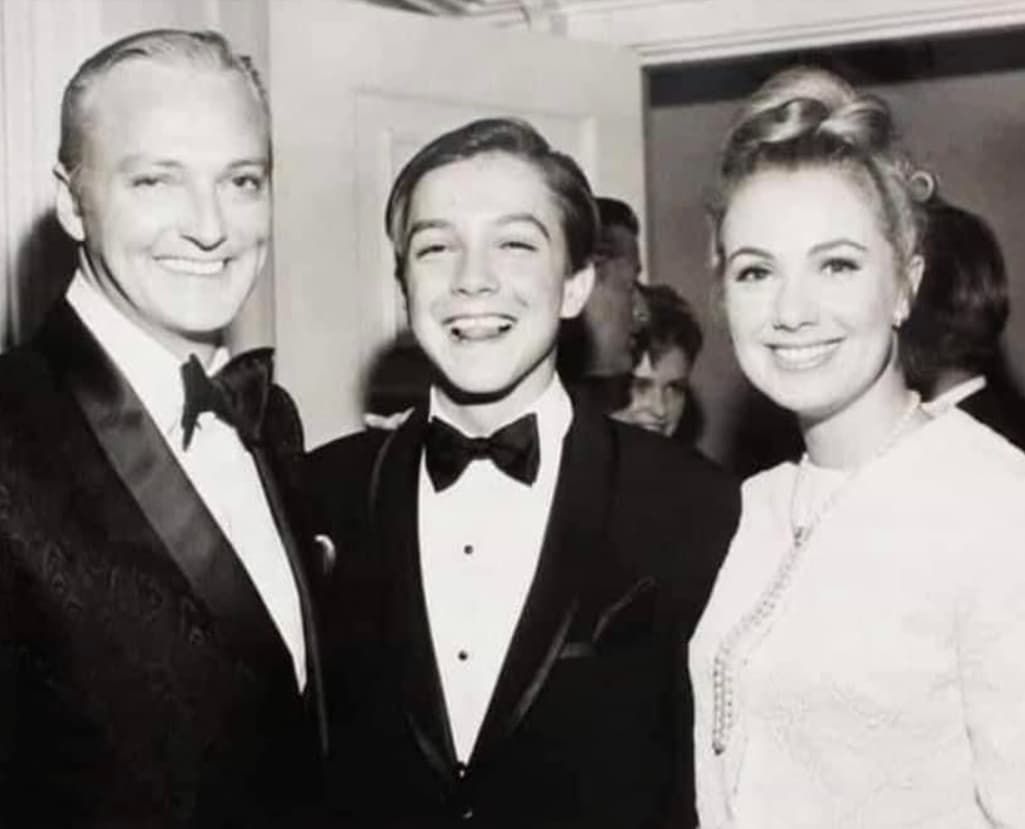
David Cassidy’s “Junked Heart Blues” Reveals the Depth of an Artist Too Often Judged by His Fame
For decades, David Cassidy was celebrated as one of the defining teen idols of the 1970s. His extraordinary popularity, striking appearance, and success with The Partridge Family often overshadowed another side of his career that deserved equal recognition. A performance of Junked Heart Blues continues to remind music lovers that Cassidy possessed remarkable artistic depth, offering a heartfelt composition that reflected both his musicianship and his ability as a songwriter.
Unlike the polished pop hits that made him an international sensation, Junked Heart Blues presents a more intimate portrait of Cassidy. Written by David himself, the song highlights his talent for creating deeply personal music with emotional honesty. His smooth, expressive vocals are accompanied by elegant piano playing, producing a performance that feels restrained, soulful, and timeless.
The recording also showcases the wide range of Cassidy’s musical abilities. Beyond singing, he played piano, guitar, and drums, while also writing songs and maintaining a successful acting career. His complete involvement in music demonstrates that he was far more than a performer standing in front of a microphone. He understood every layer of the creative process, allowing his personality and passion to become part of every note.
Many longtime admirers have viewed Junked Heart Blues as one of Cassidy’s finest artistic achievements. They believe the song reveals a musician whose gifts were sometimes overlooked because his extraordinary fame and appearance dominated public attention during the height of his career. While audiences around the world were captivated by his image, performances such as this continue to offer compelling evidence of the craftsmanship that existed beneath the celebrity.
The song’s gentle atmosphere has often been praised for its smoky, mellow quality. Cassidy’s voice moves effortlessly through the melody with warmth and quiet confidence, while the understated arrangement allows every lyric and every piano phrase to breathe naturally. The result is a performance that feels sophisticated without becoming overly elaborate, creating an emotional connection through sincerity rather than spectacle.
For many listeners, Junked Heart Blues stands as proof that David Cassidy was capable of much more than commercial pop success. It reflects an artist who embraced musical expression with intelligence, sensitivity, and genuine dedication. His songwriting, instrumental skill, and vocal control combine to create a performance that continues to resonate long after its original release.
Years after David Cassidy’s passing in 2017, recordings such as Junked Heart Blues remain an important part of his legacy. They serve as enduring reminders that behind one of popular culture’s biggest stars stood a gifted musician whose creativity, emotion, and artistry deserved lasting recognition. As appreciation for his broader body of work continues to grow, this song remains a powerful testament to the remarkable talent that defined David Cassidy far beyond his status as a cultural icon.