
A poignant lament for lost love and the hopeful promise of reconciliation.
The late 1960s were a kaleidoscope of sound and fury, a time when the world seemed to be turning on its head. Amidst the revolutionary fervor and swirling psychedelic haze, a different kind of sound often cut through the noise—the polished, poignant melodies of pop-rock that filled the airwaves of AM radio. For many of us, these were the soundtracks to our teenage years, the moments of first loves and crushing heartbreaks, and few bands captured that bittersweet feeling quite like The Grass Roots. In the summer of 1969, just as man was taking his first steps on the moon, the band released a single that perfectly encapsulated this timeless yearning: “Wait a Million Years.”
This masterful piece of pop craftsmanship found a welcoming home on the charts, climbing to an impressive #15 on the Billboard Hot 100. It was the lead single from their album, Leaving It All Behind, and it stood out as a testament to the band’s knack for delivering a sound that was both commercially accessible and emotionally resonant. Produced by the legendary Steve Barri, the song was a collaborative triumph, written by a talented duo of songwriters, Gary Zekley and Mitchell Bottler, who would later pen another of the band’s hits, “Sooner or Later.” The song’s success was not an accident; it was a carefully constructed anthem of devotion, an audio time capsule that, even today, can transport you back to a simpler, more hopeful time.
The story behind “Wait a Million Years” is less about the band’s internal machinations—a complex history of shifting lineups and session musicians—and more about the universal story it tells. It’s the kind of song that didn’t need a scandalous backstory to find its audience. It was written for every young man who ever stood by a phone that wouldn’t ring and every young woman who ever looked out her window, wondering if her love would ever come back. The lyrics are a breathtaking cascade of hyperbole, a promise so grand and so pure that it feels almost heartbreaking in its sincerity. The protagonist isn’t just waiting; he’s pledging to endure a “million lonely nights,” to “cry a million tears,” and to “walk a million miles” just to have his love near. The scale of the promise is what makes it so powerful—a sentiment so vast it could only be expressed in cosmic terms. In an era often defined by fleeting romance and a “live for today” mentality, this song was a defiant stand for enduring, everlasting devotion.
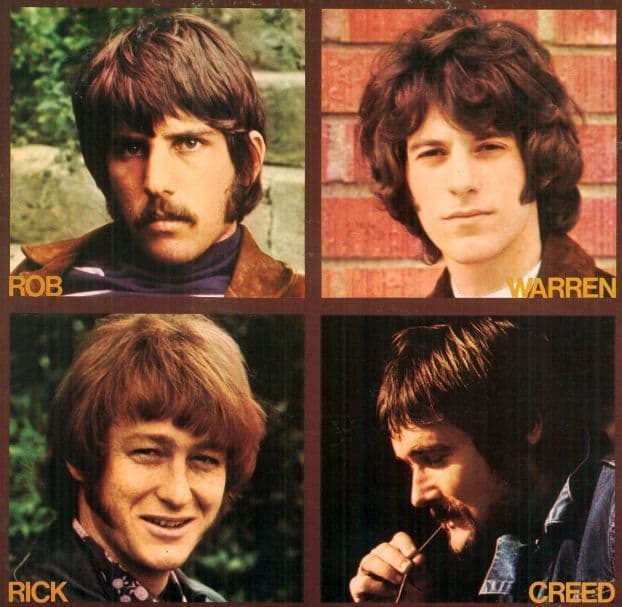
For those of us who grew up with it, the song’s meaning is deeply personal and inextricably linked to our own memories. It’s the soundtrack to late-night drives, the soft static of a car radio, and the feeling of a world that was still filled with infinite possibilities. Lead singer Rob Grill’s impassioned vocal performance perfectly captures the desperate sincerity of the lyrics. His voice, clear and full of conviction, cuts through the swirling, orchestral arrangement, making the song feel less like a pop hit and more like a private confession. The rich instrumentation, with its swelling strings and punctuating horns, elevates the song beyond a simple rock tune, giving it a dramatic sweep that matches the epic scale of its lyrical promise. It’s a reminder that even in the most chaotic of times, a simple, heartfelt promise of unwavering love could be the most revolutionary statement of all.