
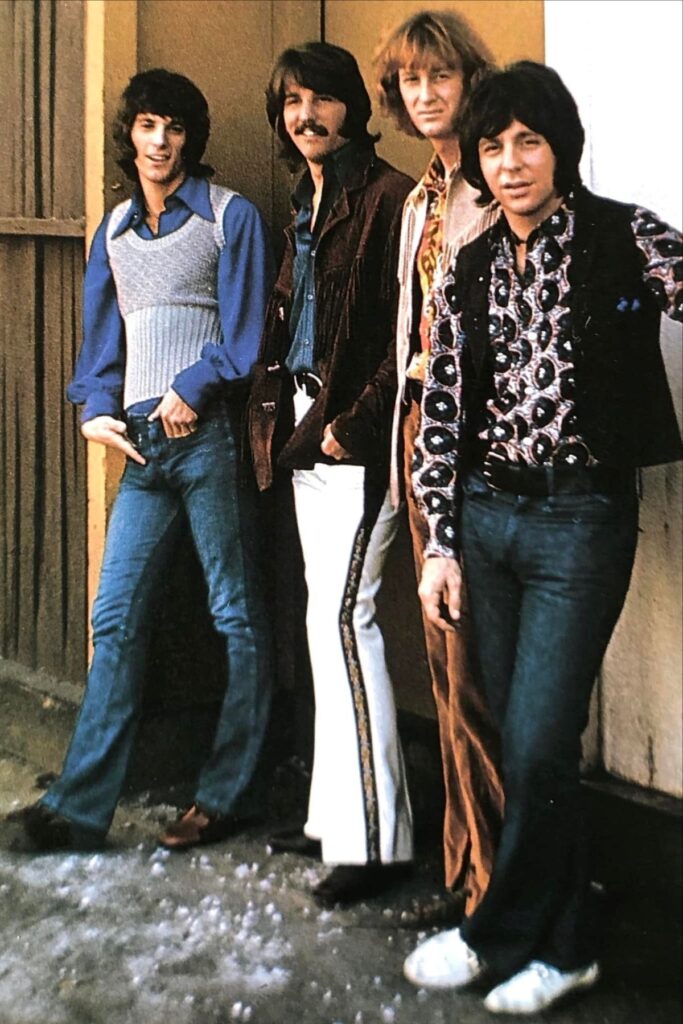
“Let’s Live For Today”: A Timeless Ode to Seizing the Present
As the golden hues of memory illuminate the past, certain melodies possess an uncanny ability to transport us back to simpler times, to an era defined by youthful exuberance and a burgeoning sense of freedom. Among these cherished sonic artifacts, The Grass Roots’ indelible hit, “Let’s Live For Today,” stands as a poignant testament to the enduring power of carpe diem. Released in 1967, a year brimming with social upheaval and cultural shifts, this song not only captured the zeitgeist but also etched itself into the hearts of a generation, ascending to a respectable No. 8 on the Billboard Hot 100 chart.
The story behind “Let’s Live For Today” is as fascinating as its enduring appeal. While often associated with the burgeoning psychedelic rock scene of the late 1960s, its origins trace back to Italy. The song was originally an Italian composition titled “Piangi con Me” (Cry with Me), written by lyricist Mogol and composer Lucio Battisti, and first performed by the Italian band The Rokes. It was a somber, melancholic ballad. However, when the American group The Grass Roots (who were originally a folk-rock band before transitioning to a more pop-oriented sound) got their hands on it, they, along with lyricist Michael Julien, transformed it into the vibrant, optimistic anthem we know today. This metamorphosis from a lament to a declaration of present-moment joy is a remarkable example of how a song can be reinterpreted and imbued with new meaning, reflecting the cultural landscape of its adopted home. The shift from “Cry with Me” to “Let’s Live For Today” perfectly encapsulated the burgeoning counterculture’s embrace of optimism and a focus on immediate experience, a stark contrast to the anxieties of the Cold War era and the looming shadow of the Vietnam War.
For many who came of age during that tumultuous yet exciting period, “Let’s Live For Today” became more than just a catchy tune; it became an anthem, a philosophy. Its simple yet profound message — to embrace the present moment, to cherish love, and to cast aside worries about an uncertain future — resonated deeply. In a world grappling with social change, political unrest, and the dawning of new freedoms, the song offered a much-needed sense of liberation and carpe diem spirit. It encouraged listeners to find joy in the here and now, a powerful sentiment for young people facing an ever-evolving landscape. The lines, “Tomorrow may never come for us / So let’s live for today,” were not merely lyrics; they were a mantra, a rallying cry for a generation determined to live authentically and passionately.
Beyond its chart success and poignant message, “Let’s Live For Today” holds a special place in the annals of music history for its distinctive sound. The Grass Roots crafted a perfect blend of melodic pop sensibilities with a subtle rock edge, characterized by the prominent use of a harpsichord, which lent the song a unique and instantly recognizable texture. This instrumental choice, combined with the band’s tight harmonies and confident delivery, created a sound that was both commercially appealing and artistically distinct. It wasn’t just another pop song; it was a carefully constructed piece of music that managed to feel both grand and intimately personal. The song’s enduring popularity is also a testament to its universal theme. While it deeply resonated with the youth of the 1960s, its message of living in the present remains eternally relevant, transcending generational divides. It’s a reminder that no matter our age, or the challenges we face, the most precious gift we have is the present moment. And as we reflect on the melodies that shaped our lives, “Let’s Live For Today” continues to shine as a beacon of hope and a joyful exhortation to embrace every precious second. It serves as a beautiful, melancholic, yet ultimately uplifting reminder of the ephemeral nature of time and the profound importance of seizing each day with open arms and a hopeful heart.