
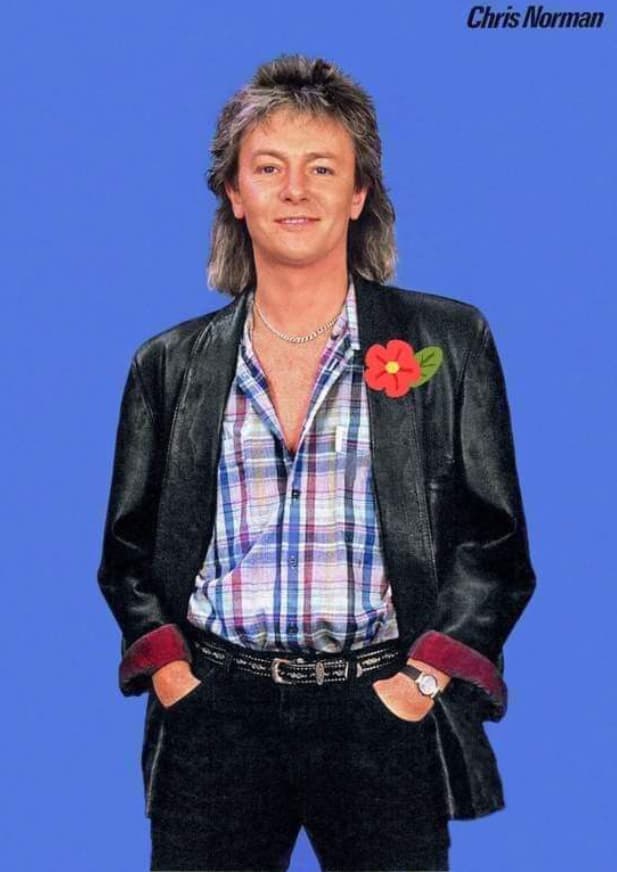
The Haunting Ballad of a Broken Heart’s Last Dance, Where True Feeling is a Costly Commodity
They say that music is a time machine, and when the opening chords of Chris Norman’s “Love For Sale” drift through the air, it’s like a soft, melancholic echo from the mid-eighties—a period often remembered for its electronic pulse, yet fertile ground for such a heartfelt, acoustic-tinged lament. Released in 1986 on his debut solo album, Some Hearts Are Diamonds, this track marked a significant step in the career of the former Smokie frontman, positioning him as a serious solo artist in his own right, particularly across continental Europe.
Unlike the roaring success of its immediate predecessor, “Midnight Lady,” which was a colossal hit across Europe (topping charts in countries like Germany, Austria, and Switzerland), “Love For Sale” did not achieve the same headline-grabbing chart positions as a standalone single. However, its importance lies in its role as an album track and a fan favorite, further cementing Norman’s signature sound—that distinctively gravelly, world-weary vocal that speaks volumes of lived experience. The album it came from, Some Hearts Are Diamonds, was a substantial success, produced by the powerhouse Dieter Bohlen of Modern Talking fame, which helped establish Chris Norman’s solo trajectory, especially in markets where his voice was revered.
The genesis of “Love For Sale” lies in the collaboration between Chris Norman and his long-time bandmate from Smokie, Pete Spencer. The song is not a cover of the famous Cole Porter jazz standard of the same name, but an original composition—a poignant, modern tale of emotional cynicism. It’s a narrative woven from the threads of disillusionment, exploring the moment a heart realizes that genuine affection has become transactional, a commodity to be advertised, bargained for, and ultimately, sold. The lyrics paint a picture of a beautiful, yet emotionally vacant woman whose “angel smile” and “feminine ways” are merely part of the advertisement for a feeling that isn’t real.
For those of us who grew up listening to the raw, genuine grit of bands like Smokie, this solo track carries a certain weight. It reflects a matured perspective, an understanding that sometimes, the glittering facade of romance hides an empty storefront. Norman’s vocal delivery—raspy and tender—isn’t one of a raging victim but of a reflective observer, someone who has seen the world enough to recognize the pain in a beautiful lie.
Listening to it today, the song evokes a strong sense of nostalgia, not just for the music but for a time when ballads carried this specific depth of bittersweet resignation. It’s a quiet moment on a bustling album, a reminder that the cost of entry into some relationships isn’t just time or effort, but a piece of your soul you may never retrieve. It resonates because it speaks to the universal ache of confusing lust or convenience with true, enduring love—a mistake many of us have made, and one that Chris Norman vocalizes with such empathetic melancholy. It’s a song for late nights, for quiet reflection, and for remembering that some of the most beautiful things in life come with the most painful, hidden price tags.