
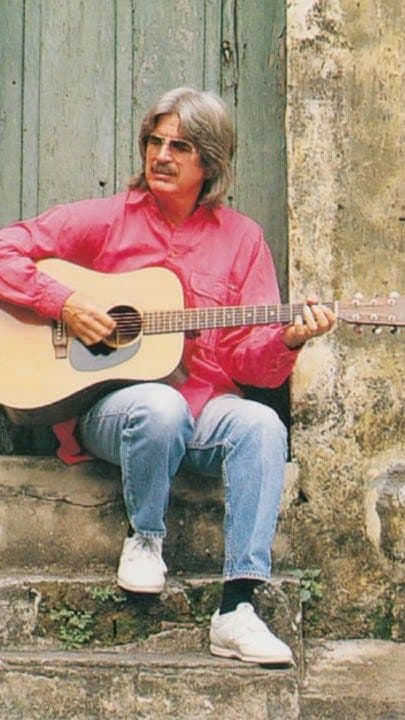
A Timeless Plea for Reciprocal Love: The Enduring Heart of “I’d Love You to Want Me”
For those of us who came of age in the early to mid-1970s, certain melodies are etched into the very fabric of our memories, acting as sonic time capsules that instantly transport us back to a simpler, perhaps more earnest, era. Among these cherished auditory touchstones, few resonate with the gentle ache and hopeful longing quite like Lobo‘s iconic ballad, “I’d Love You to Want Me.” Released in 1972 as a single from his album Of a Simple Man, this unassuming yet profoundly affecting song quickly captured the hearts of millions, ascending to an impressive peak position of number two on the Billboard Hot 100 chart in early 1973. It was a staple on AM radio, a soundtrack to countless first loves, late-night musings, and quiet moments of introspection.
The magic of “I’d Love You to Want Me” lies not in grandiosity or elaborate production, but in its disarming simplicity and the raw, vulnerable honesty of its lyrics. Written entirely by Lobo himself (born Roland Kent LaVoie), the song’s narrative is a poignant confession of unrequited or, at the very least, uncertain affection. It speaks to that universal human desire for mutual feeling, the quiet desperation for the person you adore to reciprocate that same intensity of longing. The story behind the song isn’t one of dramatic upheaval or scandalous romance, but rather a more relatable, subtle yearning that many of us have experienced. Lobo, known for his introspective and often understated songwriting, crafted a narrative that felt deeply personal yet universally applicable. He often wrote about themes of love, nature, and the human condition with a straightforward sincerity that endeared him to his audience. “I’d Love You to Want Me” is a prime example of this, offering a glimpse into the quiet anxieties and fervent hopes that accompany nascent or delicate relationships.
The meaning of the song, at its core, is a humble plea for validation and shared desire. It’s about putting your heart on the line, not with demands or expectations, but with a gentle, almost timid, hope that your affection is returned. Lines like “I’d love you to want me, the way that I want you” are not just lyrics; they are sentiments that echo in the chambers of anyone who has ever felt the exquisite agony of loving someone without knowing if that love is truly reciprocated. It speaks to the vulnerability of opening oneself up to another, the courage it takes to express such a profound need, and the quiet joy that would accompany the fulfillment of that desire. For older listeners, this song often conjures memories of a time when relationships, though perhaps still complex, felt less mediated by technology and more reliant on direct emotional expression. It harks back to an era of mix tapes, long phone calls, and handwritten notes, where the yearning for connection felt palpable and immediate.
Beyond its chart success and lyrical depth, “I’d Love You to Want Me” solidified Lobo‘s reputation as a master of the soft-rock ballad. His gentle vocal delivery, often accompanied by acoustic guitar, created an intimate atmosphere that drew listeners in. The song’s enduring appeal lies in its timeless message and its ability to evoke a sense of nostalgic warmth. It reminds us of a time when vulnerability was not seen as a weakness but as a pathway to genuine connection. It’s a song that continues to resonate because the fundamental human need to be wanted, to be loved in return, remains as potent today as it was half a century ago. When we hear those opening chords, we are not just listening to a song; we are stepping back into a moment in time, a memory of youthful idealism and the enduring power of a simple, heartfelt plea for love.