
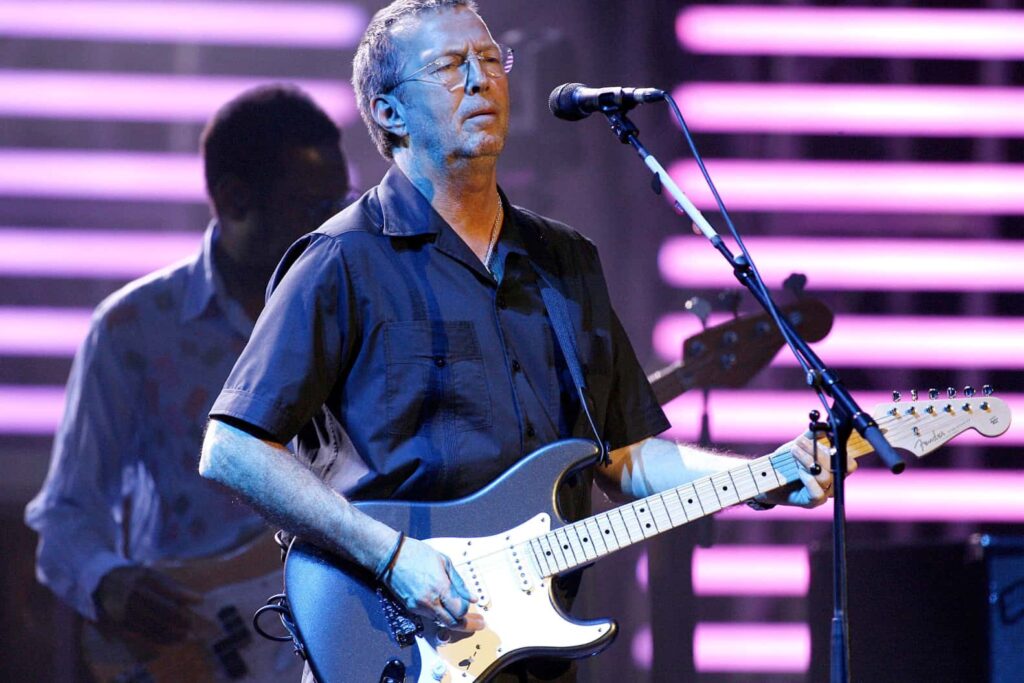
A Tender Plea Born from Unrequited Love: Eric Clapton’s Enduring Ballad, Layla
Ah, Layla. Just the name itself whispers of longing, of a love so profound it aches. Released in the autumn of 1971 as part of the Derek and the Dominos album, Layla and Other Assorted Love Songs, this iconic track, particularly its poignant piano-driven second movement, resonated deeply with listeners, climbing to the respectable position of number ten on the Billboard Hot 100 chart at the time. But the chart success, while noteworthy, only tells a fraction of the story behind this timeless piece. It’s a narrative woven with threads of intense infatuation, artistic inspiration, and the bittersweet realities of human relationships.
The genesis of Layla is as compelling as the music itself. Eric Clapton, already a guitar legend from his time with Cream and Blind Faith, was captivated by Pattie Boyd, the wife of his close friend and fellow musician, George Harrison of The Beatles. This unrequited love became the raw emotional fuel that ignited the creative fire behind Layla. Clapton found himself deeply moved by the classical Persian love story of Layla and Majnun, a tale of a man driven to madness by his unattainable love for Layla. This ancient narrative mirrored his own yearning for Pattie, and he poured his heart and soul into crafting a song that would capture the intensity of his feelings.
The song itself is a fascinating two-part journey. The first section, instantly recognizable by its driving blues-rock riff, is a passionate and urgent cry of desire. Clapton’s guitar work here is nothing short of electrifying, a raw and untamed expression of his longing. It’s the sound of a heart on fire, a desperate plea for affection. This energy then gives way to the now-famous second movement, a gentle and melancholic piano melody composed by drummer Jim Gordon. This instrumental section, often referred to as “Piano Exit,” offers a poignant contrast to the first part. It’s as if the initial passionate outburst has subsided, leaving behind a sense of wistful reflection, perhaps even a hint of resignation. This shift in mood perfectly encapsulates the complex emotions associated with unrequited love – the initial fervor followed by the quiet ache of longing.
Beyond the personal drama that inspired it, Layla stands as a testament to the power of music to transmute raw emotion into art. The collaboration between Clapton’s blues-rock sensibilities and Gordon’s classically influenced piano created a unique and enduring sound. The song’s structure, unconventional for a pop single at the time, further contributed to its lasting impact. It wasn’t just a catchy tune; it was an emotional landscape, a sonic exploration of desire and yearning.
Over the decades, Layla has become more than just a song; it’s a cultural touchstone. Its iconic guitar riff is instantly recognizable, and its emotional depth continues to resonate with new generations. For those of us who remember its initial release, hearing Layla can transport us back to a time of youthful passions and perhaps even our own experiences with love’s complexities. It serves as a reminder that some emotions are timeless, and that music has the extraordinary ability to capture and convey the most profound of human experiences. The story of Layla, both the song and the inspiration behind it, remains a captivating chapter in the history of rock music, a poignant melody etched in the soundtrack of our lives.