
A Ballad of Justice and Misunderstanding Echoing Through the Years
I Shot The Sheriff, a song that climbed to the pinnacle of the Billboard Hot 100 chart in September 1974, resonates even today as a poignant narrative of self-defense shrouded in ambiguity. Eric Clapton’s masterful rendition transformed this already compelling tale into a rock and roll classic, forever etching its place in the annals of music history.
The genesis of I Shot The Sheriff lies in the creative genius of Bob Marley, the iconic figure of reggae music. Released on The Wailers’ 1973 album, Burnin’, the original version carried Marley’s signature blend of social commentary and rhythmic brilliance. However, it was Clapton’s blues-infused rock interpretation that propelled the song to mainstream global success, introducing Marley’s songwriting prowess to a wider audience. This crossover not only showcased the universality of the song’s themes but also highlighted Clapton’s artistic versatility, proving his ability to breathe new life into existing compositions.
The lyrics of I Shot The Sheriff weave a compelling story, albeit one open to interpretation. The narrator confesses to shooting the sheriff but vehemently denies killing the deputy. This central act of violence is presented as a matter of self-preservation. The sheriff, depicted as a figure of authority with the intent to harm, becomes the target of the narrator’s desperate act. Lines like “Every time I plant a seed, he say kill it before it grow” suggest a history of oppression and conflict, painting a picture of a man pushed to his limits. The killing of the deputy, on the other hand, is portrayed as an accidental consequence, a tragic outcome that weighs heavily on the narrator’s conscience. “But I swear it was in self-defense,” he repeatedly insists, underscoring the justification he feels for his actions.
Over the years, the true meaning behind Marley’s lyrics has been the subject of much discussion. Some interpret the sheriff as a symbol of systemic oppression and injustice, while others view the narrative on a more personal level, focusing on the individual’s struggle against authority. Marley himself offered a nuanced explanation, suggesting that the “sheriff” represented a force of antagonism in his life, while the “deputy” symbolized his allies or those who stood by him. This metaphorical reading adds layers of depth to the song, allowing listeners to connect with its themes on multiple levels.
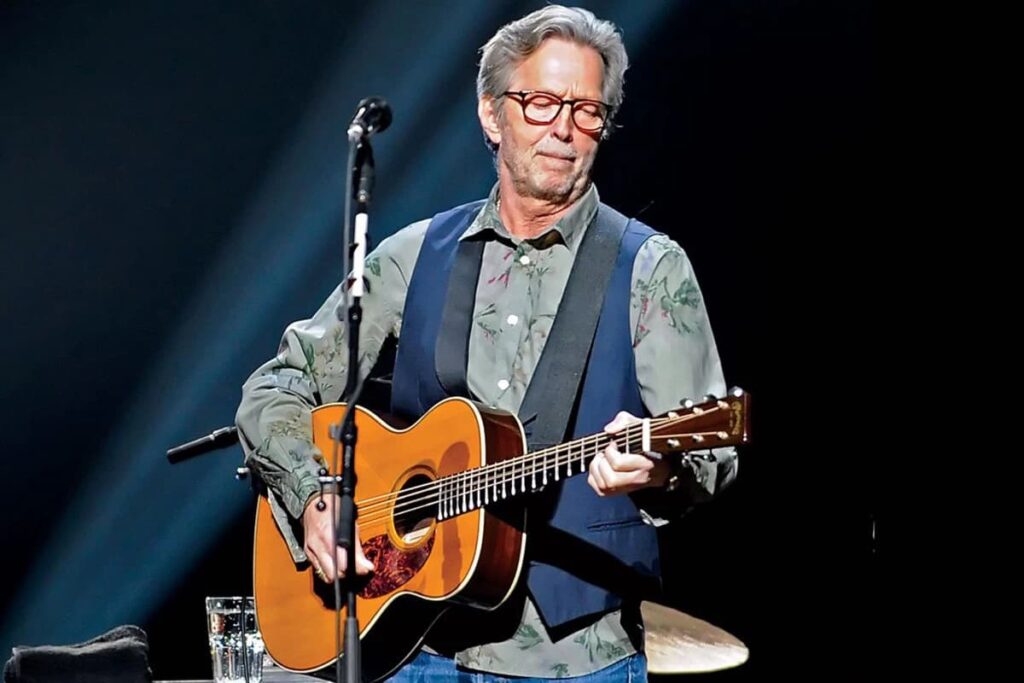
Clapton’s version, with its laid-back groove and soulful guitar work, brought a different emotional texture to the song. While Marley’s original carried a raw, urgent energy, Clapton’s rendition imbued it with a sense of weary resignation. His signature guitar licks and bluesy vocals conveyed the weight of the narrator’s actions and the lingering sense of unease. The song’s infectious rhythm, coupled with its thought-provoking lyrics, made it a staple on radio airwaves and a favorite among concertgoers. It not only topped the charts but also earned Clapton a Grammy Award for Best Male Pop Vocal Performance in 1975, solidifying its status as a landmark recording in his illustrious career.
I Shot The Sheriff remains a testament to the power of storytelling in music. It’s a song that invites reflection on themes of justice, self-preservation, and the complexities of human conflict. Whether through Marley’s original reggae rhythm or Clapton’s rock-infused interpretation, the ballad of the man who shot the sheriff continues to captivate and resonate with audiences across generations, a timeless narrative echoing through the corridors of music history. It reminds us that even in moments of apparent clarity, the truth can be multifaceted, and the line between right and wrong is not always so easily drawn. The song’s enduring appeal lies in its ability to spark contemplation and evoke a sense of empathy for a man caught in a desperate situation, a sentiment that transcends time and musical styles.