
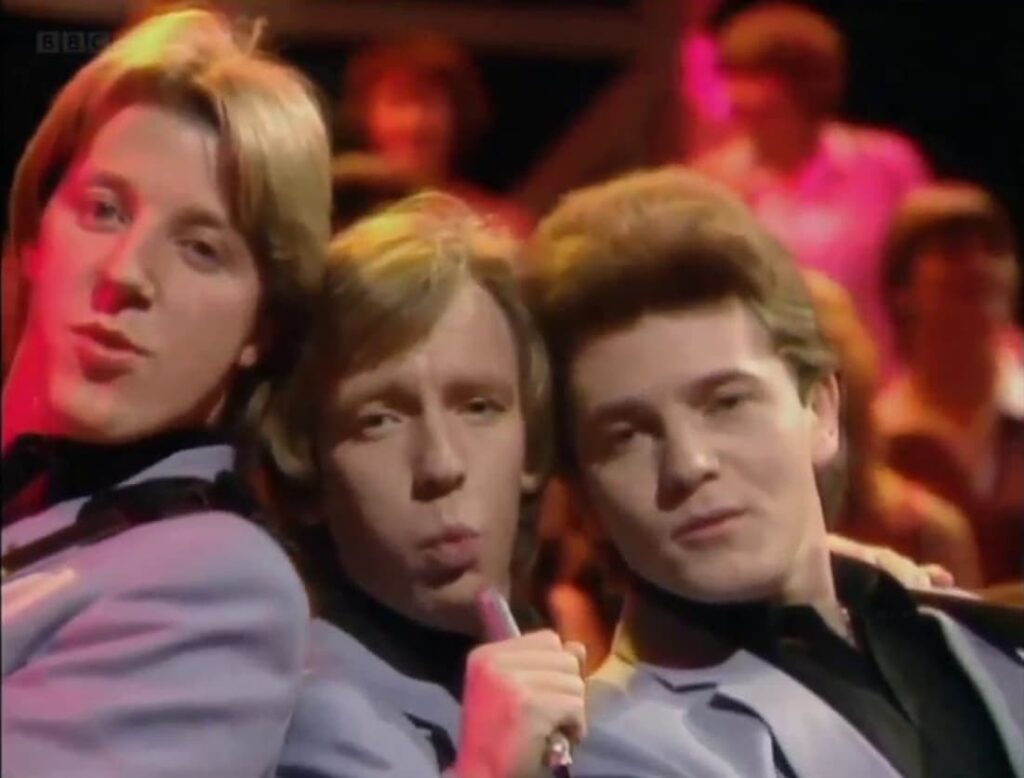
A rock ’n’ roll warning about youthful temptation, loyalty, and the price of charm worn too lightly
When Racey released their version of “Runaround Sue” in 1979, they were not trying to reinvent rock ’n’ roll history. Instead, they were doing something more subtle and, in its own way, more revealing: they were reintroducing a well-worn moral tale to a new generation that had grown up with glam rock, disco lights, and radio-friendly pop. At the time of its release, “Runaround Sue” by Racey reached No. 11 on the UK Singles Chart, a respectable and telling position that reflected both nostalgia and continuity. The song was included on their 1979 album Smash and Grab, an album that captured the band’s knack for reviving classic themes with contemporary polish.
The story behind “Runaround Sue” begins long before Racey ever stepped into the studio. The song was originally written by Dion DiMucci and Ernie Maresca, and first recorded by Dion in 1961. That original version went all the way to No. 1 on the Billboard Hot 100 in the United States, becoming one of the defining singles of early rock ’n’ roll. Its lyrics, sharp and conversational, warned young men about a beautiful girl whose affection was generously — and recklessly — shared. It was not a song of bitterness, but of experience, spoken in the voice of someone who had learned the hard way.
By the late 1970s, Racey were perfectly positioned to bring this song back into public consciousness. Known primarily for glossy pop hits like “Lay Your Love on Me” and “Some Girls”, the band had a lighter, more melodic approach than Dion’s street-corner swagger. Their “Runaround Sue” trades some of the original’s raw edge for a smoother, radio-ready sound, driven by clean guitar lines, steady rhythm, and polished harmonies. Yet the message remains intact. This is still a song about emotional caution, about the quiet wisdom that comes only after disappointment.
What gives Racey’s “Runaround Sue” its particular charm is the way it reflects its era without betraying its roots. In 1979, popular music was crowded with themes of freedom, pleasure, and instant gratification. Against that backdrop, this song feels almost reflective, even conservative in the best sense of the word. It reminds listeners that charm without commitment leaves damage in its wake, and that desire, unchecked by responsibility, often circles back as regret.
There is also something timelessly human in the way the song speaks. “Runaround Sue” does not condemn its subject with cruelty. Instead, it sounds like advice passed quietly from one generation to the next — the kind of warning offered not to judge, but to spare someone else the same pain. In Racey’s hands, the song feels less like a public accusation and more like a shared memory, told with a sigh rather than a shout.
For listeners who have lived long enough to recognize these patterns in real life, the song resonates differently. It becomes less about a specific girl named Sue and more about the moments when attraction clouded judgment, when warnings were ignored, and when lessons arrived too late. That is perhaps why the song continues to endure in its various incarnations. Each version speaks to the same truth, shaped gently by the voice and the time that carries it.
In the end, “Runaround Sue” as performed by Racey stands as a bridge between generations. It honors the early days of rock ’n’ roll while acknowledging the smoother, more reflective tone of late-1970s pop. It reminds us that while musical styles change, human behavior rarely does. Love, temptation, regret, and wisdom — these remain constant, quietly looping through our lives, much like the song itself, returning when we least expect it, and sounding a little different each time we hear it.