
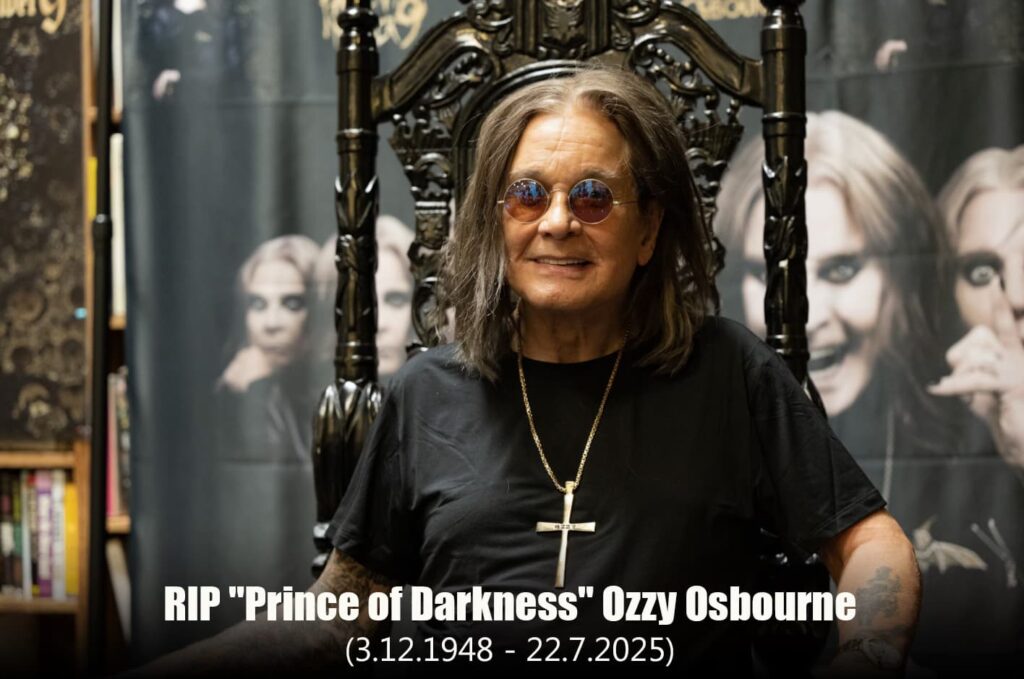
An Anthem of Enduring Strength: Unpacking Ozzy Osbourne’s “No More Tears”
For those of us who came of age with the thunderous roar of heavy metal, certain songs aren’t just tracks on an album; they’re milestones, etched into the very fabric of our musical memory. Among these, Ozzy Osbourne’s “No More Tears” stands as a monumental achievement, a sprawling epic that transcends the typical hard rock ballad, delving deep into themes of resilience, emotional turmoil, and ultimately, a defiant reclamation of self. Released in 1991 as the title track from his sixth studio album, No More Tears, this song wasn’t just another hit for the “Prince of Darkness”; it was a statement, a powerful declaration that even after decades in the spotlight, Ozzy still possessed an artistic depth that could resonate with millions.
While “No More Tears” might not have scaled the dizzying heights of the pop charts, its impact on rock radio and in the hearts of fans was undeniable. It reached a respectable No. 5 on the Billboard Mainstream Rock Tracks chart, a testament to its enduring appeal and radio-friendly yet undeniably heavy sound. The album itself, No More Tears, was a massive commercial success, eventually going quadruple-platinum in the United States. This success wasn’t merely about sales; it solidified Ozzy’s position as a solo artist of immense stature, proving that he could continue to evolve and produce compelling music well into the 90s, a decade that saw significant shifts in the rock landscape.
The story behind “No More Tears” is as complex and layered as the song itself. Co-written by Ozzy with his longtime guitarist Zakk Wylde, bassist Mike Inez, drummer Randy Castillo, and keyboardist John Sinclair, the track emerged during a period of intense creative output for the band. There’s a widely held belief, often fueled by Ozzy’s own enigmatic public persona, that the song touches on the darker aspects of human nature, perhaps even referencing serial killers. However, a deeper, more personal interpretation reveals a narrative of breaking free from addiction, self-doubt, and the manipulative forces that can bind a person. Ozzy himself has spoken about the song’s therapeutic qualities, describing it as a cathartic release, a moment of defiant strength against personal demons. It’s a reflection of his own battles with substance abuse and the constant struggle for sobriety, a journey many of us, or those we know, can intimately relate to. The lyrics, “I’ve been a victim of the game / I’ve been a victim of the pain,” speak volumes about the feeling of being trapped, while the resolute chorus, “No more tears,” signifies a decisive turning point, a refusal to succumb to despair any longer.
Beyond the lyrical depth, the musicality of “No More Tears” is nothing short of breathtaking. Clocking in at over seven minutes, it’s a journey, a meticulously crafted piece that ebbs and flows with incredible dynamic range. Zakk Wylde’s guitar work is particularly noteworthy; his iconic pinch harmonics and searing solos are instantly recognizable and contribute immensely to the song’s emotional weight. The haunting cello intro, performed by Michael Fraser, immediately sets a somber, almost gothic tone, drawing the listener in before the heavy guitars and thunderous drums unleash their full power. This unexpected classical element adds a layer of sophistication, elevating the song beyond typical heavy metal fare. It’s this masterful blend of crushing riffs, soaring melodies, and unexpected instrumentation that cemented “No More Tears” as a classic, showcasing a maturity and breadth that some might not have expected from the man who once bit the head off a bat. For those of us who remember queuing up to buy the cassette or CD, placing it reverently into our stereos, and letting those opening cello notes wash over us, “No More Tears” wasn’t just a song; it was an experience, a powerful reminder that even in our darkest moments, there’s always the potential for strength, defiance, and ultimately, a glimmer of hope. It’s a track that, even today, can evoke a powerful sense of nostalgia, transporting us back to a time when music felt like a lifeline, a shared experience that bound us together.