
A playful electronic melody that turned early synthesizer sounds into a shared global memory, bridging novelty and timeless charm
When “Popcorn” by Hot Butter burst onto the airwaves in 1972, it sounded unlike almost anything that had come before it on the pop charts. Bright, bouncy, and irresistibly playful, this instrumental built entirely around a Moog synthesizer captured the imagination of listeners across generations. Upon its release, “Popcorn” climbed rapidly up the charts, reaching No. 1 on the UK Singles Chart in May 1972, where it remained for three weeks, and peaking at No. 9 on the US Billboard Hot 100. These were remarkable achievements for an instrumental track at a time when vocal-driven pop and rock dominated radio.
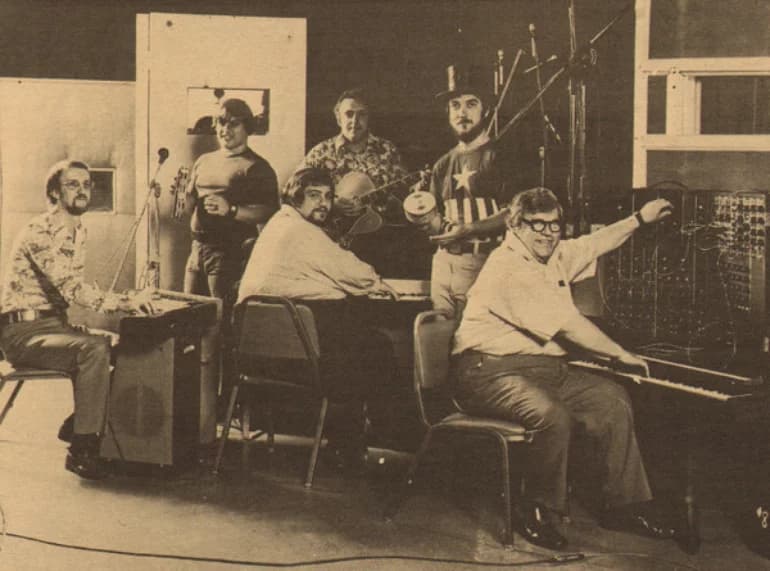
The story of “Popcorn” begins earlier than many listeners realize. The composition was originally written in 1969 by Gershon Kingsley, a classically trained composer and a pioneer of electronic music. Kingsley first recorded the tune for his album Music to Moog By, using the then-new Moog synthesizer. That original version was playful but experimental, aimed more at curious listeners than the mainstream public. It took Hot Butter, a studio-based group assembled by producer Stan Free, to transform the piece into a polished, radio-friendly phenomenon.
Hot Butter’s 1972 version refined Kingsley’s melody into something lighter, tighter, and more immediately joyful. The bubbling synth line mimics the sound of kernels bursting into popcorn, creating a sense of motion and delight that needs no lyrics to explain itself. For many listeners, especially those already well into adulthood at the time, “Popcorn” felt like a small miracle: a piece of modern technology that was not cold or alienating, but warm, humorous, and oddly comforting.
What makes “Popcorn” particularly fascinating is its timing. The early 1970s were a period of transition in popular music. Rock was becoming more complex and serious, while electronic music was often viewed as experimental or even intimidating. “Popcorn” slipped through these divides with a wink and a smile. It suggested that synthesizers did not have to be abstract or cerebral; they could be fun, melodic, and accessible. In that sense, the song quietly prepared the ground for later electronic and synth-pop movements, long before names like Kraftwerk or Depeche Mode became familiar to the general public.
The album Popcorn by Hot Butter, released the same year, leaned heavily into this approachable electronic style. Yet it was the title track that endured, becoming a staple on radio, television, and eventually in films, commercials, and children’s programs. Over time, “Popcorn” transcended its era. It has been covered and reinterpreted countless times across decades, from disco-inflected versions to digital-era remixes, each generation rediscovering its charm in a new context.
Despite its lighthearted surface, “Popcorn” carries a deeper meaning for many listeners. It represents a moment of optimism about technology, a belief that innovation could add joy to everyday life rather than complicate it. For those who heard it upon release, the song often evokes vivid memories: summer afternoons, transistor radios, variety shows on black-and-white televisions, and a world that seemed to be opening up in unexpected ways.
Today, “Popcorn” by Hot Butter stands as more than a novelty hit. It is a reminder that simplicity can be powerful, that melody alone can tell a story, and that even the most modest three-minute instrumental can leave a lasting emotional imprint. In its cheerful pulses and bright tones, many listeners still hear echoes of a gentler, more curious age—one where the future sounded friendly, and a synthesizer could make the whole world smile.