
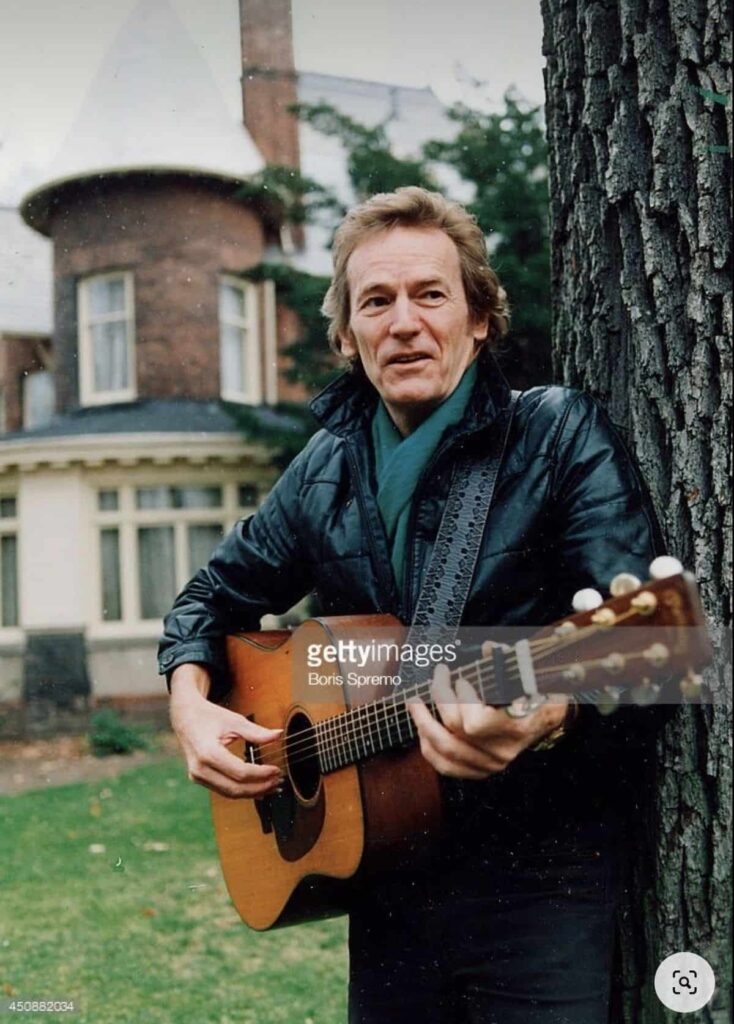
A Haunting Goodbye Woven in Summer’s Warmth
In “Summer Side of Life,” Gordon Lightfoot paints a tender yet heartrending portrait of innocence lost—a farewell to youth, love, and the fragile peace before war.
Gordon Lightfoot released “Summer Side of Life” as the title track of his sixth studio album in May 1971, under Reprise Records. The album itself reached #38 on the pop chart, while the single “Summer Side of Life” peaked at #98 on the U.S. pop singles chart, and in Canada it resonated more deeply, reaching #21.
Behind this gentle melody lies a powerful, sobering story. As Lightfoot himself explained, the song is about young men going off to fight in Vietnam, saying farewell to their mothers, their lovers, not knowing if they will ever return.
On the surface, the opening verses transport us to a sunlit summer landscape—fields of green, blossoming love, tender illusions. But Lightfoot’s narrative soon shifts. In the second verse, he evokes images of young girls talking late into the night with men about to depart for war, tears mingling with hope. The chorus brings a heartbreaking contrast: “If you saw him now, you’d wonder why he would cry the whole day long,” referencing not only his sadness, but the burden these men carry after facing the unspeakable.
A deeper meaning emerges: this is not just a folk song about summer love. It is a meditation on war’s silent wounds—the grief of separation, the weight of duty, and the invisible changes that war breeds in those who come home. Lightfoot’s rich, familiar voice carries that regret: the realization that the carefree days of youth, once so luminous, are irrevocably altered.
In retrospectives, commentators note how Lightfoot serenely blends folk sensibility with subtle but meaningful production choices. On the album, he experimented more—adding drums, electric instrumentation, and background vocals (including the famed Jordanaires), turning his earlier, sparser sound into something more layered, more emotionally textured. This sonic shift mirrors the song’s thematic shift—from naive summer daydreams to the darker, more complex realities of life.
What makes “Summer Side of Life” especially poignant for older listeners is how it taps into universal memories: a time when summer symbolized freedom and boundless promise, before the weight of the world settled in. The imagery of gathering in fields, of long nights, of quiet prayers—these evoke nostalgia for simpler days, even as the undercurrent reminds us of the fragility of that innocence.
Lightfoot’s own reflections add another layer. He admitted he doesn’t always perform the song live because “it doesn’t hold together technically” for him anymore—but he recognizes how deeply people connect with it. His modesty underscores the power of the piece: though not perfect in construction, its emotional truth resonates.
Beyond its chart position, its significance lies in its empathy. At a time when the Vietnam War loomed large in public consciousness, Lightfoot sidestepped grand political anthems. Instead, he offered something simpler—and perhaps more devastating—a human story. He writes not about battles or strategy, but about love, faith, and fear. It’s a farewell not just to a person, but to a moment in life: the summer side of life, that fleeting horizon of youth.
Listening now, decades later, the song feels like a letter from another era—an echo of green fields and aching hearts, carried on a soft breeze. To hear Gordon Lightfoot singing those lines is to stand, for a moment, among those fields, to feel the warmth of summer, and to understand how goodbye can linger long after the season ends.