
Two Songs, Two Mirrors of Love and Responsibility – Tender Humor and Stark Truth from John Prine’s World
When we speak of John Prine, we speak of a songwriter who could hold a grin and a tear in the same line. Few performances capture that duality more poignantly than “In Spite of Ourselves” and “Unwed Fathers,” especially when revisited in connection with Amanda Shires. One is a wry, affectionate portrait of imperfect love; the other, a sobering meditation on abandonment and consequence. Together, they form a moral and emotional spectrum that only Prine could traverse with such humanity.
“In Spite of Ourselves” was released in 1999 as the title track of Prine’s duets album In Spite of Ourselves. The album reached No. 21 on the Billboard Top Country Albums chart—modest by Nashville standards, perhaps, but deeply respected among listeners who valued craft over flash. The song itself, a duet with Iris DeMent, did not storm the pop charts; instead, it quietly became one of Prine’s most beloved late-career compositions, cherished for its humor and lived-in warmth.
By contrast, “Unwed Fathers” dates back to 1984, appearing on the album Aimless Love, which reached No. 63 on the Billboard 200. While never a commercial hit single, the song became a cornerstone of Prine’s reputation as a social observer—clear-eyed, compassionate, and unafraid. Over the years, it has been covered by artists such as Johnny Cash and later interpreted by Amanda Shires, whose version carries a modern yet reverent weight.
Let us begin with “In Spite of Ourselves.” On the surface, it is playful, almost mischievous. Prine and DeMent trade verses about stubborn habits, cheap tastes, and small-town quirks. He sings of a woman who “likes her eggs all runny” and keeps her Christmas lights up year-round. She counters with loving jabs of her own. Yet beneath the teasing lies something enduring. This is not young love intoxicated by illusion; it is seasoned affection, built on familiarity, compromise, and laughter.
Prine once described the song as inspired by the couples he observed in everyday life—relationships that endured not because they were perfect, but because they were resilient. The title says it all: love survives “in spite of ourselves.” There is an unspoken wisdom here—that romance matures into companionship, and companionship into something steadier, quieter, perhaps more sacred. The humor disarms us, but the sentiment lingers long after the final chord fades.
Now turn to “Unwed Fathers.” If the former song smiles with crow’s feet at the corners of its eyes, this one looks straight ahead without blinking. Written at a time when conversations about single motherhood and social responsibility were gaining urgency in America, Prine’s lyric refuses easy judgment. He paints the young mother with tenderness, describing her fear and vulnerability, while holding absent fathers accountable with lines that cut like winter wind:
“Unwed fathers, they can’t be bothered / They run like water through a mountain stream.”
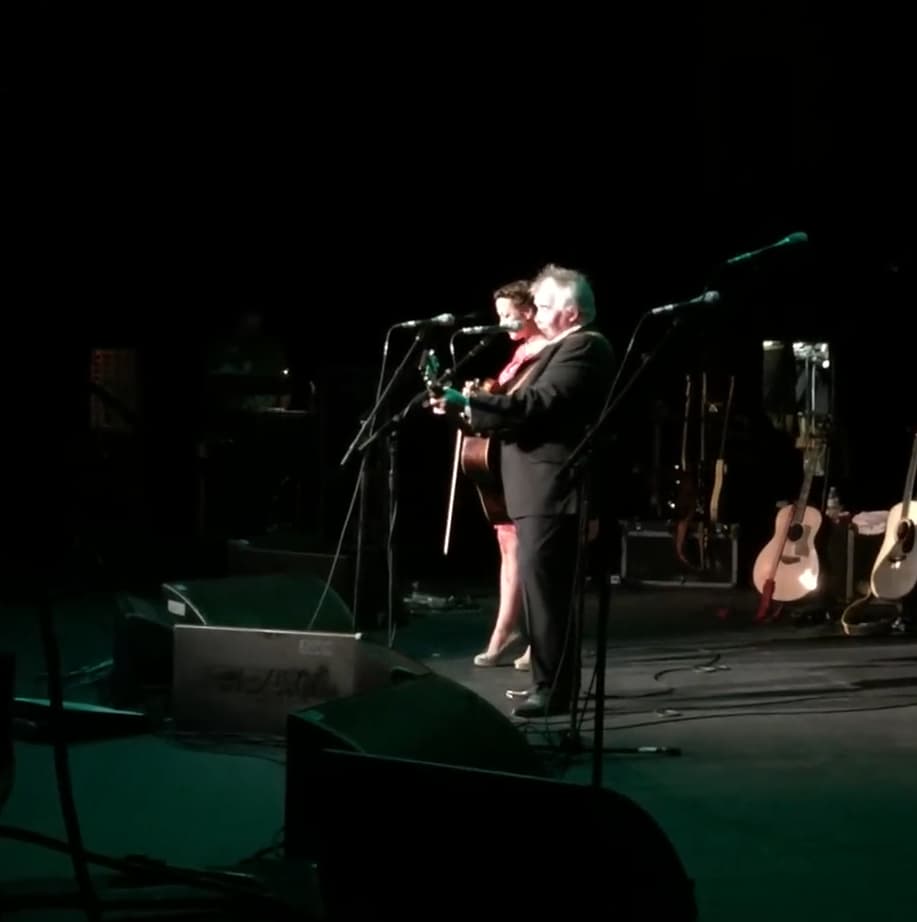
What makes the song so devastating is its restraint. There is no melodrama, no swelling orchestration to dictate our emotions. Prine trusted the story. He trusted the listener. In later interpretations—particularly by Amanda Shires, whose voice carries both fragility and steel—the song gains a contemporary resonance. Shires does not imitate Prine; she inhabits the song’s moral gravity, bringing a woman’s perspective into sharper relief. Her delivery reminds us that the themes remain painfully relevant.
Taken together, these two songs reveal the breadth of John Prine’s artistry. He could celebrate flawed devotion in “In Spite of Ourselves” and confront uncomfortable truths in “Unwed Fathers.” He understood that life contains both kitchen-table laughter and late-night reckonings. That is why his work endures—not because it chased trends, but because it honored ordinary lives with extraordinary empathy.
There is a certain ache that accompanies revisiting these songs now. They belong to a time when storytelling in popular music was less hurried, when lyrics invited contemplation. Listening today feels like opening an old wooden drawer—inside are photographs, handwritten notes, small keepsakes of memory.
And perhaps that is the quiet miracle of John Prine. In a few simple verses, he could remind us who we were, who we loved, and what we owed to one another.