
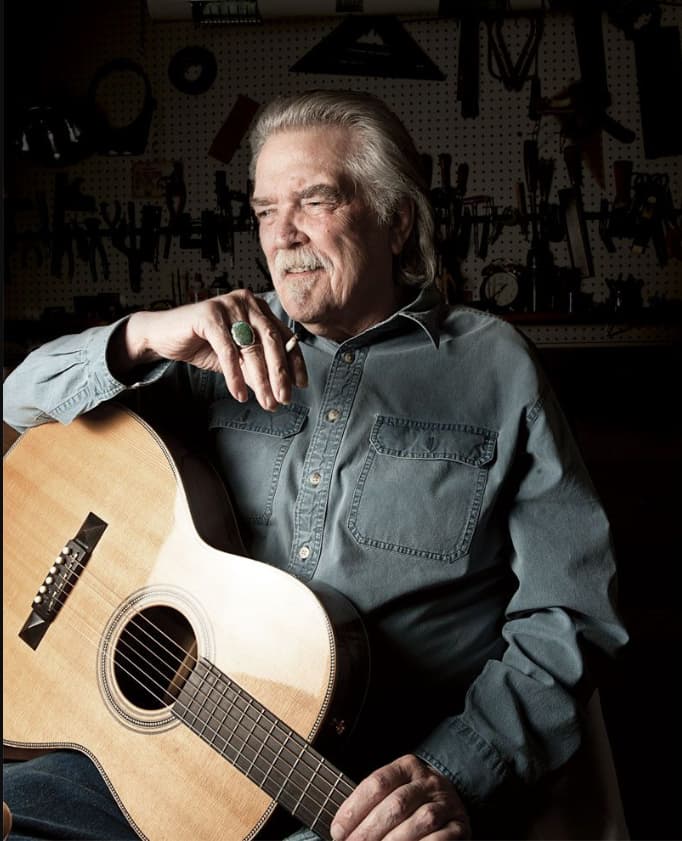
The guitar is more than wood and strings; it’s a living vessel for stories yet to be told.
The late, great Guy Clark was a man of few words but a master of them. His songs were like finely-crafted pieces of furniture—each joint perfectly fitted, each detail considered, and each one built to last. He was a troubadour, a poet, and, famously, a master luthier, a man who understood the very soul of a guitar. This deep, abiding relationship with his craft is at the heart of his stunning 2013 song, “The Guitar”. Released on his final studio album, My Favorite Picture of You, the song served as a poignant, reflective bookend to a legendary career, a testament to a life spent in communion with wood, wire, and words.
The album itself, a masterpiece of late-career artistry, was a critically acclaimed success and went on to win the Grammy for Best Folk Album in 2014. While the record’s title track, a raw and moving tribute to his late wife Susanna, rightfully drew much of the attention, it is “The Guitar” that truly encapsulates the essence of Guy Clark‘s being. The song tells a mythical tale of a young, aspiring guitarist who wanders into a dusty pawn shop and finds an old, beat-up guitar hanging on the wall. The shop’s proprietor, a mysterious, wizened figure, challenges the young man to play it, to see if he can unlock its true spirit. As the boy begins to strum, his fingers become lightning, and the guitar “almost played itself,” a moment of pure, unadulterated musical transcendence. The old man, recognizing a kindred spirit, gives the guitar to the young man for free, telling him that the instrument has been waiting for him all its life.
The story behind the song is almost as magical as the lyrics themselves. Clark wrote it with his longtime friend and touring partner, Verlon Thompson, during a songwriting workshop they were teaching at Jorma Kaukonen’s Fur Peace Ranch in Ohio. The setting—a place dedicated to the art of the guitar—seems almost destined for a song like this. Thompson has often spoken about the moment the idea for the song took hold, a spontaneous flash of inspiration that perfectly captured the feeling of being a conduit for something bigger than yourself. It’s a sentiment that many of us, who have ever sat with an old instrument, can understand. It’s the feeling that the song is already there, living in the wood, just waiting for the right hands to coax it out into the world.
For a man who spent his life building and repairing guitars, the song is deeply personal. It’s a tribute to the mystique of the instrument itself and to the idea that a great song isn’t just written—it’s revealed. It’s a metaphor for the creative process, the idea that the greatest art often comes from a place of pure, almost supernatural inspiration. When you listen to “The Guitar”, you can hear the creak of the old pawn shop door and feel the dust in the air. You can imagine that battered old six-string with its ghosts of songs past. It’s not just a song about a guitar; it’s a song about the relationship between a craftsman and his tool, an artist and his muse. It’s the story of how some things, some songs, are simply meant to be.
The song’s release came at a time when Clark‘s health was failing, and it feels like a final, knowing nod to his legacy. It’s as if he’s the old man in the song, passing the torch to a new generation of storytellers. The beautiful, unadorned simplicity of the melody, and the spoken-word verses, highlight the narrative, allowing the story to take center stage. There were no pop charts to climb for a song like this, no mainstream radio airplay. Its success was measured in the hushed reverence of a concert hall and the quiet tears of those who understood its profound message. It’s a song for anyone who has ever felt the magic of a guitar in their hands, for anyone who knows that sometimes, the instrument plays you.