
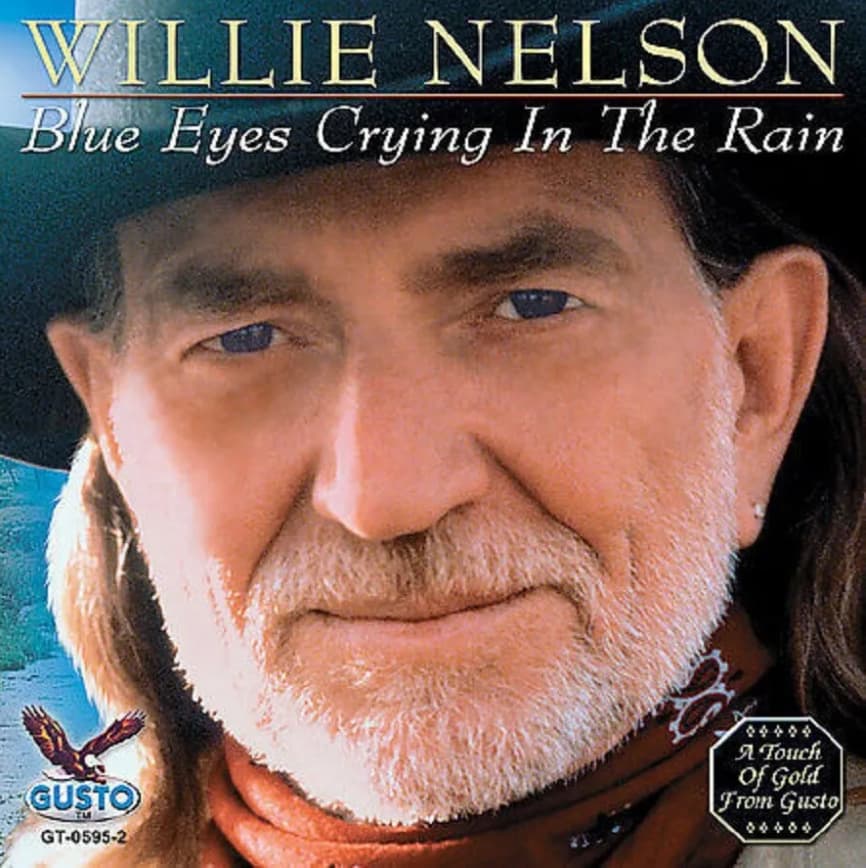
A Tender Lament of Lost Love and Enduring Memory
In the annals of country music, few songs possess the quiet, enduring power of Willie Nelson‘s “Blue Eyes Crying in the Rain.” Released in 1975 as the lead single from his groundbreaking album, “Red Headed Stranger,” this melancholic masterpiece didn’t just climb the charts; it redefined Willie Nelson‘s career and etched itself into the very fabric of American popular song. It was a revelation, a gentle storm of emotion that resonated deeply with listeners, eventually reaching the coveted number one spot on the Billboard Hot Country Singles chart, solidifying its place as a classic.
Before “Red Headed Stranger” and its iconic lead single, Willie Nelson was already a respected songwriter and performer, but he hadn’t yet achieved the widespread commercial success that seemed to elude his unique vision. He was a maverick, a “hippie outlaw” in the Nashville establishment, known for his unconventional phrasing and jazz-infused guitar work. The story behind “Blue Eyes Crying in the Rain” is as serendipitous as it is significant. The song itself wasn’t new; it was written by the legendary Fred Rose way back in 1947 and had been recorded by various artists over the years, including Roy Acuff and Hank Williams. However, it was Willie Nelson‘s stripped-down, unadorned rendition that truly unlocked its profound emotional core.
The recording of “Blue Eyes Crying in the Rain” was a testament to Willie Nelson‘s artistic convictions. During the sessions for “Red Headed Stranger,” producer Jerry Wexler initially pushed for a more polished sound, but Willie stood firm, insisting on the minimalist approach that would become the album’s signature. He reportedly laid down the track with just his guitar and a sparse arrangement, allowing the raw beauty of the melody and lyrics to shine through. This raw authenticity was a stark contrast to the often-overproduced country music of the era, and it struck a chord with a generation yearning for something real and heartfelt.
At its heart, “Blue Eyes Crying in the Rain” is a poignant meditation on lost love and the indelible mark it leaves on the soul. The “blue eyes” are a vivid symbol of a past relationship, perhaps a first love, that, despite its ending, continues to live on in memory. The “crying in the rain” imagery evokes a sense of sorrow, of tears blending with the elements, making the heartbreak almost universal. It speaks to that universal ache of looking back at a cherished time and person, knowing they are gone but feeling their presence nonetheless. It’s not a bitter lament, but rather a tender reflection, tinged with a quiet acceptance of what was and what can never be again. For many of us who have lived a few decades, this song brings forth a cascade of memories, of youthful indiscretions, of hearts broken and mended, of the quiet dignity of enduring love and loss. It’s a song that understands that some partings, no matter how long ago, still carry a faint echo in the chambers of the heart.
The song’s enduring appeal lies in its simplicity and its profound emotional resonance. Willie Nelson doesn’t belt out the lyrics; he breathes them, each word a whispered memory, each guitar note a tear falling gently. It’s a song that doesn’t demand your attention but rather invites you to lean in and listen, to find your own stories within its gentle melody. It’s a reminder that sometimes, the most powerful expressions of emotion are the ones that are quietest, the ones that allow space for introspection and personal connection. And for those of us who remember its first airing, it’s a nostalgic journey back to a time when country music was undergoing a quiet revolution, led by an outlaw poet with a guitar and a voice that could break your heart and mend it all at once.

Tạo Tổng quan bằng âm thanh
 Great Songs