
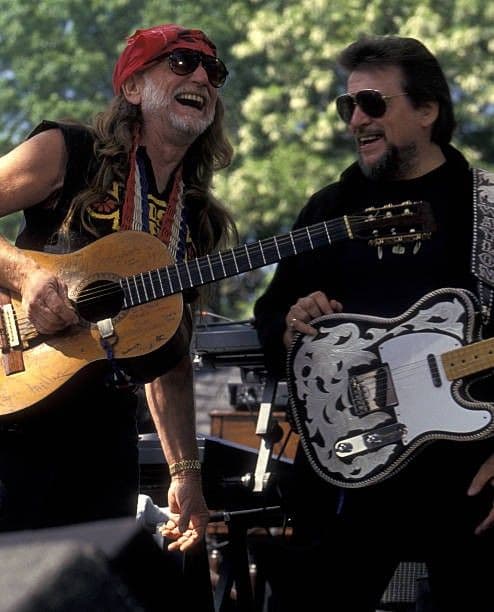
A Hymn for Faithful Wives: The Confession of an “Outlaw”
Born from a poker game and inspired by Tina Turner, this song became the defining anthem of the Outlaw Country movement.
“Good Hearted Woman” is not only one of the most famous duets by Willie Nelson and Waylon Jennings, but also a declaration of the Outlaw spirit itself. Written by the two legends, it became the title track of Jennings’ 1972 solo album (which reached No. 3) and later their first No. 1 duet single in 1976, featured on the groundbreaking compilation album Wanted! The Outlaws. That album made history as the first country record ever certified Platinum, selling over one million copies.
The Story Behind the Poker Hand
The tale behind “Good Hearted Woman” is as legendary as the song itself. The idea was born in 1969, while Jennings and Nelson were playing poker at the Fort Worther Hotel in Fort Worth, Texas. Jennings saw a newspaper ad about Tina Turner that read: “Tina Turner sings songs about good-hearted women loving good-timing men”—a clear nod to her turbulent marriage with Ike Turner.
Intrigued, Jennings began writing lyrics right there at the poker table. Willie Nelson added a crucial line to the chorus — “Through teardrops and laughter, they’ll pass through this world hand-in-hand” — finishing the song before the game ended. Nelson’s wife at the time, Connie Koepke, wrote the lyrics down as they went. Both artists later admitted that the song was a tribute — and perhaps an unspoken apology — to their own wives, Connie and Jessi Colter, who had endured their wild, pleasure-seeking lifestyles.
Meaning: A Bitter-Sweet Apology
At its core, “Good Hearted Woman” is bluntly honest and deeply self-reflective. It’s the confession of a “good-timing man” — a wanderer, sometimes reckless and unfaithful — acknowledging the grace of a “good-hearted woman” who continues to love and forgive him.
The chorus is the heart of the message:
“She’s a good hearted woman in love with a good timin’ man,
And she loves him in spite of his wicked ways that she don’t understand,
Through teardrops and laughter, they’ll pass through this world hand-in-hand,
A good-hearted woman loving her good-timing man.”
This song is a reversal of the traditional love ballad. Instead of praising the man, it honors the woman’s patience, kindness, and unconditional love. It touches on the raw truth of life on the edge — where a man might be a wandering musician, a reckless drifter, yet still has a home and a tender heart waiting for him — despite all his flaws.