
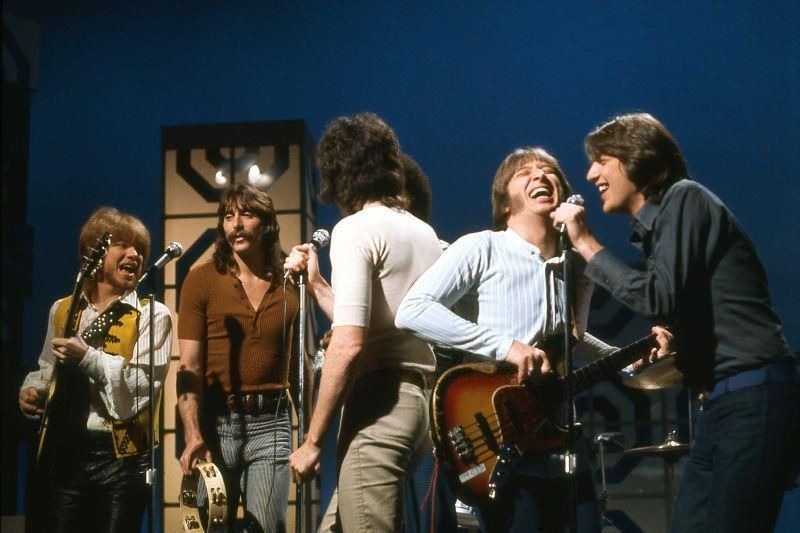
A stirring anthem about human unity, resilience, and the shared heartbeat of a divided world.
When The Family of Man was released by Three Dog Night in 1972, it carried with it the urgency and idealism of an era that desperately needed reassurance. Issued as a single from the album Seven Separate Fools, the song climbed to No. 12 on the Billboard Hot 100 in the United States and reached No. 6 in Canada—an impressive achievement in a year crowded with powerhouse releases. Written by the incomparable Paul Williams and produced by Richard Podolor, the track became one of the band’s most spirited and enduring statements during their remarkable run of hits between 1969 and 1974.
By the time Three Dog Night recorded The Family of Man, they were already seasoned hitmakers, known for their uncanny ability to interpret songs by outside writers and turn them into chart successes. With their signature three-part vocal attack—led here by Danny Hutton—they transformed Williams’ composition into something more than just a pop single. They made it a rallying cry.
The early 1970s were a restless period. The Vietnam War was still casting its long shadow, political tensions ran high, and social divisions felt raw and personal. Against this backdrop, The Family of Man emerged as a reminder that beyond politics and protest, beyond generational divides, there remained a common thread binding humanity together. Its lyrics speak plainly but powerfully: we may quarrel, we may stumble, but we are still one family.
Musically, the song is driven by an urgent, almost gospel-inflected energy. The pounding piano, tight rhythm section, and layered harmonies give it propulsion, but it is the vocal performance that truly elevates it. Three Dog Night had always excelled at dramatic builds and emotional crescendos, and here they lean into that strength. There is a sense of gathering momentum, as if each chorus insists more forcefully than the last that unity is not just an ideal—it is a necessity.
Paul Williams, who would later achieve immense acclaim for songwriting classics such as “We’ve Only Just Begun” and “Rainy Days and Mondays,” infused the song with his characteristic blend of sincerity and urgency. He understood how to write lyrics that felt intimate yet universal. In The Family of Man, his message is simple but not simplistic. It acknowledges conflict—“We’ve got to get it together”—while insisting on hope. That duality gives the song its lasting resonance.
The album Seven Separate Fools, released in 1972, would go on to be certified gold, further cementing the band’s commercial strength. But beyond sales figures and chart positions, this period represents something deeper in the story of Three Dog Night. They were not merely interpreters of pop material; they were cultural conduits. They selected songs that reflected the anxieties and aspirations of the time, and through their polished yet passionate performances, they amplified those emotions for millions.
Listening to The Family of Man today, one cannot help but feel a wave of nostalgia—not only for the sound of early 1970s AM radio, but for a moment when popular music dared to speak directly about shared responsibility and collective destiny. The arrangement may carry the textures of its time, but the message feels disarmingly current.
There is something profoundly moving about revisiting a song like this. It recalls an era when harmonies were rich, production was analog and warm, and bands stood shoulder to shoulder at the microphone, breathing the same air as they sang about unity. Three Dog Night gave voice to a belief that despite our arguments and differences, we remain bound together. That belief, expressed with such conviction in The Family of Man, continues to echo long after the last chord fades.
In a catalog filled with hits, this track stands out not only for its chart success but for its heart. It is a reminder that sometimes the simplest truths—sung loudly and together—are the ones that endure.