
A Gentle Confession of Longing Wrapped in Harmonies and 1970s Soul
When “Let Me Serenade You” by Three Dog Night arrived in 1973, it did not roar onto the charts with the explosive force of some of the band’s earlier smashes. Instead, it slipped in quietly—warm, persuasive, almost intimate. Released as a single from the album Cyan, the song climbed to No. 17 on the Billboard Hot 100 in the United States. It may not have been a No. 1 juggernaut like “Joy to the World,” but in many ways, its modest peak belies its emotional depth and subtle sophistication.
What many listeners may not have realized at the time is that “Let Me Serenade You” was written by Leon Russell, one of the most soulful architects of early ’70s American music. Russell originally recorded the song in 1970 under the slightly different title “Let Me Serenade You (Sweet Baby),” and it carried his unmistakable blend of gospel warmth and Southern-inflected piano rock. When Three Dog Night took hold of it three years later, they reshaped it—without losing its heart.
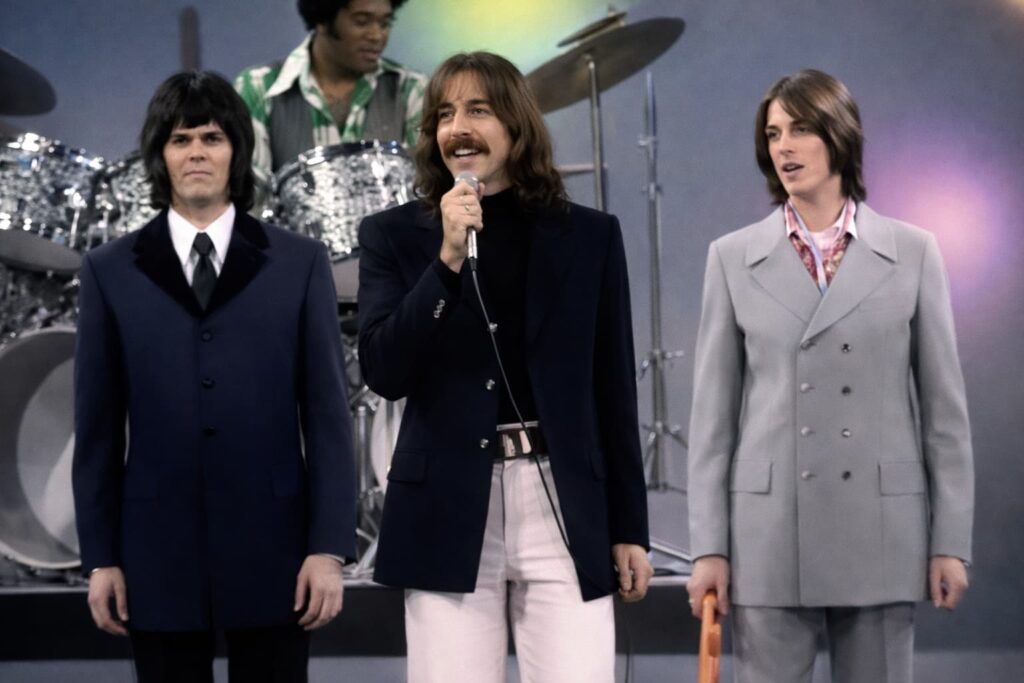
By 1973, Three Dog Night had already cemented their place in popular music history. With an extraordinary string of Top 40 hits between 1969 and 1974, they were unmatched in their consistency. Their formula—three distinctive lead vocalists (Danny Hutton, Cory Wells, and Chuck Negron) interpreting songs by outside writers—was almost alchemical. They had an uncanny ability to recognize a well-crafted composition and transform it into something radio-ready yet emotionally resonant.
In “Let Me Serenade You,” the band leaned into restraint rather than bombast. The arrangement is fluid and polished, anchored by gentle piano lines and layered harmonies that feel less like a performance and more like a conversation. The production on Cyan marked a slight shift in their sound—more refined, more adult, less overtly exuberant than their earlier work. It reflected a band maturing in both style and sensibility.
Lyrically, the song is simple, but that simplicity is its strength. At its core, it is about devotion expressed through music itself: “Let me serenade you / Let me make you stay.” It speaks to a time when romance was patient, when longing was expressed not through spectacle but through tenderness. There is no dramatic heartbreak here, no grand declarations of despair. Instead, there is a quiet plea—a desire to connect, to soothe, to win someone over not by force, but by melody.
Listening now, decades later, one can almost feel the atmosphere of early 1970s AM radio—when songs like this drifted from dashboard speakers on long evening drives, when harmonies seemed to float across summer air. Three Dog Night understood the emotional language of that era. They did not simply sing songs; they interpreted them, giving each composition a new personality. In this case, they softened Leon Russell’s earthier edges and wrapped the tune in polished vocal textures that made it accessible to a wide audience.
It is worth noting that by the time “Let Me Serenade You” charted in 1973, the musical landscape was shifting. Glam rock was emerging, singer-songwriters were dominating, and harder-edged sounds were gaining ground. Yet this song held its place—a reminder that sincerity never truly goes out of style. Its Top 20 success proved that listeners still valued melody, harmony, and heartfelt sentiment.
Over the years, Cyan has often been overshadowed by the band’s blockbuster albums like It Ain’t Easy or Naturally, but songs such as “Let Me Serenade You” reveal another side of Three Dog Night—less flamboyant, more introspective. It stands as a testament to their musical intelligence: they knew when to soar and when to whisper.
Today, revisiting “Let Me Serenade You” feels like opening a carefully kept letter from another time. It is not loud. It does not demand attention. Instead, it invites you closer. And perhaps that is its enduring power. In a catalog filled with anthems, this song remains a gentle confession—proof that sometimes the most lasting music is the kind that simply asks, softly and sincerely, to be heard.