
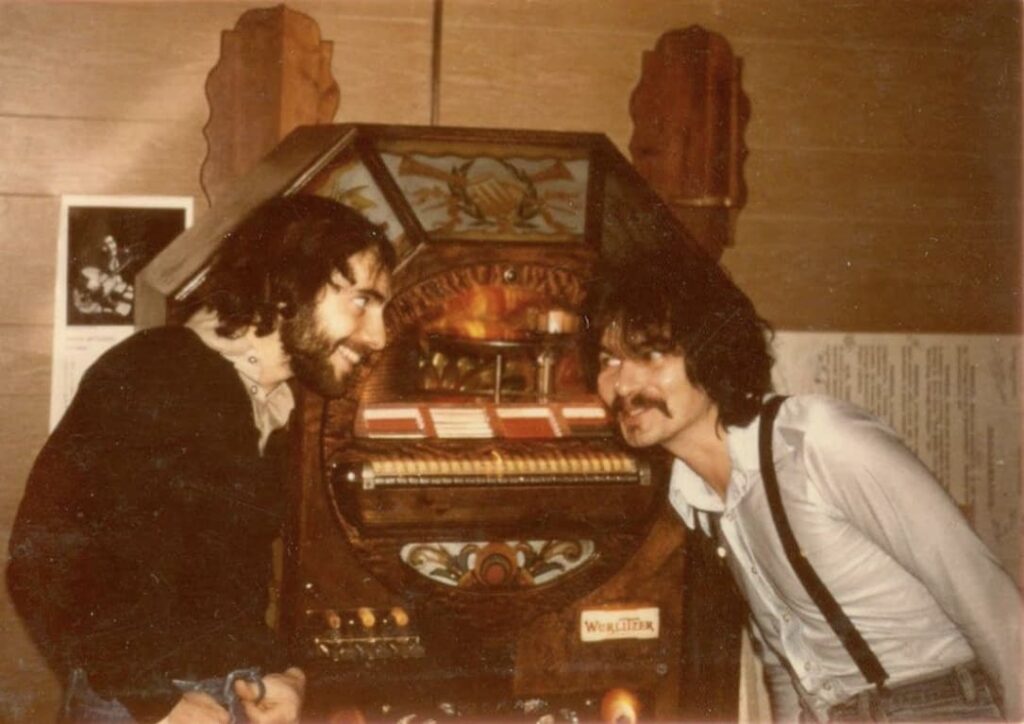
You Never Even Called Me by My Name — a wry country anthem that laughs, remembers, and tells the truth about heartbreak
Few country songs manage to be both a joke and a confession, both satire and sincerity. “You Never Even Called Me by My Name”, written by Steve Goodman together with John Prine, is one of those rare pieces that understands country music from the inside out — its clichés, its pride, its wounds — and loves it enough to smile gently at all of them.
The song was first written in the early 1970s, during a fertile period when Goodman and Prine were sharpening their songwriting voices in Chicago, trading ideas, lines, and late-night conversations. While Goodman recorded the song himself, its most famous and commercially successful version came in 1975, when David Allan Coe included it on his album Once Upon a Rhyme. That recording climbed to No. 8 on the Billboard Hot Country Singles chart, making it one of Coe’s signature hits and bringing Goodman’s songwriting to a far wider audience.
But the heart of the song belongs to Steve Goodman.
On the surface, “You Never Even Called Me by My Name” sounds like a simple complaint — a lover left behind, wounded by neglect. Yet from the opening lines, Goodman makes it clear that this is no ordinary country lament. The narrator calls the song “the perfect country and western song,” then proceeds to list everything it supposedly lacks: mama, trains, trucks, prison, and getting drunk. It’s a clever dismantling of genre expectations, delivered with a wink rather than a sneer.
The brilliance lies in what happens next.
In the now-legendary final verse — often spoken or half-sung — all those missing elements suddenly appear at once. Mama is mentioned. A train passes. A truck rolls by. Prison looms. Whiskey flows. It’s absurd, exaggerated, and deeply affectionate. Goodman wasn’t mocking country music; he was honoring it by showing how deeply he understood its language.
Behind the humor, though, there is something older listeners recognize immediately: real feeling. The line “You don’t have to call me darlin’, darlin’” carries a quiet sting. It speaks to a kind of emotional erasure that cuts deeper than anger — the pain of realizing you no longer even exist in someone’s daily thoughts. That’s not a punchline. That’s life.
Steve Goodman’s genius was his ability to balance irony with compassion. Unlike many satirical songs, this one never feels cold or clever for its own sake. Goodman knew these stories because he had lived among them — listening in bars, riding buses, watching people age into their disappointments and small victories. His voice, warm and conversational, made listeners feel as though the song was being sung just for them, perhaps across a kitchen table or from a corner stool at closing time.
When David Allan Coe recorded the song, he added his own outlaw edge, leaning into the spoken verse and turning it into a moment of shared laughter with the audience. Yet the soul of the song remained intact: a love letter to country music’s honesty, even when that honesty comes wrapped in humor.
For those who have spent years listening to country songs — really listening — “You Never Even Called Me by My Name” becomes something more than a novelty. It’s a mirror. It reminds us how often life refuses to follow neat formulas, and how sometimes the only way to survive heartbreak is to tell the truth with a smile.
Steve Goodman passed away far too young, but this song ensures his voice still lingers — not loudly, not insistently, but warmly. Like an old friend who knows exactly how the story ends, and tells it anyway, because it still matters.