
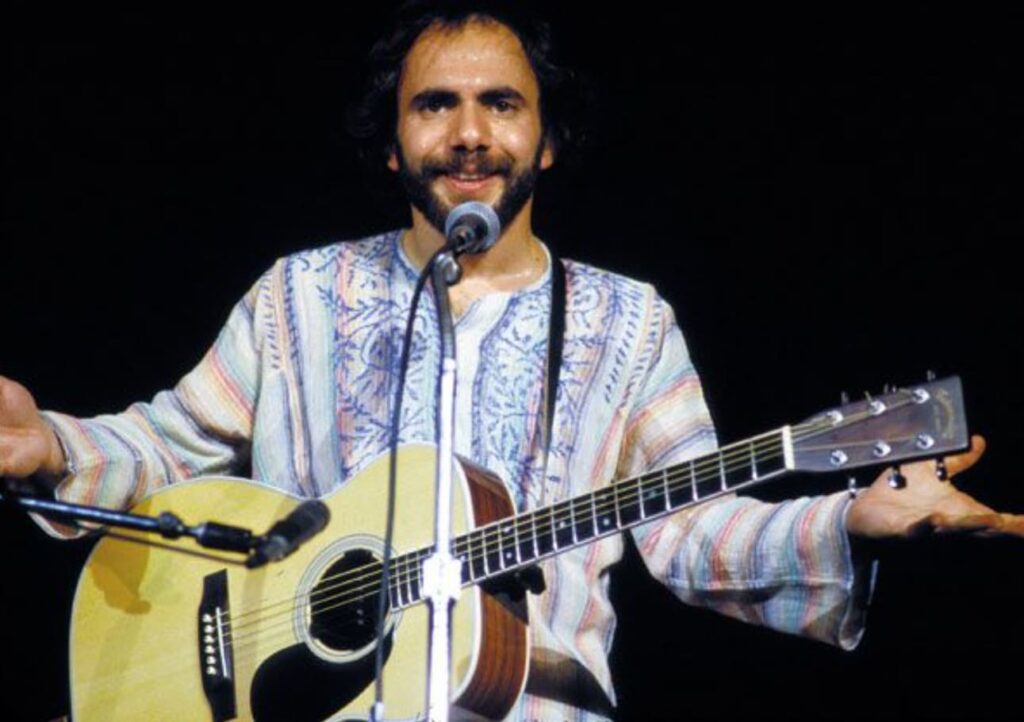
Steve Goodman’s Courage Shines Through in a Timeless Performance of “The Dutchman”
Few performances capture both artistic brilliance and human resilience as powerfully as Steve Goodman’s rendition of The Dutchman alongside mandolin master Jethro Burns. The clip stands today as more than a musical moment. It is a reminder of the extraordinary determination that defined Goodman’s life and career.
For many admirers of American folk music, Steve Goodman remains one of the genre’s most gifted songwriters and performers. What makes his legacy even more remarkable is the fact that he spent his entire professional career battling leukemia. Despite knowing that his future was uncertain, Goodman continued to write, perform, and record with relentless dedication. His work reflected a man determined to share as much of himself as possible through music.
That reality gives additional weight to this performance. Goodman’s voice carries warmth, sincerity, and emotional depth, while Jethro Burns provides masterful accompaniment on mandolin. Burns, widely regarded as one of the finest string musicians of his generation, appears deeply engaged throughout the performance. At one memorable moment, he watches Goodman’s left hand with clear admiration before breaking into a smile, a subtle exchange that speaks volumes about the respect shared between two exceptional musicians.
The story of Goodman’s life extends beyond the stage. He became a symbol of courage in the face of illness, participating in experimental research at Sloan Kettering during his fight against leukemia. Those efforts not only helped extend his own life but also contributed to medical advances that benefited future patients. His determination to keep moving forward, even under the most difficult circumstances, remains one of the most inspiring aspects of his legacy.
Fellow musicians were deeply affected by his passing. John Prine once reflected on how Goodman had been ill for so long that many had grown accustomed to the reality of his condition. Yet when the end finally came, the loss felt sudden and devastating. The emotional impact left a lasting impression on those who knew him personally and professionally.
Listening to The Dutchman today, it is easy to understand why the performance continues to resonate. The song’s tenderness, combined with Goodman’s heartfelt delivery and Burns’ remarkable musicianship, creates an atmosphere of rare authenticity. It is a performance that speaks not only of artistic excellence but also of perseverance, dignity, and courage.
Steve Goodman’s life was tragically short, but his achievements endure. Through recordings such as this one, his voice continues to tell a story of talent, bravery, and an unwavering commitment to music.