
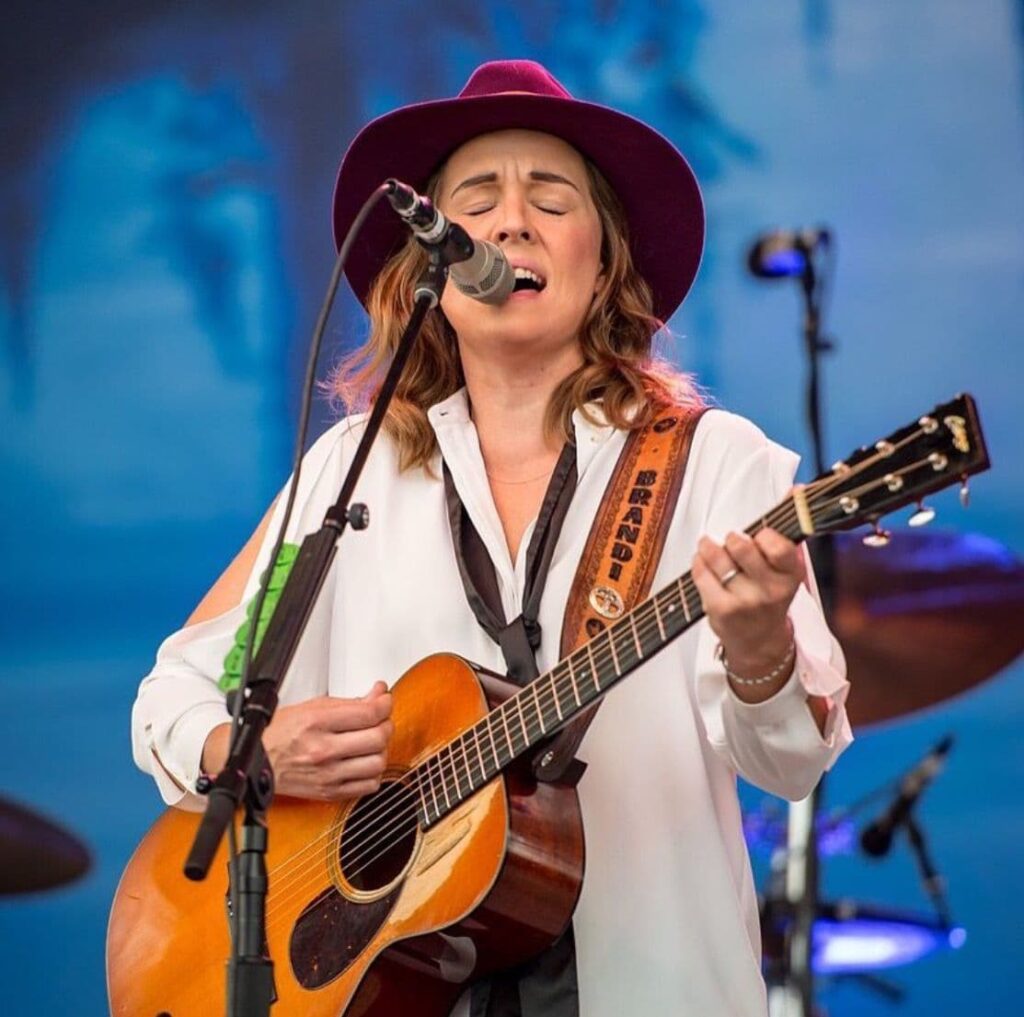
A Defiant Anthem of Survival and Unbreakable Spirit in the Face of Hardship
When “Broken Horses” by Brandi Carlile was released in October 2021 as the lead single from her album In These Silent Days (2021), it arrived not merely as a song—but as a declaration. The track went on to win the Grammy Award for Best Rock Performance at the 65th Annual Grammy Awards, cementing its place as one of the most powerful modern roots-rock statements of the decade. Though it did not storm the upper tiers of the Billboard Hot 100, it resonated deeply within the Adult Alternative Airplay and Americana communities, reaffirming Carlile’s stature as one of the most emotionally authentic voices in contemporary American music.
From its very first thunderous drumbeat, “Broken Horses” announces itself with urgency. Produced by Dave Cobb and recorded largely live in the studio, the track channels the raw immediacy of classic 1970s rock—echoes of Elton John’s Madman Across the Water era, the grit of The Rolling Stones, and the spiritual intensity of gospel-infused Americana. But make no mistake: this is unmistakably Brandi Carlile. Her voice doesn’t merely sing the lyrics—it wrestles with them, claws at them, breathes life into every syllable.
The song’s central metaphor—“broken horses”—is drawn from Carlile’s own upbringing in rural Washington State. She has spoken openly about growing up feeling like an outsider: a queer child in a conservative environment, raised amid economic hardship and personal struggle. The “broken horse” becomes a symbol not of weakness, but of misunderstood strength. It represents those who have been underestimated, dismissed, or bruised by circumstance—yet refuse to surrender their spirit.
Lyrically, the song carries a simmering tension between vulnerability and defiance. Lines like “I have ever known was how to hold my own” feel less like boasts and more like confessions whispered through clenched teeth. There is pain in her delivery, but also pride. This duality is what gives the song its gravity. It is not a triumphant anthem in the traditional sense; it is something more hard-earned. The triumph comes not from victory, but from endurance.
Musically, “Broken Horses” builds with remarkable control. The verses feel coiled and restrained, driven by a pulsing rhythm section and ominous piano chords. Then the chorus erupts—Carlile’s voice rising into a gritty, near-preacherly cry. It is in these moments that the song transcends the boundaries of genre. Rock, gospel, Americana—they merge into something elemental. One can almost imagine it reverberating through an old wooden hall, or rolling across open farmland at dusk.
The album In These Silent Days itself debuted at No. 11 on the Billboard 200 and received widespread critical acclaim, earning multiple Grammy nominations. Yet “Broken Horses” stands as its emotional cornerstone. The album’s title references a line from Elton John’s “Someone Saved My Life Tonight,” a subtle nod to Carlile’s reverence for the musical lineage that shaped her. That lineage is audible here—not in imitation, but in spirit.
There is something deeply reflective about the song’s message. It speaks to anyone who has ever felt out of place, who has carried invisible scars, who has endured seasons of doubt. But rather than wallow in melancholy, the song insists on resilience. The “broken” are not defeated; they are forged.
Listening to Brandi Carlile sing this track, one hears not just technical mastery but lived experience. There is gravel in her voice, but also grace. She has always possessed the rare ability to balance intimacy with grandeur—an artist equally comfortable in a hushed acoustic setting or commanding a roaring stage.
In the end, “Broken Horses” is more than a standout single. It is a reminder that some of the most compelling art emerges from struggle. It honors the quiet courage of those who have had to fight simply to stand where they are. And in doing so, it joins the long tradition of American songwriting that turns hardship into hymn.
For those who grew up with records that told the truth—unvarnished, unafraid—this song feels like a continuation of that tradition. It is fierce, reflective, and profoundly human. And once it begins, it does not let go.