
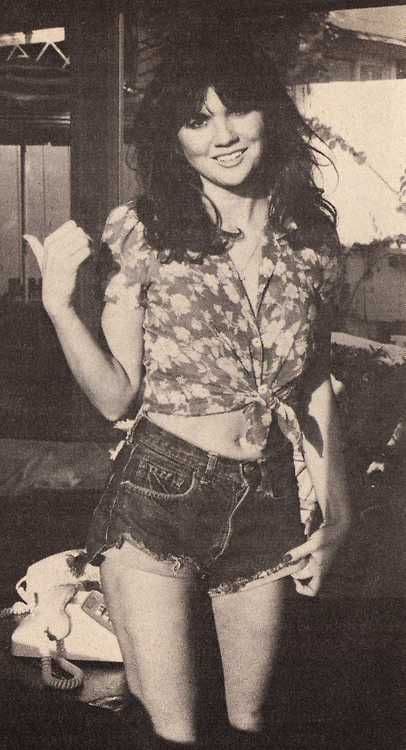
Hurt So Bad — a heartbreaking collision of strength, longing, and the wound that never fully closes
There is a particular kind of pain that only the greatest voices can carry — a pain that trembles without breaking, that glows even as it wounds. When Linda Ronstadt recorded “Hurt So Bad” for her 1980 album Mad Love, she stepped into that fragile place with the fearlessness only she possessed. The song, originally a 1965 hit for Little Anthony & The Imperials, had already lived one lifetime. But in Ronstadt’s hands, it became something rawer, sharper, and more bruised — a confession wrapped in fire.
Here are the essential facts woven gently into the story:
- Released in 1980, Ronstadt’s version of “Hurt So Bad” became a major hit.
- It climbed to No. 8 on the Billboard Hot 100, marking one of her biggest chart successes of the era.
- The song anchored the album Mad Love, itself a bold shift into new wave and rock textures.
- Ronstadt’s interpretation remains the most commercially successful cover of the song’s long history.
But charts only tell part of the tale. The deeper truth of “Hurt So Bad” lies in the emotional excavation Ronstadt performs — a kind of emotional honesty that cuts through decades with startling clarity.
From the first trembling lines, she sounds like someone standing at the doorway of an old love, overwhelmed not by nostalgia but by the sting of recognition. This isn’t innocent romance; this is the pain of meeting the past face-to-face and realizing the wound never fully healed. Her voice, at once steely and vulnerable, carries that contradiction beautifully. Every phrase feels like an attempt to steady herself, even as the hurt keeps rising.
The shift in her career at this time also adds weight to the song’s emotional meaning. Coming off a series of massive successes in the ’70s, Ronstadt could have stayed comfortably within her soft-rock, country-rock world. Instead, Mad Love thrust her into a new sound — sharper edges, harder rhythms, and emotional tension that felt closer to the bone. “Hurt So Bad” became the emotional centerpiece of that transformation.
And yet, for all its musical evolution, the song remains deeply human.
It speaks to the universal experience of running into someone whose memory still breathes inside you. That sting — the sudden tightening of the heart, the painful familiarity — Ronstadt captures it with devastating exactness. It’s not dramatic heartbreak; it’s the quieter, more complicated ache of remembering how deeply you once loved, and how vulnerable that made you.
Listeners who lived through the era felt this instantly.
Her performance didn’t just reinterpret a classic — it reopened a feeling many people had tucked away under the layers of time. There is something about her phrasing, the way her voice strains ever so slightly at the edge of a note, that brings back memories of love you once thought you were done feeling. Ronstadt doesn’t simply sing hurt; she inhabits it.
And perhaps that is why this version endures.
“Hurt So Bad” becomes, in her voice, a kind of emotional mirror. It reflects the times we’ve stood in front of someone we tried to forget. It reflects the tremble in the chest, the rush of old memories, the strange mix of longing and regret. For older listeners especially, the song lands not as a performance but as a lived truth — something recognized rather than merely heard.
By the time the final chorus rises, Ronstadt has taken us through the full terrain of heartbreak: memory, shock, denial, tenderness, and finally the quiet acceptance that some loves never quite disappear.
And that is the song’s enduring power.
It reminds us that time may soften many edges, but a few loves — the ones that shaped us, broke us, taught us — still hurt, even after all the years. And somehow, in Linda Ronstadt’s soaring, aching voice, that lingering pain feels both unbearable and beautifully familiar.