
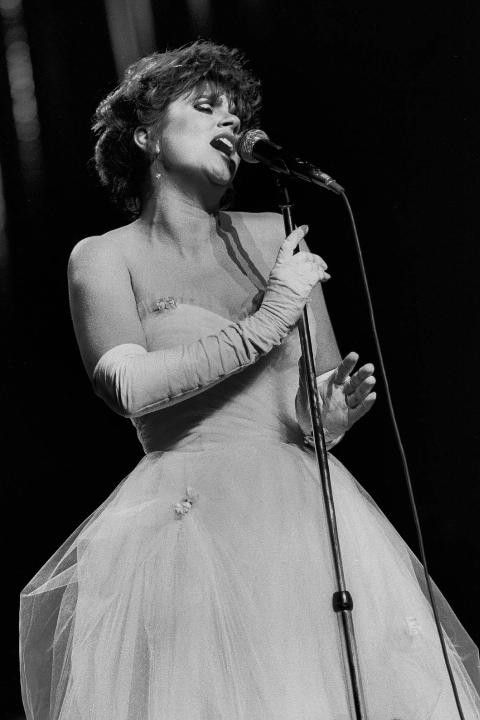
Por Un Amor (For a Love) — when longing becomes prayer and a voice crosses every border of the heart
There are songs that do not simply tell a story — they confess. “Por Un Amor”, as sung by Linda Ronstadt, is one of those rare performances where emotion feels older than the singer herself, as if the song had been waiting patiently for the right voice to carry its sorrow. Recorded for her landmark 1987 album Canciones de Mi Padre, this interpretation did not chase the pop charts as a single, yet it arrived wrapped in historic success. The album itself reached No. 1 on the Billboard Top Latin Albums chart, climbed to No. 21 on the Billboard 200, and went on to win the Grammy Award for Best Mexican-American Performance. More importantly, it restored a cultural memory that many feared was fading.
“Por Un Amor” is a traditional ranchera song written by Gilberto Parra Paz, a composer known for lyrics steeped in heartbreak, devotion, and emotional surrender. Long before Ronstadt ever sang it, the song lived in cantinas, family gatherings, and late-night radios across Mexico — a lament from the soul of someone willing to suffer everything for a love. What Linda Ronstadt did was not to modernize it, but to honor it — faithfully, humbly, and with profound respect.
The story behind her decision to record Canciones de Mi Padre is inseparable from the meaning of this song. At the height of her mainstream success — after rock anthems, country ballads, and arena tours — Ronstadt chose to look backward, toward her Mexican heritage. It was a deeply personal risk. She did not speak Spanish fluently, and many in the industry doubted whether a Spanish-language album of traditional songs could survive in the commercial marketplace. Yet she persisted, driven not by trends, but by memory — the sound of her father singing these songs at home, the emotional gravity they carried in her family.
When Ronstadt sings “Por un amor me siento herido” (“For a love, I feel wounded”), she does so without theatrical excess. Her voice remains controlled, almost restrained, allowing the sorrow to speak for itself. This is not youthful heartbreak; it is dignified pain. The kind that does not ask for pity, only understanding. The melody rises and falls like breath held too long, and every phrase feels deliberate, as if she knows the weight each word carries.
What makes her performance extraordinary is the balance between strength and vulnerability. Ronstadt does not try to sound like a ranchera singer — she becomes one by stepping aside and letting the song lead. Her clear soprano brings an aching purity to the lyric, while the mariachi arrangement surrounds her like a slow-moving tide of grief. Trumpets cry, strings ache, and beneath it all is the quiet acceptance that love, once lost, leaves a permanent mark.