
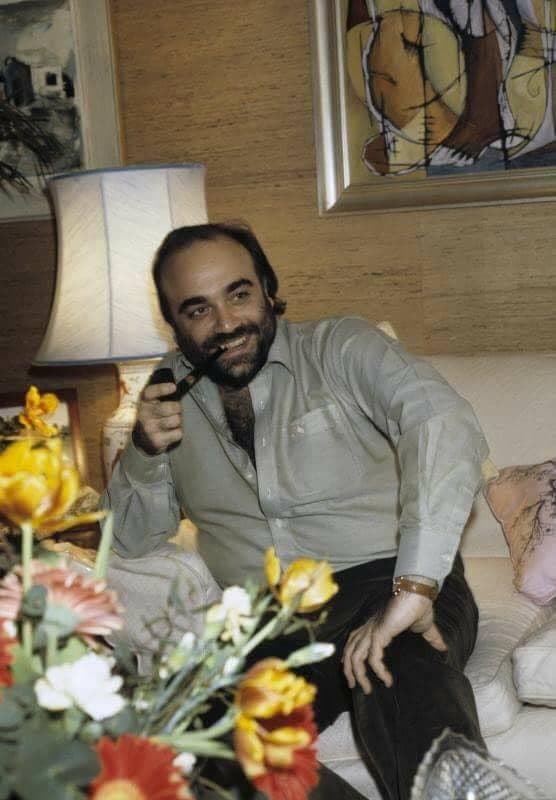
A timeless, heart-wrenching ballad of farewell and the enduring hope of reunion.
The year is 1973. For those of a certain age, it was a time of flared trousers, vinyl records, and a slow, gentle turning of the seasons that seemed to last forever. Into this world of soft-focus nostalgia came a sound that was both entirely new and somehow deeply familiar. It was the voice of Demis Roussos, a man whose larger-than-life presence was matched only by the haunting, almost ethereal quality of his falsetto. And with that voice, he delivered a song that would become an anthem for a generation: “Goodbye, My Love, Goodbye”.
This wasn’t just a song; it was a phenomenon, particularly across continental Europe where its impact was monumental. The single, released in early 1973, wasn’t a slow burn but a supernova. It soared to the coveted number one position in Germany, Switzerland, Belgium, and Spain, cementing its place in the pop culture tapestry of the decade. While it didn’t achieve the same commercial peak in the UK or the US, its success in these key markets made Demis Roussos an international star and a figure synonymous with the tender, romantic ballads of the era. The song’s success was so profound that it became a multi-million seller, a testament to its universal appeal and the powerful emotion it evoked.
The beauty of “Goodbye, My Love, Goodbye” lies in its deceptively simple, yet profoundly resonant, message. At its core, it is a classic farewell song, a poignant account of a lover’s departure. But the true genius of the lyrics, penned by Klaus Munro and Mario Panas (a pseudonym for producer Leo Leandros), is the glimmer of hope woven into the fabric of the sorrow. The repeated refrain, “As long as you remember me, I’ll never be too far,” transforms the goodbye from a final, heartbreaking end into a promise. It’s not a mournful dirge but a declaration of enduring connection, a belief that love can transcend physical distance and linger in the realm of memory and dreams.
For so many who came of age during that time, this song was the soundtrack to first loves and first goodbyes. You can almost feel the chill of a lonely train station platform or the damp mist of an airport tarmac as you listen. It speaks to the innocence of a time when communication wasn’t instantaneous, and a long-distance relationship meant waiting for a letter or an expensive, crackly phone call. The longing expressed in the song was a palpable, shared experience. The lyrical plea to “hold me in your dreams ’til I come back to you” was not just poetry; it was a mantra for anyone separated from a loved one.
It’s impossible to separate the song from the artist. Demis Roussos himself was an unforgettable figure. His signature kaftans and distinct, almost operatic vocal style were a far cry from the rock and folk movements dominating the airwaves. He was a troubadour from another land, a voice that carried the warmth and melancholic soul of Greece to the rest of the world. “Goodbye, My Love, Goodbye” was a cornerstone of his 1973 album, Forever and Ever, and its success defined the sound and sentiment he would carry throughout his celebrated career. For those who hear its opening bars today, it’s not just a song; it’s a doorway to a different time, a sweet and sorrowful memory whispered on the wind.