
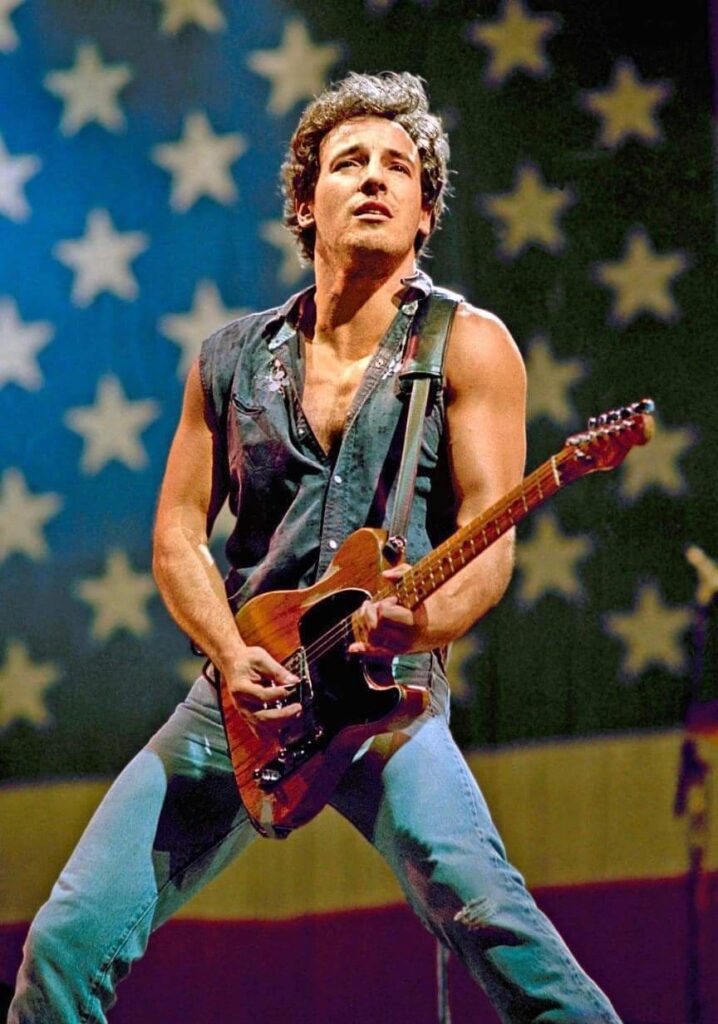
The song is a romantic, cinematic invitation to a young woman to escape the dead-end trappings of small-town life.
There’s a reason some songs stick with you, not just for a moment, but for a lifetime. They become the soundtrack to your memories, a time capsule of a feeling you can revisit whenever you need to. And few songs capture that particular ache and defiant hope of youth quite like Bruce Springsteen’s “Thunder Road.” It’s more than a song; it’s a cinematic poem, a desperate plea, and a promise whispered in the twilight.
Released as the opening track on the monumental 1975 album, Born to Run, “Thunder Road” set the stage for what was to come, a grand statement of purpose from a songwriter who was fighting to be heard. At the time, Springsteen was on the brink, his first two albums having earned critical praise but failed to achieve widespread commercial success. He was under immense pressure to deliver, and with Born to Run, he didn’t just deliver—he created a masterpiece. While “Thunder Road” was never a substantial chart single itself, the album it heralded climbed to No. 3 on the Billboard Top LPs & Tape chart, a testament to the collective power of its songs. It’s an interesting paradox: a song so universally beloved, so ingrained in the fabric of rock history, that it didn’t need a high chart position to cement its legacy. Its success was measured in the hearts it captured, not the numbers on a list.
The story behind the song is as evocative as the lyrics themselves. Springsteen has often said the title was inspired by a poster for a 1958 Robert Mitchum movie he’d never seen, but the name “Thunder Road” just resonated. It’s a road that doesn’t exist on any map, a metaphor for the last-ditch attempt to break free. The song’s central characters, the narrator and a young woman named Mary, are trapped in a “town full of losers.” They’re not looking for a savior, but a partner in crime, someone to “case the promised land” with. The famous, debated opening line—”The screen door slams, Mary’s dress sways“—immediately draws you into a deeply personal, almost voyeuristic scene. While for years the official lyrics said “waves,” Springsteen’s long-time manager, Jon Landau, finally settled the debate, confirming that the Boss has always sung “sways,” a subtle but crucial detail that adds to the song’s intimate, quiet desperation.
Lyrically, “Thunder Road” is a tapestry of vivid imagery and raw emotion. It’s a love song that’s not really about love, but about shared loneliness and the pursuit of a bigger life. The narrator offers Mary not a hero’s rescue, but a flawed, genuine redemption “beneath this dirty hood.” He acknowledges her pain, the “ghosts in the eyes of all the boys you sent away,” and the broken promises of a life she’s trying to outrun. The song’s power lies in its recognition that true freedom isn’t just about escape; it’s about making a choice. The “wings” of their innocence are traded for the “wheels” of a car, a vehicle for their destiny. It’s an invitation to a ride that isn’t free, a journey that demands courage and faith in the unknown. This song feels like a last chance, a desperate gamble that, for a moment, makes everything possible. For anyone who’s ever felt stuck, ever yearned for something more than what their small town could offer, “Thunder Road” is not just a song; it’s a mirror.