
“Rolling Thunder Revue”: A Poetic Odyssey Through a Nation’s Soul
Ah, remember those days? The air crackled with a different kind of electricity, a tangible sense of change humming beneath the surface of everyday life. If you were there, you felt it; if you weren’t, you’ve surely heard the echoes. And at the heart of much of that seismic shift, both politically and artistically, stood a figure whose very name became synonymous with an era: Bob Dylan. But even the most towering figures sometimes find their most profound expressions in collaboration, in the give-and-take of shared artistry. And so it was with the Rolling Thunder Revue, a traveling carnival of musical brilliance that, while not a conventional single or album charting in the typical sense, became a legendary chapter in American music history. Its essence, its spirit, is what we remember, and it’s inextricably linked to the evocative live performances and recordings that emerged from it.
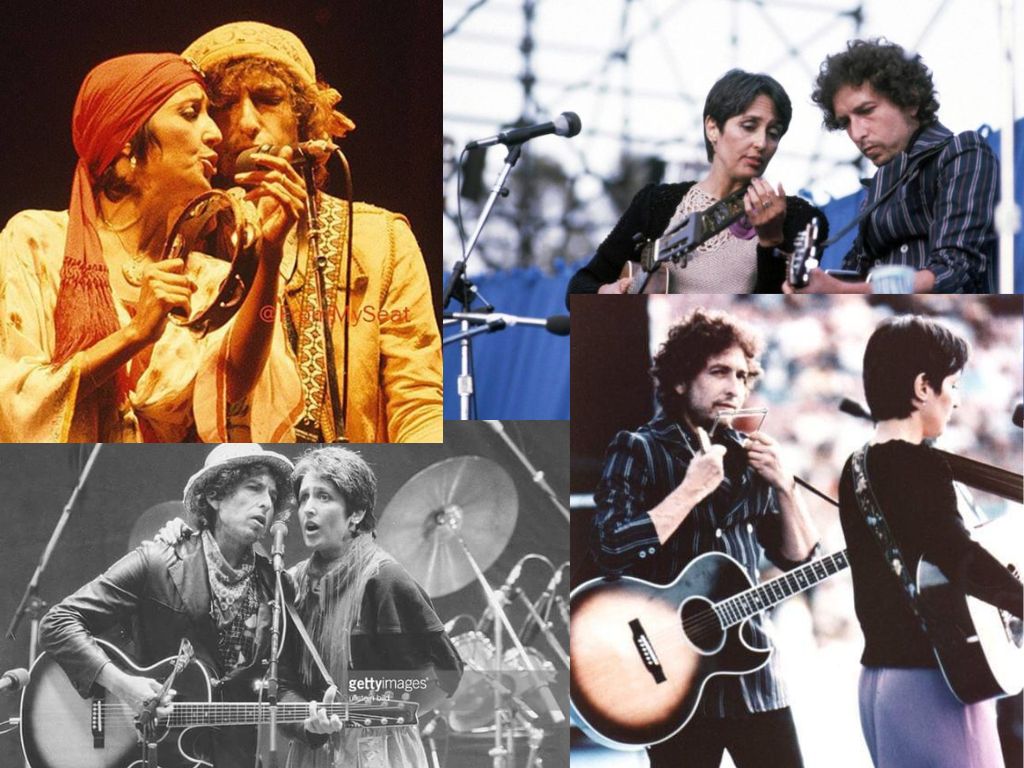
The Rolling Thunder Revue wasn’t a neatly packaged studio release designed to climb the Billboard charts; it was a phenomenon, a living, breathing testament to a particular moment in time. Launched in the fall of 1975, just as America was grappling with the aftermath of Vietnam and the Watergate scandal, the Revue was Dylan’s audacious answer to stadium rock, a deliberate return to a more intimate, spontaneous form of performance. He assembled an extraordinary cast of musicians and poets – a veritable who’s who of counterculture icons and unsung heroes – including the incomparable Joan Baez, his former lover and a voice that could melt glaciers and stir revolutions. The “story behind it,” then, isn’t a simple tale of songwriting inspiration, but a complex tapestry woven from Dylan’s desire to reconnect with his audience on a more personal level, to challenge the growing commercialism of the music industry, and perhaps, to recapture some of the freewheeling spirit of his earlier folk days. It was a pilgrimage, a carnival, a commune on wheels, crisscrossing the Northeast, playing in smaller venues, often without much advance notice, inviting a sense of discovery and shared experience that felt utterly unique.
The meaning of the Rolling Thunder Revue goes far beyond the sum of its individual parts. It was, in many ways, a reflection of America itself in the mid-1970s – a nation bruised but resilient, yearning for authenticity and connection. For Dylan, it was a period of immense creative ferment, a rebirth of sorts after a few years of more introspective work. The spontaneous collaborations, the shifting line-up of performers, the often-unpredictable setlists – all contributed to a feeling of raw, unvarnished artistry. And at the heart of many of those unforgettable nights were the duets with Joan Baez. Their voices, once intertwined in the early Greenwich Village folk scene, re-emerged with a renewed depth and complexity. Listen to them now, and you can almost feel the weight of their shared history, the triumphs and heartbreaks, the personal and political narratives that unfolded between them. Their performances, particularly of songs like “Blowin’ in the Wind” or “The Times They Are a-Changin’,” were not just renditions; they were living documents, imbued with the resonance of their individual legacies and their intertwined past. They served as a poignant reminder of the power of music to reflect, to heal, and to galvanize.
The Rolling Thunder Revue wasn’t about hit singles; it was about the collective experience, the ephemeral magic of live performance, and the enduring power of artistic collaboration. It spawned a live album, “Hard Rain” (1976), which captured some of its raw energy, and later, the sprawling box set “The Rolling Thunder Revue: The 1975 Live Recordings” (2019), which offered a more comprehensive glimpse into its vast musical scope. Beyond the recordings, the Revue became a cultural touchstone, influencing countless musicians and artists, and serving as a powerful testament to the enduring spirit of artistic exploration. It was a time when music felt less like a commodity and more like a shared conversation, a communal gathering around the campfire of creativity. And for those of us who lived through it, or even just heard the stories, the Rolling Thunder Revue remains a vivid, shimmering memory, a testament to a time when art and life truly intertwined. It evokes a feeling of yearning for simpler times, perhaps, but also a deep appreciation for the unbridled passion and artistic courage that defined that extraordinary chapter in music history.