
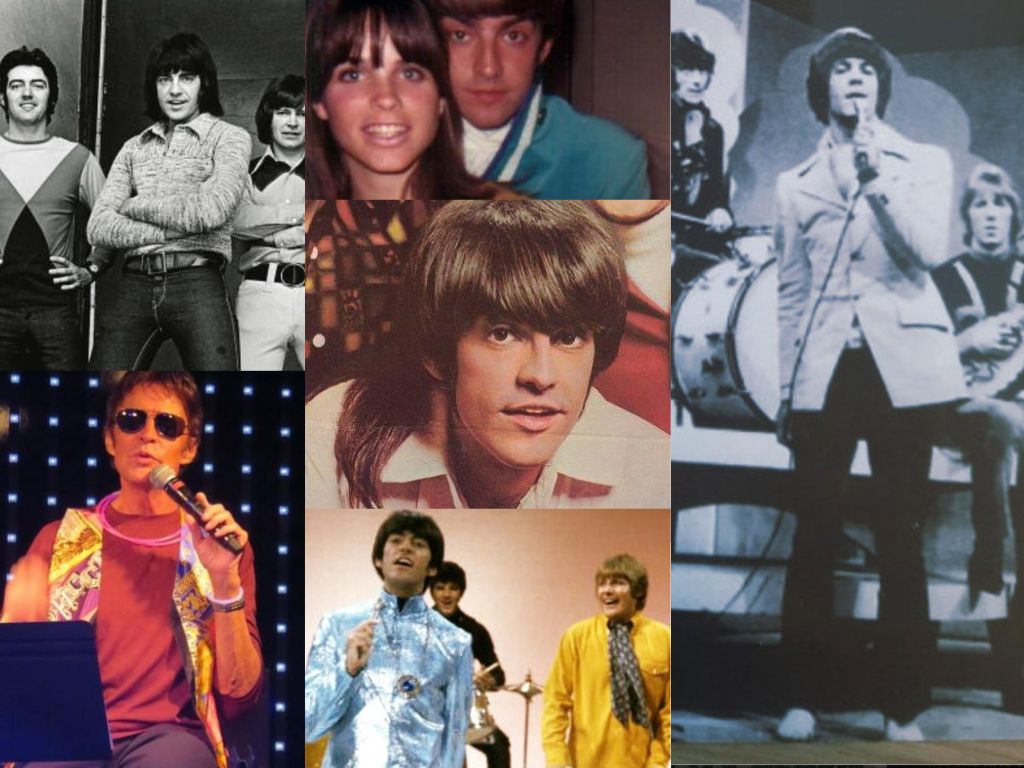
“Are You Old Enough”: A Timeless Question Echoing Through Generations
Ah, Mark Lindsay. Just the name itself conjures up images of a golden era in music, a time when rock and roll was still finding its boundless voice, and television shows like “Where The Action Is” brought the energy of live performance right into our living rooms. While many of us remember Lindsay as the dashing frontman of Paul Revere & The Raiders, a band synonymous with Revolutionary War-era costumes and exuberant garage rock, his solo career, though perhaps less heralded by the masses, holds a special place in the hearts of those who truly appreciate the depth and versatility of his artistry.
Among his solo endeavors, one song that often surfaces in the quiet corners of memory is “Are You Old Enough.” Released in October 1971, this track made a modest but respectable showing on the Billboard Hot 100, peaking at number 87. For those of us who lived through that vibrant decade, chart positions weren’t always the sole measure of a song’s impact. Sometimes, a melody or a lyric simply resonated, finding its way into the fabric of our personal soundtracks, irrespective of its commercial climb.
“Are You Old Enough” is one such song, carrying a surprisingly nuanced message beneath its seemingly playful exterior. At first listen, it might appear to be a somewhat whimsical, even “funky, somewhat silly 1970s pop-rock tune,” as some critics have described it. The catchy chorus, “Are you old enough to be young enough / To be bad enough to be good / Are you old enough to be young enough / To do the things you shouldn’t when you should,” certainly lends itself to that interpretation. It invites a smile, a nod, and perhaps a moment of self-reflection on youthful indiscretions and the eternal dance between rebellion and responsibility.
However, delve a little deeper into the genesis of the song, and a more profound narrative emerges. The true story behind “Are You Old Enough,” penned by the talented Alan O’Day, reveals a more serious, albeit veiled, underlying theme. According to Mark Lindsay himself, the song was initially conceived with a subtle, cautionary message. It was a “tongue-in-cheek reference to long hair music, meaning classical music,” but its core intention, unbeknownst to Lindsay at the time of recording, was an anti-drug message. It was written, in part, as a warning to a friend of the songwriters who was purportedly dabbling in substances. The lyrics, with their seemingly lighthearted questions about being “bad enough to be good” or doing “things you shouldn’t when you should,” were a clever, almost coded, way of addressing the dangers of excess and the allure of forbidden experiences.
For someone like Mark Lindsay, who describes himself as “naive” and a “kid from Idaho” at the time, the full gravity of the song’s meaning might not have immediately registered. He simply interpreted the lyrics as a reflection on the evolving nature of fun and freedom, the idea that “it’s harder to have fun than it used to be.” This innocent interpretation, however, doesn’t diminish the song’s enduring charm. In fact, it adds another layer to its appeal. For older listeners, it evokes a sense of nostalgia for a simpler time, when the world, and perhaps even our understanding of its complexities, felt a bit more straightforward. We recall our own youth, the questions we pondered about boundaries and self-discovery, and the sometimes-blurry line between youthful exuberance and reckless abandon.
“Are You Old Enough” isn’t a preachy anthem; it’s a gentle, melodic rumination that invites us to consider the passage of time, the wisdom gained, and the lingering echoes of our younger selves. It reminds us that while the questions may remain, our answers, shaped by the years and experiences, are constantly evolving. It’s a testament to Mark Lindsay’s ability to deliver a song with warmth and sincerity, allowing it to resonate on multiple levels, much like the best tunes from that unforgettable era. So, as the gentle strains of Lindsay’s voice fill the air, let’s take a moment to reflect on the question posed within the song, and perhaps, find a bit of our own youth reflected in its timeless melody.