
“If You Could Read My Mind”: A Melancholy Journey Through Unspoken Desires and Lost Connections
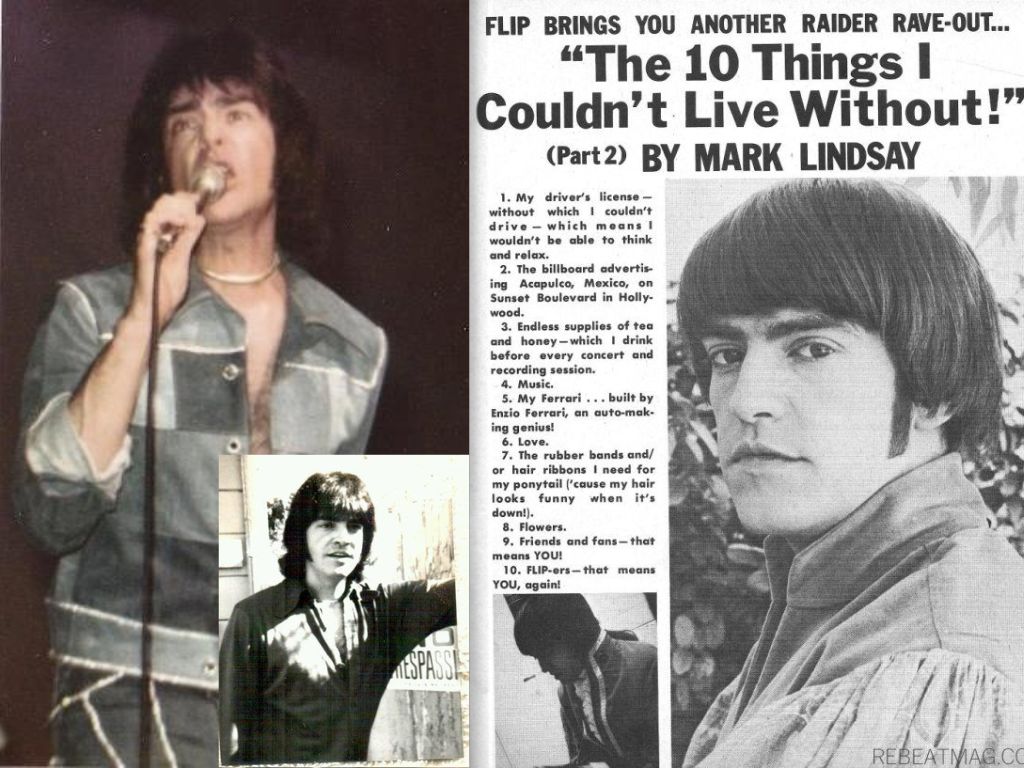
Ah, the early 1970s. A time when the echoes of the ’60s were still reverberating, yet a new, more introspective sound was beginning to emerge. It was a period of transition, a turning point where raw energy began to yield to a more contemplative melancholy. And right there, amidst that shift, we find Mark Lindsay, the charismatic frontman of Paul Revere & The Raiders, venturing into solo territory with a song that would become a quiet, enduring classic: “If You Could Read My Mind.”
Now, for those of us who recall Lindsay primarily for his dynamic stage presence and the raucous energy of The Raiders‘ hits like “Kicks” or “Hungry,” his rendition of “If You Could Read My Mind” might have seemed a surprising departure. Yet, it was precisely that unexpected vulnerability that lent the song such power. Released in 1971, this poignant ballad, penned by the masterful Canadian troubadour Gordon Lightfoot, found its way onto Lindsay’s third solo album, “You’ve Got a Friend.” While Lightfoot’s original recording of the song had already made a significant impact, reaching number 5 on the U.S. Billboard Hot 100, Lindsay’s take offered a different, equally compelling interpretation. While Lindsay’s version didn’t achieve the same stratospheric heights as Lightfoot’s, it still resonated with listeners, a testament to the song’s universal appeal and Lindsay’s heartfelt delivery. It became a notable addition to his post-Raiders solo career, showcasing a depth that perhaps some had overlooked in his more boisterous days.
The true genius of “If You Could Read My Mind” lies in its exquisite simplicity and profound emotional resonance. It’s a song that speaks to the unspoken, the unfulfilled desires, and the aching chasm that can sometimes exist between two people, even in the most intimate of relationships. Gordon Lightfoot reportedly wrote the song following a difficult period in his own marriage, and that raw, personal experience permeates every lyric. The imagery is vivid, almost cinematic: “Just like an old time movie / ‘Bout a ghost from a wishin’ well / In a castle dark or a fortress strong / With chains upon my feet.” This isn’t just about a lover’s quarrel; it’s about a soul trapped, yearning for connection but unable to articulate the depth of its longing.
For listeners of a certain age, this song taps into a wellspring of shared experience. Who among us hasn’t, at some point, wished we could peer into the mind of another, to truly understand their thoughts, their fears, their unvoiced affections? The beauty of Lightfoot’s lyrics, and Lindsay’s gentle, earnest delivery, is that they articulate this universal yearning with such tender precision. It’s the quiet ache of a love that’s slipping away, the frustration of miscommunication, and the profound sadness of realizing that sometimes, despite our best efforts, we simply can’t bridge the gap.
Mark Lindsay, with his distinctive vocal timbre, brought a particular warmth and sincerity to the track. While Lightfoot’s version is often lauded for its introspective, almost austere beauty, Lindsay’s rendition carries a slightly more approachable, perhaps even more vulnerable, quality. He wasn’t trying to outdo Lightfoot; rather, he was offering his own empathetic connection to the song’s core message. It’s a reminder that a truly great song can be interpreted in myriad ways, each shedding a new light on its inherent truths.
Listening to “If You Could Read My Mind” today, it’s impossible not to be transported back. Perhaps it conjures images of quiet evenings, thoughtful drives, or moments of profound reflection. It’s a song that invites you to slow down, to listen not just to the notes and words, but to the emotions swirling beneath the surface. It speaks of the fragile dance of relationships, the constant push and pull between independence and intimacy, and the quiet tragedy of words left unsaid. It’s a song for anyone who has ever loved deeply, lost profoundly, or simply wondered what lies hidden in the silent spaces of another’s heart. And in Mark Lindsay’s rendition, we find a tender, empathetic voice guiding us through that timeless, universal journey.