
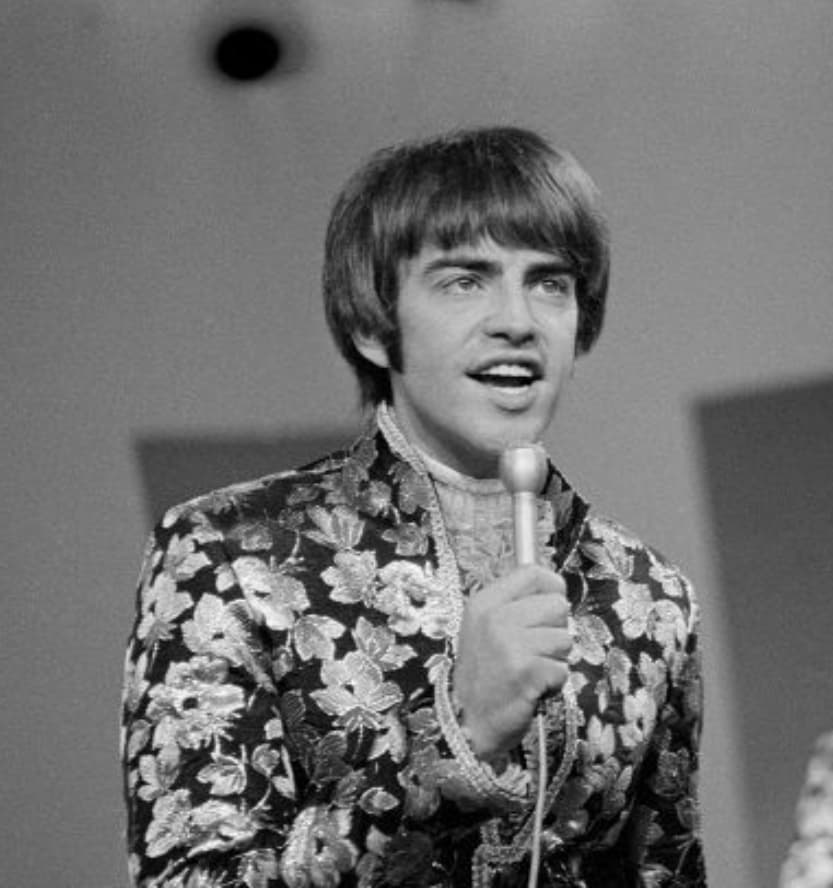
Leaving on a Jet Plane — a familiar goodbye, sung by a voice stepping out on his own
There are songs that feel like letters never sent, and “Leaving on a Jet Plane” is one of them — a quiet farewell wrapped in melody, heavy with the weight of things left unsaid. When Mark Lindsay recorded his version of this well-traveled song, it carried a particular resonance: the sound of a familiar voice stepping away from one chapter of life and into another, uncertain but necessary.
Originally written by John Denver in the mid-1960s, “Leaving on a Jet Plane” had already entered popular consciousness long before Lindsay touched it. The song reached its most famous moment in 1969, when Peter, Paul and Mary took it to No. 1 on the Billboard Hot 100 — a bittersweet anthem of departure that seemed to capture the emotional climate of the era. By the time Mark Lindsay recorded his own interpretation in the early 1970s, the song was no longer new, but its meaning had only deepened.
This matters, because Lindsay was at a turning point himself. Known to the world as the voice and face of Paul Revere & The Raiders, he had spent much of the 1960s in the spotlight — polished, uniformed, and tightly connected to a band identity. His solo work, including his recording of “Leaving on a Jet Plane,” reflected a quieter ambition: to be heard not as an image, but as a storyteller.
Unlike the chart-dominating folk harmony of Peter, Paul and Mary, Lindsay’s version leans inward. His delivery is restrained, almost conversational, as if the goodbye is being spoken softly so it won’t wake the house. The familiar lines — “Don’t know when I’ll be back again” — feel less like a dramatic promise and more like a confession. This isn’t the voice of someone chasing adventure. It’s the voice of someone who understands what departure costs.
What gives Lindsay’s interpretation its emotional weight is precisely what he does not change. He doesn’t modernize the song or reshape its structure. Instead, he lets the lyric stand, trusting its simplicity. In doing so, he aligns himself with the song’s original spirit — a meditation on love paused by distance, not broken by it. The jet plane is merely a symbol; the real journey is emotional, measured in heartbeats and memories.
For listeners who had grown older alongside Lindsay’s career, this version carried added meaning. Many had experienced their own departures by then — leaving home, leaving love, leaving certainty behind. Hearing a once-familiar pop figure sing about separation with such understatement felt deeply personal. It was no longer about youth and excitement, but about responsibility, sacrifice, and the quiet bravery of walking away when staying would be easier.
Though Mark Lindsay’s “Leaving on a Jet Plane” did not define the song’s legacy in chart terms, it earned its place through sincerity. It stands as a reflective pause in his career — a moment when a well-known voice chose vulnerability over volume. In the context of his solo work, the song feels almost autobiographical: a man acknowledging that change, however painful, is unavoidable.
Decades later, the song still lands the same way. It reminds us that goodbyes are rarely dramatic. Most are whispered at doorways, carried in glances, folded into promises we hope will hold. And in Lindsay’s gentle reading, “Leaving on a Jet Plane” becomes what it has always been at its core — not a song about travel, but about the fragile hope that love will wait, even as time moves us on.