
An Anthem of Unrequited Love and Boundless Devotion
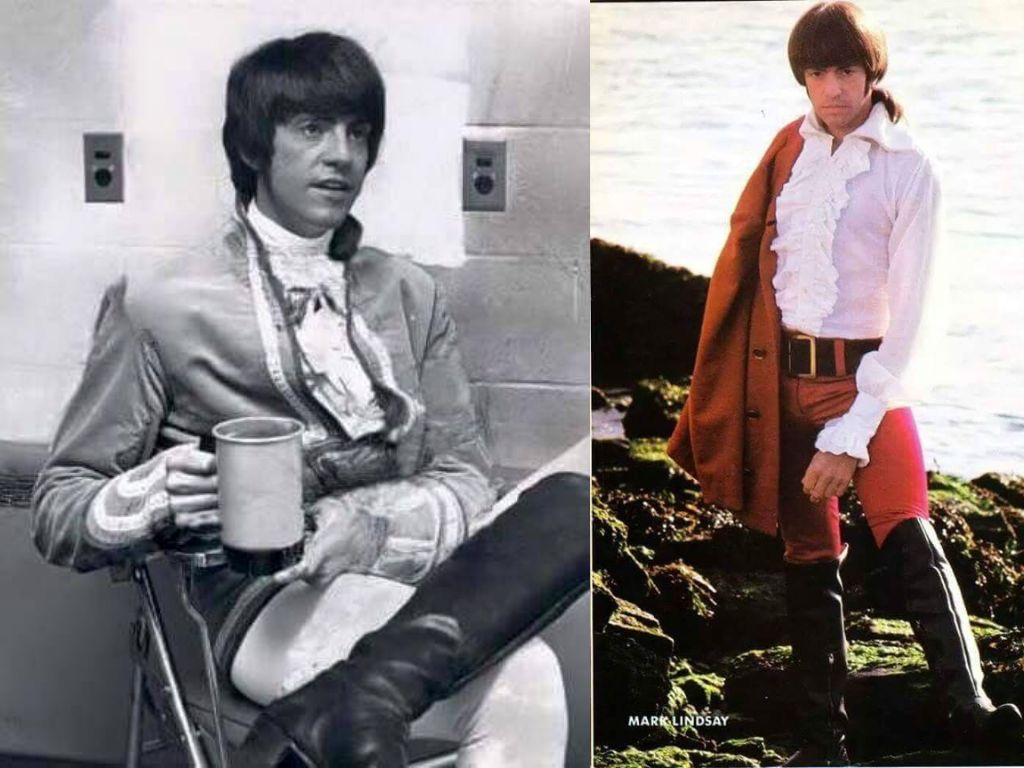
Ah, Mark Lindsay, a name that surely stirs the memory for anyone who lived through the vibrant, shifting tides of 1960s and 70s rock and roll. While many will immediately connect him to the flamboyant, revolutionary-era costumes and rebellious swagger of Paul Revere & The Raiders, it’s his solo work that often offered a more introspective, sometimes even vulnerable, side to this quintessential frontman. And among those solo endeavors, his rendition of The Who‘s “I Can See for Miles” stands as a fascinating, almost haunting, footnote.
Now, before we delve into Lindsay‘s particular take, it’s crucial to acknowledge the colossal shadow cast by the original. The Who‘s “I Can See for Miles,” penned by the prodigious Pete Townshend, was an absolute powerhouse. Released in 1967 as the only single from their groundbreaking concept album, The Who Sell Out, it was meant to be their definitive smash. Townshend, brimming with confidence, believed it was his “ace in the hole” that would “flatten all the opposition.” The song itself, steeped in a raw, almost sinister jealousy, tells the tale of a lover whose acute perception allows him to see through his partner’s deceptions, no matter how far away they might be. “I know you’ve deceived me, now here’s a surprise,” Daltrey snarls, “I know that you have ’cause there’s magic in my eyes. I can see for miles and miles and miles and miles and miles.” This lyrical intensity, coupled with The Who‘s signature explosive sound – Keith Moon‘s propulsive drumming, John Entwistle‘s rumbling bass, and Townshend‘s groundbreaking use of feedback and power chords – made it an immediate classic. Despite Townshend‘s high expectations for a chart-topping sensation, the single peaked at a respectable, though perhaps to him disappointing, No. 10 on the UK charts and No. 9 on the Billboard Hot 100 in the US. It was a testament to its raw power, a sound so “heavy” that it reputedly inspired Paul McCartney to write The Beatles‘ equally raucous “Helter Skelter.”
So, why would Mark Lindsay, a man known for his own string of chart successes with The Raiders (like “Kicks” reaching No. 4 and his solo hit “Arizona” hitting No. 10), choose to tackle such an iconic and distinctly Who song? It’s a curious choice, indicative of the era’s fluid musical landscape where artists often reinterpreted each other’s work, sometimes with surprising results. While there isn’t a widely publicized “story” behind Lindsay‘s decision to cover “I Can See for Miles” specifically, it likely speaks to his discerning ear for potent songwriting and his desire to explore different facets of his artistry beyond the established Raiders‘ sound. Lindsay was, after all, a prolific songwriter himself and someone deeply immersed in the rock scene. His solo career, which ran concurrently with his time in The Raiders before he fully departed in 1975, allowed him to experiment with a broader range of styles, from the more pop-oriented “Arizona” and “Silver Bird” to deeper, more reflective tracks.
For us, the older listeners who remember those days vividly, Lindsay‘s “I Can See for Miles” becomes a fascinating artifact. It’s not about outdoing The Who – that would be an impossible task. Instead, it offers a different perspective, a gentler, perhaps more melancholic, reading of Townshend‘s furious declaration of observational prowess. Where Daltrey‘s vocal was a snarl, Lindsay‘s might carry a hint of weary resignation. It’s a reminder of how a song, in the hands of a different artist, can transform, retaining its core meaning while taking on new shades of emotion. It transports us back to a time when artists weren’t confined to rigid genre boxes, when a voice like Mark Lindsay‘s could glide effortlessly from revolutionary rock anthems to more introspective interpretations, inviting us to see for miles into the heart of a classic, through a slightly different lens. It’s a moment of reflection on the fluidity of music, and the enduring power of a truly great song, no matter who is singing it.