
A Sun-Kissed Farewell to Summer and the Bittersweet Ache of Anticipation
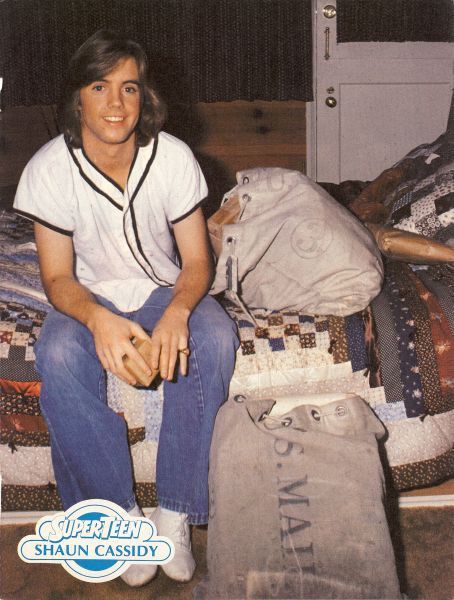
Ah, the 1970s. For many of us, it was a time of bell bottoms, roller skates, and the sweet, innocent melodies that poured from our transistor radios. The air was thick with the scent of possibility, and the soundtrack to our youthful days was often provided by the latest teen idol, a phenomenon that truly blossomed in that decade. Among the pantheon of heartthrobs who graced our bedroom walls and whispered through our headphones, one name shone brightly for a fleeting, yet indelible, period: Shaun Cassidy.
While his older brother, David, had already cemented his place as a pop culture icon, Shaun carved out his own niche, charming audiences with his boyish good looks, infectious smile, and a knack for delivering catchy, wholesome tunes. And among those tunes, one particular song often comes to mind, especially as the summer days begin to wane and the promise of autumn hangs in the air: “Carolina’s Comin’ Home.”
Released in 1977, a year that marked the peak of Shaun’s musical career, “Carolina’s Comin’ Home” wasn’t just another track on an album; it was a wistful embrace of longing and the eager anticipation of a reunion. This gem found its home on his sophomore album, aptly titled “Born Late,” a record that capitalized on the momentum of his self-titled debut. While it might not have reached the stratospheric heights of his chart-topping smash, “Da Doo Ron Ron,” or the equally popular “That’s Rock ‘n’ Roll,” “Carolina’s Comin’ Home still managed to resonate with fans, landing at a respectable No. 70 on the Billboard Hot 100. For a young artist in the highly competitive pop landscape of the late 70s, a Top 100 hit was certainly nothing to scoff at, cementing his presence on the airwaves and in the hearts of his burgeoning fanbase. It’s the kind of song that, even today, can transport you back to those sun-drenched afternoons, waiting by the phone or gazing out the window, counting down the moments until someone special arrived.
The story behind “Carolina’s Comin’ Home” is, in many ways, a universal one, woven from the threads of distance and affection. It speaks to that familiar ache in the heart when someone you care deeply about is away, and the sheer joy and relief that washes over you at the thought of their return. While there isn’t a dramatic, well-publicized tale of Shaun himself waiting for a “Carolina” to come home, the song’s brilliance lies in its ability to tap into that shared human experience. It’s a narrative that anyone who has ever felt the pang of separation, be it from a lover, a dear friend, or a family member, can instantly connect with. Imagine the scene: a long, hot summer drawing to a close, and the narrator, perhaps a young man, is envisioning the moment his beloved Carolina will walk back into his life. The lyrics paint vivid pictures of a reunion, filled with tender gestures and unspoken promises. “She’s got that smile that drives me wild,” he sings, and you can almost see it, can’t you? That particular smile that only one person possesses, the one that makes your heart flutter.
The meaning of “Carolina’s Comin’ Home” is as straightforward as it is profound: it’s a song about the yearning for companionship and the sweet anticipation of a reunion. It’s about that specific kind of hope that blossoms when you know someone important is making their way back to you. More than just a love song, it’s a testament to the power of connection and the way absence truly does make the heart grow fonder. It’s a song that understands the quiet joy of waiting, the silent preparation of the heart, and the explosion of happiness when that wait is finally over. For those of us who grew up with this song, it evokes memories of simpler times, perhaps of young love blossoming, or of the excitement of a childhood friend returning from a summer vacation. It speaks to the innocence of youth, where the greatest concerns were often about who was coming home and when. It’s a nostalgic whisper of an era when a pop song could, with such gentle ease, capture the essence of human emotion and deliver it with a disarming sincerity that still resonates decades later.