
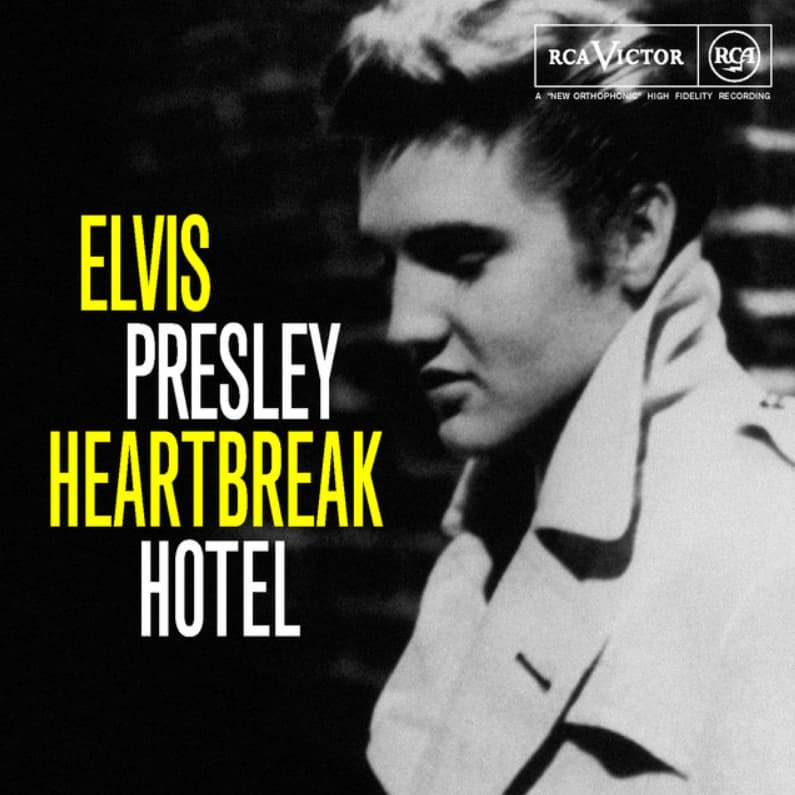
Heartbreak Hotel — the lonely room where rock ’n’ roll first bared its soul
From the instant “Heartbreak Hotel” begins, a chill runs through the room — a hollow guitar, a distant echo, and then Elvis Presley’s voice, young yet heavy with a sorrow far older than his years. This was the moment, in early 1956, when the world heard a new kind of loneliness. A new kind of music. A new kind of emotional truth that would break open the doors of rock ’n’ roll forever.
Released on January 27, 1956, Heartbreak Hotel quickly became Elvis’s first No. 1 hit on the Billboard pop chart. It dominated the country chart for months, crossed into the R&B listings, and rose to No. 2 in the UK. That kind of crossover success was almost unheard of at the time. But then again, nothing about this song — or the young man singing it — fit the old rules of the music world.
The darkness that sparked a classic
The seed of the song came from a tragic news story: a man who ended his life, leaving behind just one heartbreaking line — “I walk a lonely street.” It struck a chord with songwriters Tommy Durden and Mae Boren Axton, who imagined a place built for broken spirits: a shabby, shadowed hotel at the end of a lonely street, where hearts go to grieve.
Most artists refused to sing it. Too dark, they said. Too strange. Too sad.
But when Axton played it for Elvis — not once, but over and over — something in him recognized its truth instantly. He knew the feeling. He knew the longing. He could be the voice of that lonely man walking into the dim hallway of that figurative hotel.
In the Nashville studio, the atmosphere turned electric as Elvis shaped the song into something far more haunting than its writers had imagined. Scotty Moore’s guitar lines echoed like footsteps down a dark corridor. Bill Black’s bass slapped with a hollow thump, like a heart beating against an empty room. And Elvis — only 21 — sang with a kind of cracked, trembling ache that felt impossibly old.
A sound no one saw coming
When producers first heard the recording, some thought it was too strange to succeed: too much echo, too little polish, too heavy in mood. But what they dismissed as odd was exactly what listeners would crave.
Because “Heartbreak Hotel” didn’t just tell you about loneliness.
It sounded like loneliness.
The echo wasn’t just an effect — it was the room itself.
The space between Elvis’s words wasn’t silence — it was the weight of sorrow.
The pauses weren’t empty — they were the breath of someone trying not to break.
This was the first time many listeners had ever heard such emotional nakedness in a mainstream hit. Young people felt seen. Older listeners heard their own heartbreak reflected back at them. And music — especially rock ’n’ roll — was never as tidy again.
The legacy that lingers in the dark
The success of “Heartbreak Hotel” launched Elvis into a new stratosphere. Television appearances followed, stages erupted, fans screamed, and suddenly the shy boy from Tupelo became a cultural force the world had never witnessed before.
But beyond the fame, the gold records, and the headlines, something deeper remained.
This song — this strange, eerie, echo-soaked blues — spoke to a truth that crosses generations:
the unbearable weight of being alone.
the ache of being left behind.
the quiet nights when the world feels too big, and your room feels too small.
For those who heard it upon release, and for those who discover it decades later, “Heartbreak Hotel” still feels like a place we’ve all walked into at least once — a dim hallway of memory, a room where sorrow breathes softly, a corner of the heart where tears gather but never quite fall.
It is a song that doesn’t age because loneliness doesn’t age.
And whenever that first trembling guitar note begins again, we return — gently, almost willingly — to that lonely street, guided by a voice that understood heartbreak long before the rest of the world gave it a name.
 Great Songs