
The story of a man who gave up his quiet life for his wife’s urban dream, only to lose her to the glittering allure of the big city.
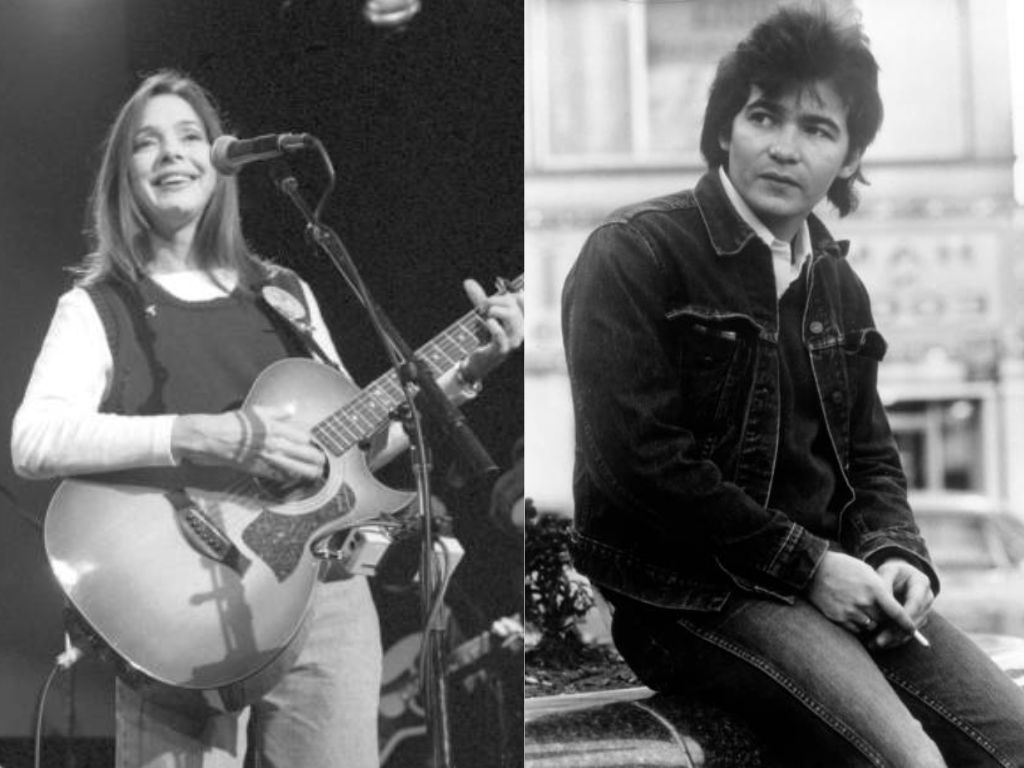
The version of “Streets of Baltimore” by Nanci Griffith and John Prine, found on Griffith’s 1998 album, Other Voices, Too – A Trip Back to Bountiful, is a profoundly moving testament to the enduring power and melancholy of classic country storytelling. While this particular duet did not chart as a single on the major Billboard country charts—as the album was a collection of covers and follow-up to her Grammy-winning tribute album—the original song, written by the legendary songwriting duo of Tompall Glaser and Harlan Howard in 1966, was a significant hit for Bobby Bare. Bare’s rendition peaked at No. 5 on the Billboard Hot Country Singles chart that same year, cementing its place in the country canon.
This song is not merely a tune; it’s a devastating miniature play about sacrifice and disappointment. It narrates the tragic tale of a Tennessee farmer who sells his livelihood—the family farm—and moves to the unfamiliar city of Baltimore purely to grant his wife her wish. The opening lines immediately set a nostalgic, reflective tone: “Well I sold the farm to take my woman where she longed to be. / We left our kin and all our friends back there in Tennessee.” It’s a classic country setup: the country heart versus the city lights, the simple life traded for the complex allure of the metropolis. The farmer, in his devotion, feels a fleeting pride in giving her what she desires, even confessing, “And I kind of liked the Streets of Baltimore.”
The true meaning, however, emerges when the city’s bright, distracting glamour reveals a deep flaw in their love. He gets a factory job, works hard, and tries to build a serene new home. But his wife, enthralled by the “city lights,” begins to love the Baltimore nightlife more than she loves the man who gave up everything for her. The ultimate betrayal isn’t an act of outright cruelty but a slow, soul-crushing realization: “Then I soon learned she loved those bright lights more than she loved me.”
The genius of having Griffith and Prine perform this cover lies in their shared gift for authentic, wistful folk-country delivery. Both artists are masters of the narrative ballad, their voices—Prine’s gravelly, world-weary baritone and Griffith’s sweet, clear, yet often melancholic soprano—lending a profound sense of lived experience to the farmer’s pain and the wife’s tragic, misplaced yearning. The song’s final verses, where the heartbroken man boards the same train back to Tennessee—alone—while his “baby walks the streets of Baltimore,” are a powerful expression of quiet defeat. It evokes memories of a time when men felt a duty to sacrifice for a partner’s happiness, and the pain when that ultimate sacrifice proves insufficient against the pull of a different kind of life. For older listeners, this song echoes the universal experience of love’s unequal bargains and the poignant recognition that sometimes, a partner’s true desire is a place, a feeling, or a dream, not the person who stands beside them. It’s a bittersweet reflection on what it means to be truly alone amidst a crowd.