
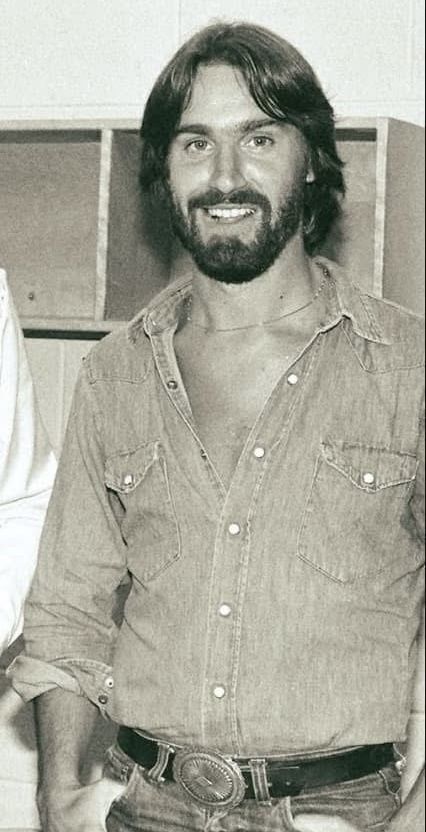
Dancing Shoes — a bittersweet reflection on love, distance, and the courage to let go
Among the quieter corners of Dan Fogelberg’s catalog, “Dancing Shoes” stands as a song of emotional maturity — gentle on the surface, yet deeply weighted with understanding. It appears on his 1977 album Nether Lands, a record often regarded as one of his most introspective and understated works. While “Dancing Shoes” was never released as a single and did not chart independently, Nether Lands itself reached No. 34 on the Billboard 200 upon its release, affirming Fogelberg’s steady place in American popular music during the late 1970s.
What makes “Dancing Shoes” endure has little to do with commercial success. Its strength lies in its emotional honesty — a quiet conversation set to melody, spoken not in anger or drama, but in acceptance.
By the time Nether Lands was recorded, Dan Fogelberg had already achieved significant recognition as a songwriter capable of blending folk, soft rock, and poetic introspection. Yet this album marked a noticeable shift. Written largely in isolation on the coast of Maine, Nether Lands reflects solitude, emotional distance, and the gradual realization that love does not always mean permanence. “Dancing Shoes” embodies this realization with remarkable grace.
The song tells the story of a relationship nearing its end — not because of betrayal or cruelty, but because two people are no longer moving to the same rhythm. When Fogelberg sings about one partner wanting to “put on dancing shoes,” it becomes a metaphor for a desire to move forward, to rediscover freedom, motion, and perhaps a different version of life. The narrator, meanwhile, stands still — not resentful, but aware. He understands that love sometimes requires stepping aside.
This is not a song about heartbreak in the traditional sense. It is about emotional clarity. The pain is present, but so is compassion. There is a quiet dignity in acknowledging that someone you love needs a different path — and loving them enough to let them take it.
Musically, “Dancing Shoes” is restrained and elegant. The arrangement is subtle, allowing the lyrics to breathe. Fogelberg’s voice, warm and unforced, carries a reflective tone that feels almost conversational. There is no attempt to overwhelm the listener. Instead, the song invites you to lean in — to listen closely, as if someone were sharing a personal truth late in the evening, when the world has gone still.
For listeners who have lived long enough to recognize the complexity of relationships, this song resonates deeply. It speaks to those moments when love does not fail, but changes. When staying becomes more painful than leaving. When caring means understanding rather than holding on.
In the broader context of Dan Fogelberg’s work, “Dancing Shoes” represents a songwriter unafraid of quiet endings. Unlike the sweeping nostalgia of “Leader of the Band” or the seasonal warmth of “Same Old Lang Syne,” this song lives in a more private emotional space. It does not seek resolution. It accepts ambiguity — a rare and honest stance in popular music.
There is also something timeless in its message. As years pass, many listeners find themselves revisiting this song with new understanding. What once sounded sad may later sound wise. What once felt distant may suddenly feel familiar. That is the mark of enduring songwriting — music that grows alongside its audience.
“Dancing Shoes” does not ask us to celebrate or mourn. It asks us to reflect. To remember that love can be sincere even when it ends, and that sometimes the most loving act is to allow someone the freedom to keep dancing — even if we are no longer beside them.