
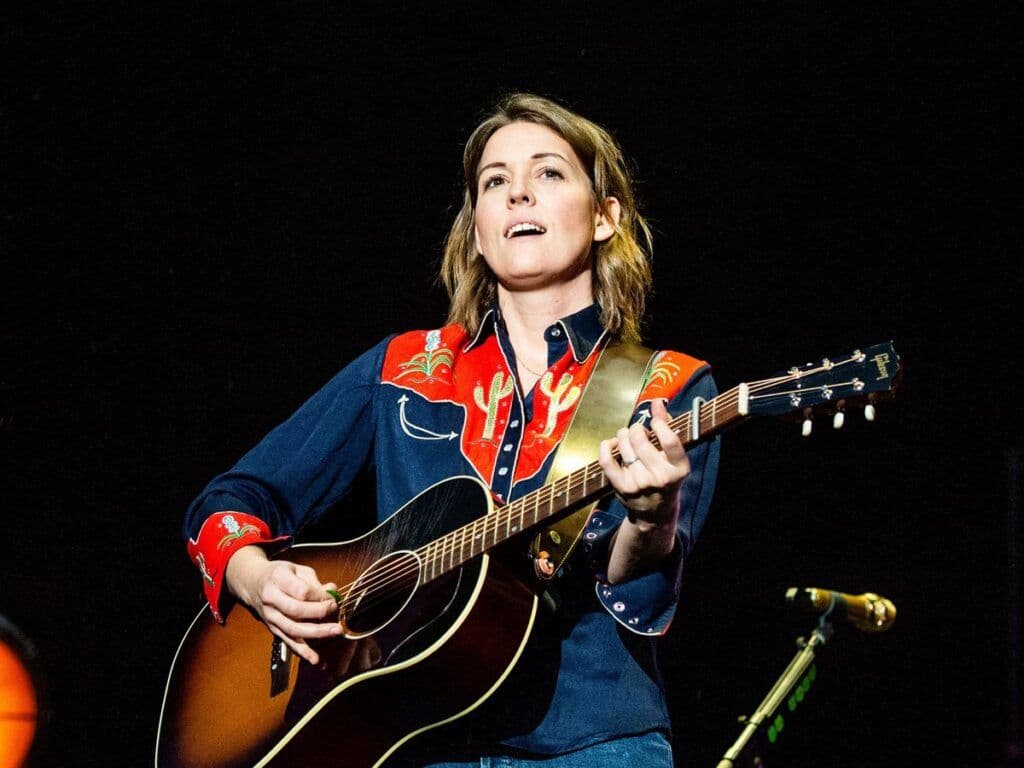
A Song of Enduring Love and Quiet Devotion Reawakened Across Generations
When Brandi Carlile chose to interpret “Long Long Time”, she was not simply revisiting a classic—she was reopening a tender wound in the American songbook. The original recording by Linda Ronstadt, released in 1970 from the album Silk Purse, stands as one of the most emotionally naked performances of the early ’70s. Written by songwriter Gary White, the song reached No. 25 on the Billboard Hot 100 and climbed to No. 15 on the Billboard Adult Contemporary chart in 1971. It also earned Linda Ronstadt her first Grammy nomination for Best Contemporary Female Vocal Performance—an early sign of the extraordinary career that would follow.
Placed at the dawn of a new decade, “Long Long Time” arrived during a period of emotional turbulence in American culture. The optimism of the ’60s had dimmed; the country was searching for quieter truths. And in that search, Linda Ronstadt’s voice became something elemental. Her delivery was neither theatrical nor ornate. It was restrained, trembling at the edges, almost conversational—yet it carried an ache that seemed to speak for anyone who had ever loved beyond reason.
The song itself is deceptively simple. It tells the story of unrequited love—of loving someone who does not, perhaps cannot, love you back. But what makes “Long Long Time” enduring is not its narrative; it is its emotional honesty. There is no bitterness in the lyrics. No anger. Only resignation and a stubborn devotion that refuses to die. When Ronstadt sings, “Love will abide, take things in stride,” it feels less like advice and more like a quiet plea to herself. That fragile balance between hope and heartbreak is what gave the song its timeless gravity.
Decades later, Brandi Carlile—herself a master interpreter of emotional landscapes—brought “Long Long Time” back into the cultural conversation. Known for her deeply expressive songwriting and her reverence for the musical traditions of artists like Joni Mitchell, Emmylou Harris, and Elton John, Carlile approached Ronstadt’s signature ballad not as a reinvention but as a tribute. In live performances, she often introduces the song with profound respect, acknowledging Ronstadt’s influence not only on her own artistry but on generations of singers who followed.
Carlile’s voice, fuller and earthier than Ronstadt’s crystalline soprano, adds a slightly different shading to the heartbreak. Where Ronstadt’s version trembles like a confession whispered late at night, Carlile’s feels grounded—like a memory revisited with both pain and acceptance. Yet she never oversings it. That restraint is key. She understands that “Long Long Time” lives in the spaces between notes, in the pauses where breath falters.
The renewed attention to the song in recent years—particularly after its poignant use in the television series The Last of Us (2023)—introduced it to a new generation, sending the original 1970 recording back onto streaming charts more than half a century after its debut. Few songs are granted such a second life. Fewer still manage to resonate just as deeply in a vastly different era.
Behind the success lies an important cultural thread. Linda Ronstadt, who would later become one of the most versatile and celebrated vocalists in American music—spanning rock, country, opera, and traditional Mexican songs—once described herself as simply a singer in search of good material. “Long Long Time” was one of the earliest songs that revealed her interpretive genius: the ability to inhabit someone else’s words as if they were her own lived experience.
When Brandi Carlile steps into that song, she bridges more than five decades of musical history. She reminds us that certain emotional truths do not age. They wait patiently, like the love described in the lyrics—steadfast, enduring, perhaps unreturned, but never extinguished.
And so “Long Long Time” continues to echo. Not as a relic of the past, but as a living testament to the quiet strength it takes to love without guarantee. In the hands of Linda Ronstadt, it was a revelation. In the voice of Brandi Carlile, it becomes a conversation across time—a reminder that the most powerful songs are not those that shout the loudest, but those that dare to whisper what we have always known, deep down, for a very long time.