
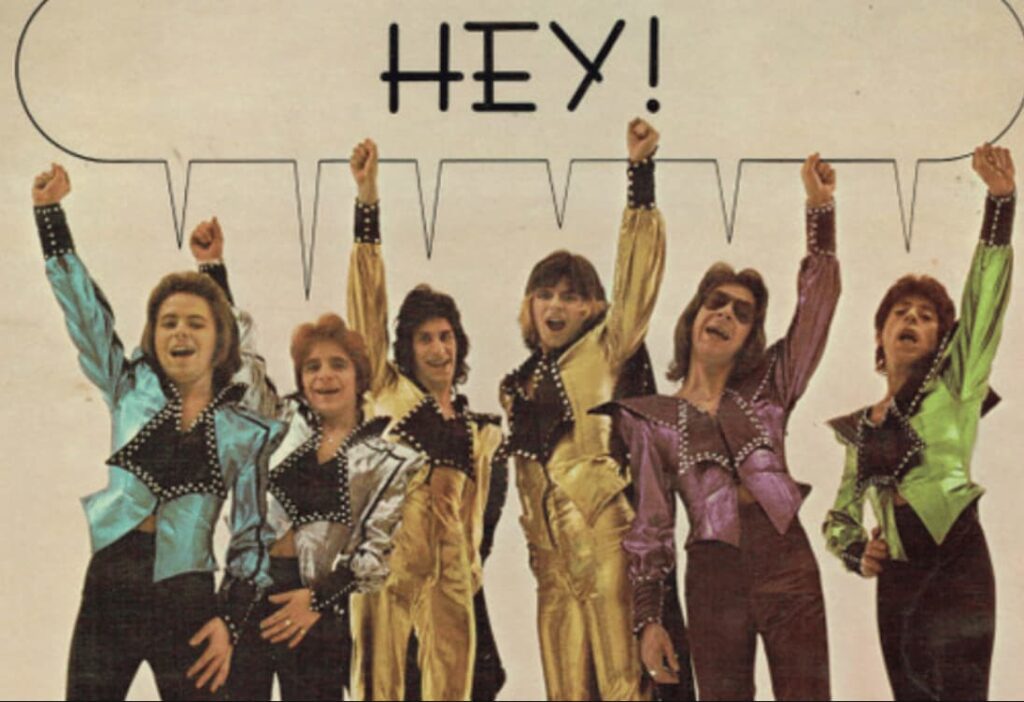
A Tender Echo of Devotion and Glam Rock Elegance
When we speak of “Just For You” by The Glitter Band, we are not merely recalling a song from the early 1970s—we are revisiting a moment when British glam rock softened its glittering edges and revealed a surprisingly tender heart. Released in 1974, “Just For You” climbed to No. 10 on the UK Singles Chart, securing its place among the band’s most beloved hits during their brief but brilliant commercial peak. In a period dominated by stomping rhythms and flamboyant theatrics, this track stood out as a gentle affirmation of loyalty and heartfelt devotion.
To understand the significance of The Glitter Band, one must remember their origins. Emerging from the backing group of Gary Glitter, the musicians—John Springate, Pete Phipps, Tony Leonard, and Paul Raven—soon carved out their own identity. While the pounding, tribal drum patterns and chant-like choruses defined earlier hits like “Angel Face,” “Just For You” revealed another dimension of the group’s musical personality. It demonstrated that beneath the glam rock polish lay a deep understanding of classic pop craftsmanship.
The song was included on their 1974 album Listen to the Band, a record that solidified their independence and showcased their songwriting strengths. By this time, The Glitter Band had already tasted chart success with tracks such as “People Like You and People Like Me” (UK No. 5) and “Angel Face” (UK No. 4). But “Just For You” carried a more introspective mood. Its chart position—No. 10—may not have eclipsed their earlier triumphs, yet it remains one of their most emotionally resonant recordings.
Musically, the arrangement is both restrained and purposeful. The familiar double-drum attack remains present, but it is softened, serving as a rhythmic heartbeat rather than a battle cry. The harmonized vocals—one of the band’s strongest assets—create a warm, enveloping atmosphere. Unlike many glam anthems that thrive on bravado, “Just For You” leans into vulnerability. Its melody unfolds with quiet assurance, each verse building toward a chorus that feels like a personal promise whispered across time.
Lyrically, the message is direct and sincere. The song speaks of unwavering devotion—of being present, steadfast, and emotionally available. There is no grand poetic metaphor, no elaborate storytelling. Instead, the simplicity is its strength. In an era when pop music often reveled in flamboyance, this track dared to say something intimate. That simplicity resonates deeply because it reflects the universal longing to be valued and remembered.
The early 1970s were a transitional period in British rock. Glam was beginning to diversify, with artists like David Bowie pushing artistic boundaries and bands experimenting with theatrical personas. Yet The Glitter Band chose, at least momentarily, to step away from spectacle and focus on melody and emotional clarity. That choice gave “Just For You” a timeless quality. It does not rely on trends or gimmicks; it rests on feeling.
Behind the scenes, the band members themselves were asserting greater creative control. Having initially been associated with another artist’s shadow, they were determined to establish their own voice. Songs like “Just For You” proved they were more than a backing act—they were capable of crafting pop songs with both commercial appeal and genuine emotional weight.
Listening today, one cannot help but feel a quiet nostalgia. The production carries the unmistakable warmth of analog recording—drums that breathe, vocals that shimmer slightly in the mix, guitars that ring with gentle clarity. It transports the listener to a time when singles were eagerly awaited, when chart positions were followed weekly in newspapers, and when a melody could accompany you for decades.
In retrospect, “Just For You” represents more than a Top 10 hit. It symbolizes a fleeting era when glam rock briefly paused to express tenderness. For The Glitter Band, it remains one of their defining moments—a reminder that beneath the glitter, the lights, and the stomping rhythms, there was always a beating heart.
And perhaps that is why the song endures. Not because of its chart statistics alone, but because it captures something enduring: the simple, powerful promise to be there—just for you.