
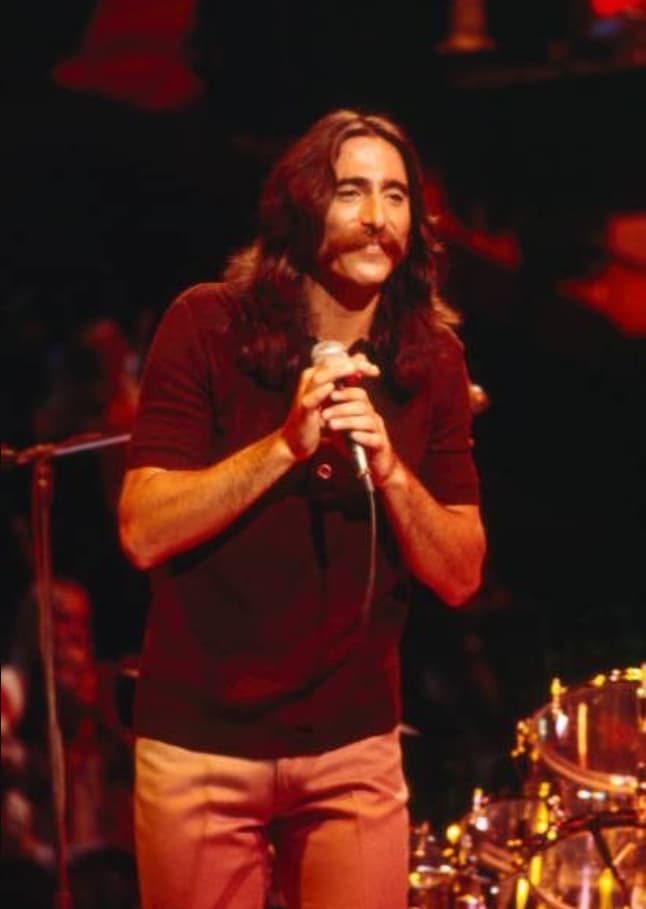
A Tender Echo of Lost Love and Lingering Devotion
When Chuck Negron released “Still in Your Heart” as a solo single in 1995, it was not merely another chapter in a long musical journey—it was a quiet confession set to melody, a heartfelt continuation of a life lived in harmony and heartbreak. Best known as one of the three lead vocalists of Three Dog Night, the band that dominated the American charts from 1969 to 1974 with 21 Top 40 hits, Negron carried with him the unmistakable emotional tenor that once powered classics like “Joy to the World” and “One.” But “Still in Your Heart” belonged to a different season of life—more reflective, more intimate.
Released as part of his solo catalog in the mid-1990s, the song did not break into the Billboard Hot 100, nor did it aim to chase the commercial thunder of his earlier career. By that time, popular music had shifted dramatically. The airwaves were filled with grunge, alternative rock, and hip-hop. The era of soft-rock balladeers had largely passed. Yet chart positions alone cannot measure the quiet power of a song that speaks directly to the human heart. “Still in Your Heart” found its home not on the charts, but in the quiet spaces where memory lives.
The story behind this song is inseparable from Negron’s own life. After soaring success in the early 1970s with Three Dog Night, he endured years of personal struggle—most notably with addiction. His eventual recovery in the late 1980s marked a profound turning point. His solo recordings in the 1990s, including “Still in Your Heart,” reflect a man who had walked through darkness and emerged with humility and gratitude. The song carries that weight. It is not the voice of a young man pleading for love; it is the voice of someone who understands loss, forgiveness, and the enduring imprint of connection.
Musically, the arrangement leans toward adult contemporary sensibilities—gentle piano lines, restrained percussion, and a vocal performance that avoids excess. Negron’s voice, once soaring and bright in his youth, here carries a deeper, slightly weathered texture. That weathering becomes the song’s greatest strength. When he sings of a love that remains “still in your heart,” the phrasing is unhurried, almost conversational, as if speaking to someone across a quiet table rather than a roaring arena.
Lyrically, the song centers on enduring emotional presence. Even when relationships fade, even when distance or time has intervened, something remains. The idea is simple but profound: love, once truly given, does not vanish; it transforms. There is no bitterness in the tone. Instead, there is a gentle hope that somewhere, in some corner of memory, the singer still resides. This theme resonates deeply with anyone who has watched years unfold, who has seen seasons change, and who understands that some names never fully leave the heart.
In contrast to the exuberant, almost celebratory anthems that defined Three Dog Night, this track feels like the quiet reflection after the applause has ended. It speaks to the later chapters of life, when the loudest victories are often internal ones. The song’s emotional maturity distinguishes it from the chart-driven pop ballads of the 1990s. It is less about dramatic declaration and more about acceptance—about acknowledging what was, without demanding its return.
One cannot separate the emotional impact of “Still in Your Heart” from Negron’s legacy. As a member of Three Dog Night, he helped define a golden era of American rock and pop. Between 1969 and 1974, the band sold tens of millions of records and earned multiple gold and platinum certifications. Yet in his solo years, Negron seemed less concerned with commercial validation and more interested in honest storytelling. That sincerity is what gives this song its quiet gravity.
Listening today, the song feels like a letter never sent, or perhaps one that was written and folded carefully into a drawer. It reminds us that music is not only about youth and celebration; it is also about remembrance. Some songs are fireworks. Others are candles. “Still in Your Heart” belongs to the latter—steady, warm, and enduring.
And in that soft glow, we hear not just the voice of Chuck Negron, but the echo of a lifetime—of stages once bright with spotlight, of crowds long dispersed, and of love that, despite everything, remains.