
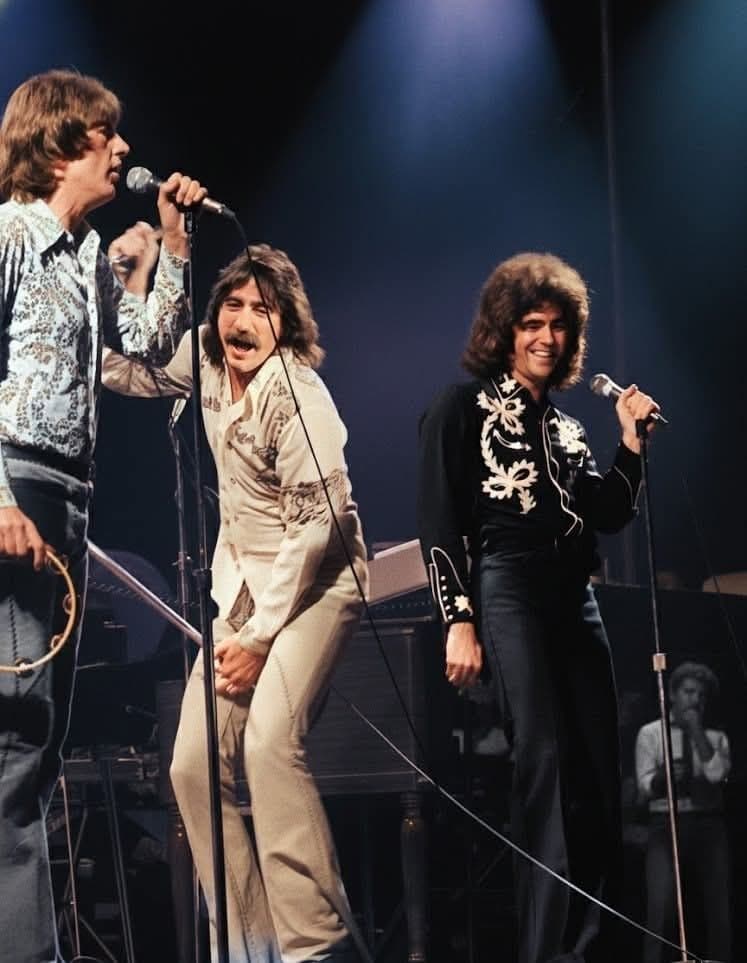
A tender meditation on distance and devotion, where love survives in fragments of springtime memory.
When Three Dog Night released “Pieces of April” in November 1972, it marked a subtle yet deeply affecting turn in the band’s remarkable run of hits. Issued as a single from their album Seven Separate Fools, the song climbed to No. 19 on the Billboard Hot 100 in January 1973, becoming the group’s final Top 20 pop hit in the United States. The parent album itself reached No. 9 on the Billboard 200, continuing their astonishing streak of commercial success that had defined the turn of the decade. Yet unlike the exuberant anthems that first made them household names—“Joy to the World,” “Mama Told Me (Not to Come),” or “Black and White”—this song unfolded with quiet restraint, trading bombast for intimacy.
Written by Dave Loggins, a then-young songwriter who would later score his own hit with “Please Come to Boston,” “Pieces of April” is built around a simple but piercing premise: a lover separated from the one he longs for, trying to make sense of distance through small, sensory reminders of spring. “Pieces of April scattered all around the floor,” Danny Hutton sings with aching vulnerability. The lyric does not rely on elaborate metaphor; instead, it draws strength from understatement. April—symbol of renewal, warmth, and possibility—becomes fragmented, scattered, incomplete. Love exists, but in pieces.
Musically, the arrangement is sparse by Three Dog Night standards. Gone are the roaring horns and driving rhythms that characterized many of their earlier hits. In their place is a gentle piano figure, subtle orchestration, and a vocal performance that feels almost confessional. The band, famous for its three distinct lead singers—Danny Hutton, Cory Wells, and Chuck Negron—often thrived on dynamic contrasts. Here, however, the restraint is deliberate. Hutton’s voice carries a tremor of yearning that cannot be disguised by harmonies. It is the sound of someone alone with his thoughts.
The early 1970s were a time when American pop music was becoming more introspective. The optimism of the late 1960s had given way to reflection, and audiences seemed ready for songs that acknowledged uncertainty and longing. In that landscape, “Pieces of April” felt almost like a letter written in the quiet hours of the night. It resonated not because it shouted, but because it whispered.
Behind the scenes, the song also signaled a subtle shift for the band. By 1972, Three Dog Night had already placed an astonishing number of singles in the Top 40—more than twenty since 1969. They were one of the most reliable hitmakers of the era, masters at selecting outside material and transforming it into radio gold. Choosing Dave Loggins’ composition demonstrated their instinct for emotional nuance. They understood that maturity in music often means knowing when to pull back.
There is something profoundly human in the song’s imagery. The scattered pieces of April evoke letters on the floor, sunlight through a window, the faint scent of blossoms carried on memory alone. It speaks to anyone who has known separation—not necessarily dramatic heartbreak, but the quieter ache of missing someone whose presence once felt as natural as spring. The song never resolves into grand reunion; instead, it lingers in that suspended space between hope and resignation.
Listening now, decades later, the recording carries the patina of its time: analog warmth, unhurried pacing, and a sincerity that feels almost radical in an era of polished perfection. It reminds us of a moment when pop groups could evolve without losing their identity, when vulnerability could coexist with commercial success.
In the grand arc of Three Dog Night’s career, “Pieces of April” may not tower like “Joy to the World,” which famously reached No. 1. But its significance lies elsewhere. It represents the band at their most reflective, offering not celebration but contemplation. And perhaps that is why it endures—not as a thunderous anthem, but as a gentle companion for quiet evenings, when memory itself feels like spring scattered across the floor.