
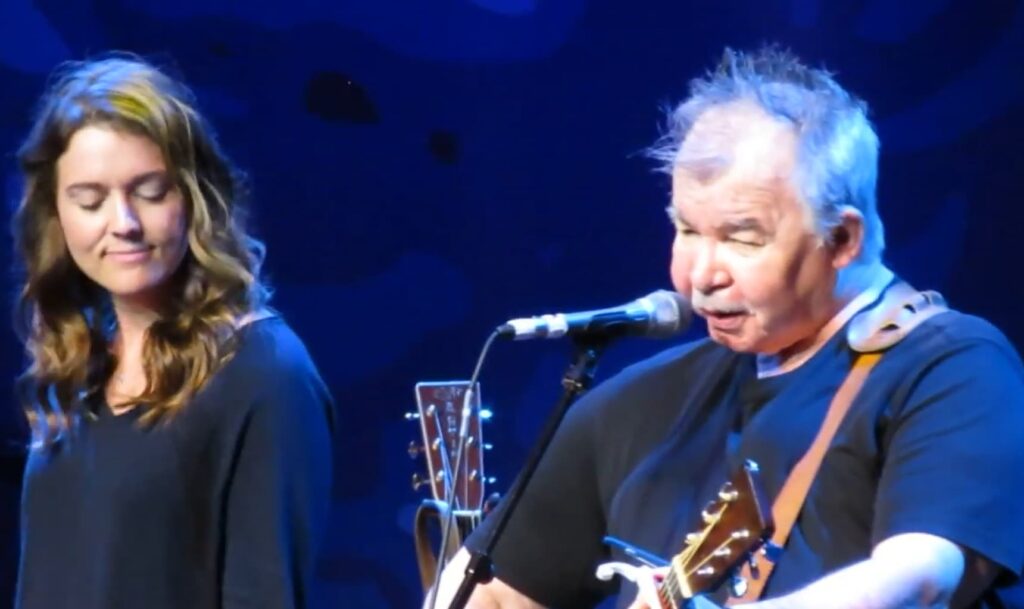
A crooked love song that laughs at perfection and survives by sheer tenderness
When John Prine released “In Spite of Ourselves” in 1999, it arrived quietly, almost sheepishly, at a time when American popular music was racing toward polish and spectacle. Yet this small, odd, plain-spoken duet would go on to become one of the most beloved love songs of his career—not because it idealized romance, but because it dared to tell the truth about it.
The song was first issued as the title track of In Spite of Ourselves (1999), Prine’s comeback album after years of health struggles and industry absence. Upon release, the single reached No. 32 on the Billboard Hot Country Singles & Tracks chart, a modest placement that hardly hinted at its long afterlife. Over time, the song grew far beyond its chart position, becoming a standard in Americana circles and a defining statement of Prine’s worldview.
The story behind the song
John Prine wrote “In Spite of Ourselves” during a period of renewed creative clarity. After surviving throat cancer in the late 1990s, his voice was physically altered—rougher, deeper, less elastic—but emotionally sharper than ever. Instead of fighting that change, Prine leaned into it. He wrote songs that sounded lived-in, worn at the edges, and profoundly human.
For the duet partner, Prine chose Iris DeMent, whose unvarnished, nasal, plain-church voice was the perfect counterweight to his gravelly delivery. Their pairing was not about vocal beauty; it was about character. Together, they sounded like two real people at a kitchen table, trading confessions they never intended to make public.
Decades later, Brandi Carlile would emerge as one of the most devoted interpreters of Prine’s catalog. Though not part of the original recording, Carlile has carried “In Spite of Ourselves” forward through live performances and tributes, singing it as a hymn to imperfect devotion. Her connection to the song reflects how Prine’s writing transcended generations—spoken softly, yet heard loudly by those who recognized themselves in it.
Meaning and emotional core
At first glance, “In Spite of Ourselves” sounds almost comic. The lyrics are filled with self-mockery: bad habits, poor manners, emotional blind spots, and small humiliations. The couple in the song is not glamorous, not particularly wise, and certainly not admirable by romantic standards. Yet line by line, something deeper reveals itself.
This is a song about endurance. About staying when leaving would be easier. About loving someone not because they complete you, but because they know your worst angles—and stay anyway.
Prine avoids sentimentality with surgical precision. There are no promises of eternal bliss, no swelling metaphors, no cinematic declarations. Instead, there is recognition. Two flawed people look at each other and say, in effect: this shouldn’t work, but it does. The title itself—“In Spite of Ourselves”—carries the weight of a lifetime. Love here is not destiny; it is a stubborn choice, renewed daily.
Why the song endures
What gives the song its lasting power is its refusal to pretend. John Prine trusted his audience enough to believe they could handle the truth: that love is often awkward, unbalanced, and slightly ridiculous—and still sacred.
In later years, as artists like Brandi Carlile spoke openly about Prine’s influence, the song gained another layer of meaning. It became a reminder of a disappearing songwriting tradition—one rooted in empathy rather than irony, in observation rather than performance.
“In Spite of Ourselves” does not ask to be admired. It asks to be recognized. And for those who have lived long enough to know that love is rarely clean or symmetrical, that recognition can feel almost unbearable in its honesty.