
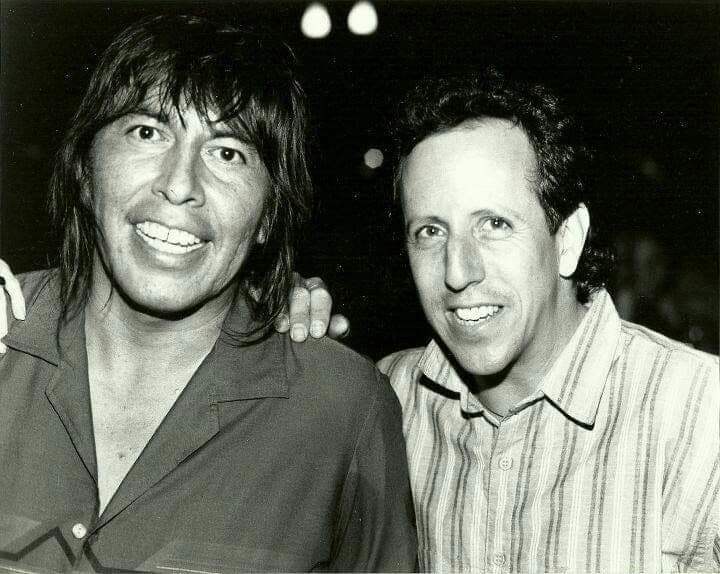
Washita Love Child — a soulful testament to friendship, heritage, and the quiet power of roots music
From the very first notes of “Washita Love Child”, there is a feeling that this song is not trying to impress anyone — it is simply telling the truth. Written and recorded by Jesse Ed Davis, with Eric Clapton lending his unmistakable guitar presence, the track appears on Davis’s self-titled debut album Jesse Ed Davis, released in 1971. The album did not storm the charts or dominate radio playlists, but its importance lies elsewhere: in authenticity, in musical kinship, and in a deep sense of cultural identity that few artists of that era expressed so honestly.
Let us place the essential facts clearly at the beginning. “Washita Love Child” was released as part of Jesse Ed Davis (1971), produced by Leon Russell, a longtime friend and collaborator. The album itself did not achieve high chart positions in the United States or the United Kingdom, and the song was never issued as a hit single. Yet its legacy has grown steadily over time, especially among musicians and listeners who value feel over fame, soul over spectacle.
Jesse Ed Davis was never a star in the conventional sense. Born in Oklahoma and of Native American heritage (Kiowa, Comanche, and Seminole), he carried a quiet dignity into his music. By the time this album was recorded, he was already respected behind the scenes, having worked with artists such as Taj Mahal, John Lennon, George Harrison, and Leon Russell. Eric Clapton’s appearance on “Washita Love Child” was not a marketing trick — it was a gesture of respect between musicians who recognized something genuine in one another.
The song’s title itself is deeply personal. Washita refers to the Washita River in Oklahoma, tying the music directly to Davis’s roots. Love Child is not used provocatively here; instead, it suggests belonging — a child of the land, of memory, of ancestry. The lyrics speak softly but firmly, blending themes of identity, love, and spiritual grounding. This is not a song that shouts its message. It lets it breathe.
Musically, “Washita Love Child” is steeped in a rich blend of blues, roots rock, and understated soul. Davis’s guitar playing is warm and unhurried, never flashy, always purposeful. Clapton’s contribution is instantly recognizable yet remarkably restrained. Rather than overpowering the track, he listens — responding to Davis’s phrasing, weaving in and out like a trusted companion on a long road. It is one of those rare collaborations where ego disappears completely.
What makes the song resonate so strongly with listeners who have lived a little is its sense of calm confidence. There is no chasing of trends here, no attempt to sound “modern.” Instead, the song seems anchored in something older and steadier — the idea that knowing where you come from gives you strength, even when the world moves too fast to notice.
In the early 1970s, rock music was often loud, ambitious, and self-mythologizing. Against that backdrop, Jesse Ed Davis stood quietly to the side, offering songs like “Washita Love Child” as an alternative path. His voice carries humility, but also pride — pride in heritage, in craft, in staying true to oneself. It is the sound of a man who knows that recognition is fleeting, but truth endures.
Over the years, the song has taken on an almost meditative quality. Listening now, it feels less like a recording from a specific era and more like a timeless reflection. It speaks to anyone who has ever looked back toward home — not necessarily a place on a map, but a feeling of belonging that shaped who they became.
“Washita Love Child” may never have climbed the charts, but it has earned something far more lasting: quiet reverence. It remains a reminder that some of the most meaningful music is not made to conquer the world, but to honor it — river by river, memory by memory, note by honest note.