
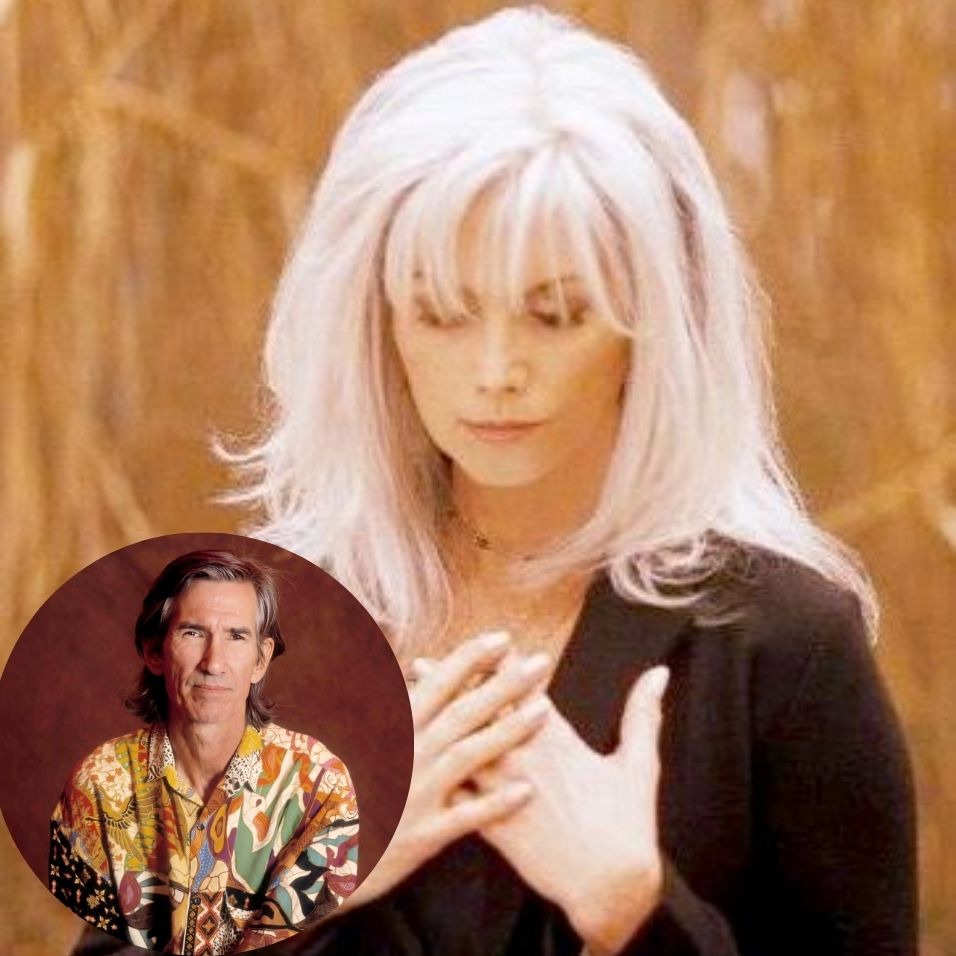
A Haunting Ballad of Outlaw Friendship, Loneliness, and the Shadow of Regret
The song “Pancho and Lefty”, interpreted with luminous tenderness by Emmylou Harris on her 1977 album Luxury Liner, stands as one of the most affecting outlaw ballads ever shaped by American songwriting. Though her version was never released as a single and therefore carried no chart position of its own, the album that held it soared to No. 1 on the Billboard Country Albums chart, placing Harris at the very heart of country music’s creative golden era. And in many ways, it was her gentle yet resolute performance that helped guide this song from a cult favorite into a modern classic — a journey that later culminated in Willie Nelson and Merle Haggard’s 1983 duet reaching No. 1 on the Billboard Country Singles chart.
But long before its chart successes, before its status as a masterpiece was widely acknowledged, “Pancho and Lefty” lived in the quiet imagination of its writer, Townes Van Zandt. First recorded in 1972, the song existed then as a mysterious, poetic narrative — a tale of two men bound together by circumstance, loyalty, and ultimately betrayal. Van Zandt’s original never charted, but it planted a seed in the hearts of musicians who recognized the rare depth of his craft.
A Tale That Feels Like an Old Photograph
The story is deceptively simple. Pancho, the brave, wild outlaw, rides boldly through the desert, living by defiance and instinct. Lefty, softer and more uncertain, walks beside him through a partnership built on shared roads and whispered promises. Yet somewhere along the way, a choice is made — a choice that sends Pancho to his death “down in Mexico,” while Lefty slips quietly north, destined to live out his days in anonymous loneliness.
The song never spells out the truth. It only hints. That was always part of Van Zandt’s genius — he trusted listeners to read the silence between the lines. And so Lefty becomes not merely a character, but a mirror. For some, he reflects regret. For others, the weight of a moment when they failed someone, or when survival mattered more than honor.
Emmylou Harris and the Art of Reverence
When Emmylou Harris included the song on Luxury Liner, she did something remarkable: she didn’t try to solve the mystery; she allowed it to breathe. Her voice, warm but edged with quiet sorrow, lends the story a kind of weathered dignity — as though she is recalling a tale heard long ago from someone who lived it.
Harris would later confess that she feels as though “Pancho and Lefty” is partly hers, a sentiment shared by many who fell in love with the song through her recording. Surrounded by impeccable musicianship — including the bright, fluid playing of Albert Lee and the heartfelt presence of Ricky Skaggs — her version brought a new sense of movement, like dust drifting behind two riders disappearing into the horizon.
Most critically, it was Harris’s recording that first drew the song into the orbit of Willie Nelson, whose daughter reportedly played Harris’s version for him. Without her interpretation, the song’s later commercial breakthrough might never have happened. In that sense, Emmylou became the quiet shepherd of a masterpiece waiting for its moment.
Why It Means So Much
For many listeners, especially those who have lived long enough to carry their own bundle of memories, “Pancho and Lefty” feels less like a song and more like a recollection that aches gently at the edges. It touches something universal — the bond between companions, the heartbreak of inevitable partings, the slow settling of remorse over the years.
There is no moral lesson offered. No forgiveness granted. Only the steady reminder that choices leave trails behind them, and those trails follow us whether we’re ready or not. Harris’s rendition makes this truth feel deeply human, as though she is offering the listener a hand — not to resolve the past, but to acknowledge it.