
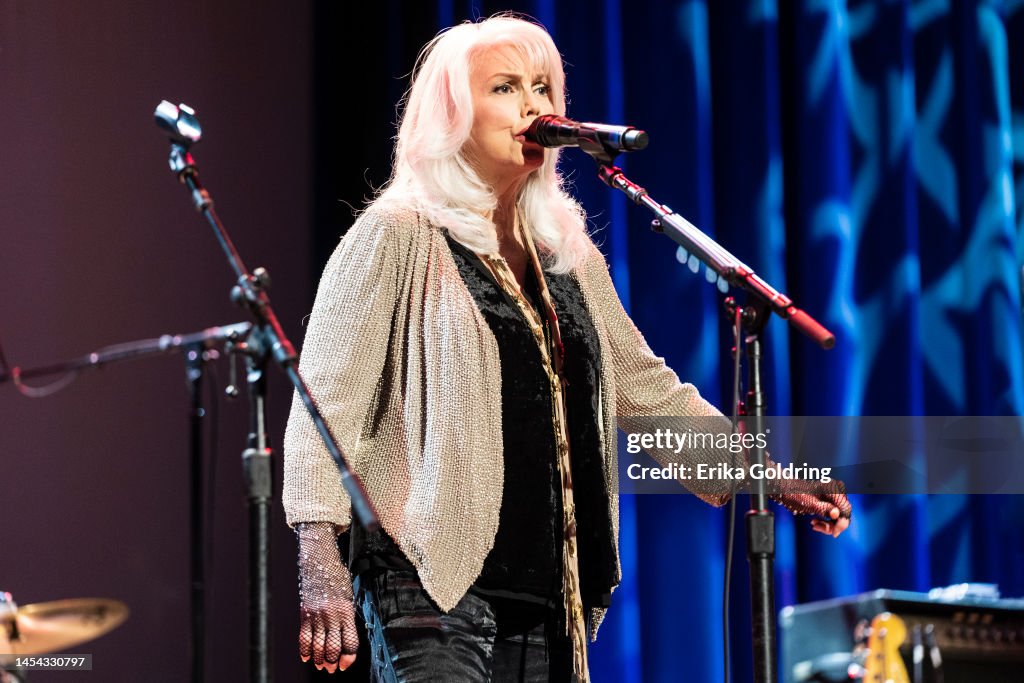
On the Bayou: A Glimpse of Country-Rock’s Joyous Heart
There are certain songs that, upon the first few notes, transport you back to a simpler time, a memory colored in the golden hues of youth and carefree days. For many, Emmylou Harris’s irresistible take on Hank Williams’s classic, “Jambalaya (On the Bayou),” is one of those timeless touchstones. It’s a track that pulses with life, a vibrant, up-tempo celebration of Cajun culture and good times, interpreted through the lens of a new kind of country music that was taking shape in the mid-1970s.
Emmylou Harris—a name synonymous with impeccable taste, crystalline soprano, and an unparalleled ability to find the heart in any song she touches—included her version on her second major-label album, Elite Hotel, which was released in December 1975. The album itself marked a significant milestone, becoming Harris’s first No. 1 on the U.S. Top Country Albums chart (and peaking at No. 25 on the overall Billboard 200). While “Jambalaya” itself was not released as a formal single, it became an immediate fan favorite and a staple of her live shows, riding the considerable success of the album and its charting singles like the chart-topping “Together Again” and “Sweet Dreams.”
The Hank Williams original, of course, is a legendary piece of Americana, a 1952 hit that introduced a generation to the sounds and flavors of the Louisiana bayou—the crawfish pie, the filé gumbo, and the infectious spirit of a Saturday night party with ma cher ami-o (my good girlfriend). Harris’s decision to cover it was deeply rooted in her philosophy of bridging the past and present of American music, a vision she inherited and refined from her late mentor, Gram Parsons. This wasn’t just a faithful rendition; backed by her formidable Hot Band—a collection of stellar musicians that included guitarist James Burton and pianist Glen D. Hardin, both veterans of Elvis Presley’s band—Harris infused the song with a distinct country-rock energy.
Her version is faster, a jubilant, infectious stomp that strips away some of the original’s gentle sway, replacing it with a punchy, electric vitality that was pure mid-70s California country. It perfectly embodies the era of Elite Hotel and Luxury Liner, where she blended rock, folk, and classic country with seamless artistry. The meaning remains the same—a simple, joyous ode to life and love in the swampy south—but Harris’s interpretation serves as a powerful testament to her role as a great curator of American song, one who could honor tradition while simultaneously making it feel fresh and thrilling for a new audience. Hearing it now, its bright, ringing guitars and Harris’s soaring, clear voice evoke a powerful sense of nostalgia—not just for the song, but for a moment in country music history when the lines between genres were beautifully and boisterously blurred.