
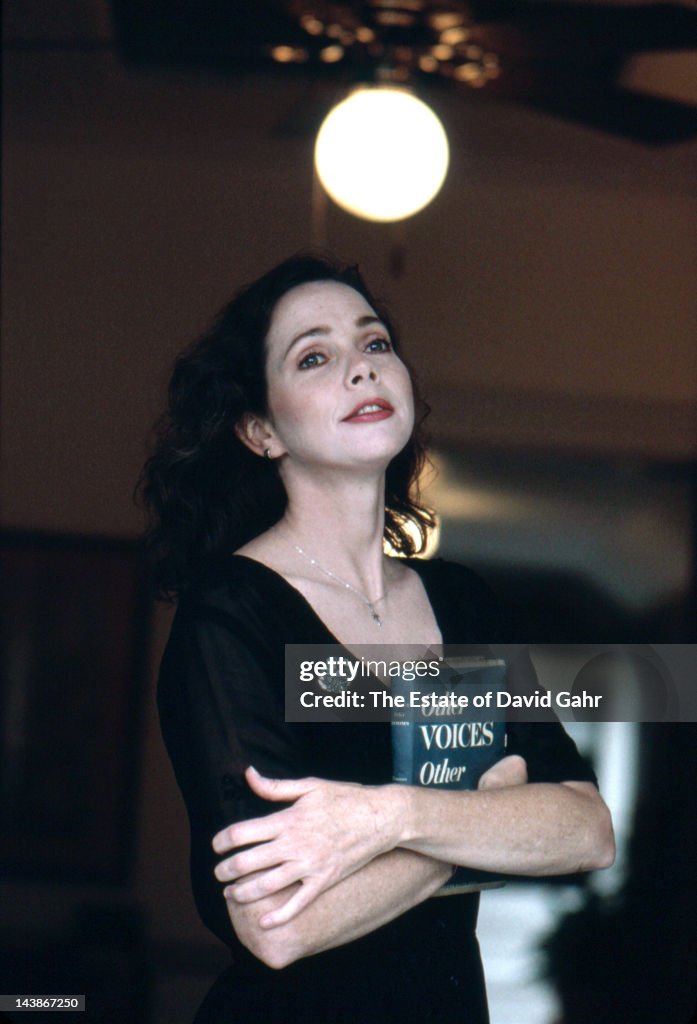
A Poignant Lament of Longing — Speed of the Sound of Loneliness
At its core, “Speed of the Sound of Loneliness” is a gentle but devastating reflection on the silent distances that grow between people, and how emotional absence can echo louder than any spoken word.
If ever there were a song that captured the soft ache of drifting apart, Nanci Griffith’s interpretation of “Speed of the Sound of Loneliness” would be it. While the song was written by John Prine and first released on his 1986 album German Afternoons, it found a second life — and a deeper tenderness — when Griffith recorded it years later for her 1993 album Other Voices, Other Rooms. That album, built as a tribute to the songwriters who shaped her musical soul, featured a special and unforgettable moment: she invited Prine himself to join her on harmony. Their voices, so different yet perfectly intertwined, carried the song into new emotional territory.
Chart Performance & Release Context
Prine’s original version, though admired, never reached major chart success, and Griffith’s rendition also did not chart in the United States. Another cover — by Kim Carnes — would be the version to briefly enter the Billboard Hot Country Songs chart. Yet Griffith’s version, despite lacking commercial numbers, became one of the most beloved interpretations among folk and Americana listeners, remaining deeply associated with her name.
The Story Behind the Song
John Prine once explained that the inspiration came during a painful breakup. He pictured the force of an aircraft accelerating, the intense pressure on a pilot’s face — a metaphor for what heartbreak can do to a person. That image became the emotional engine of the song: the sensation that loneliness accelerates faster than we’re prepared for, hitting us with a force that feels almost physical.
When Nanci Griffith chose the song for Other Voices, Other Rooms, it wasn’t simply a matter of admiration — it was an act of gratitude. The album honored those who had come before her, the storytellers whose words lit her path. Her performance with Prine became a quiet conversation between two weary but wise souls. Even the music video, shot in soft black-and-white tones, reinforced that intimacy: Griffith dressed in luminous white, Prine in darker shades — two spirits reflecting the shadows and light that define loneliness.
Meaning & Emotional Resonance
The lyrics, understated yet piercing, sketch the portrait of a relationship fading into silence. The person the song addresses is “late … early,” unpredictable, distant. Sometimes physically present, sometimes vanished. What cuts deepest is not betrayal or anger — it is the hollow space where closeness used to live.
When Griffith sings the line “You’ve broken the speed of the sound of loneliness”, it feels like a sigh from someone who has learned, not just felt, what it means to be left behind emotionally. That unique phrase — the “speed of the sound of loneliness” — evokes a paradox: loneliness moves faster than sound, faster than understanding, faster than healing.
For listeners who have lived through decades of change, of love lost through time, silence, or circumstance, the song carries a familiar texture. It recalls nights waiting for answers that never came, mornings spent searching for a warmth that had already slipped away. Yet there is no bitterness here. Only reflection — the soft, resigned acceptance that some distances cannot be closed.
Legacy & Timeless Significance
Though it wasn’t a charting hit, Griffith’s rendition became one of her signature performances and one of the most cherished versions of Prine’s work. The album it belonged to, Other Voices, Other Rooms, earned her a Grammy for Best Contemporary Folk Album, solidifying her legacy as not just a songwriter, but a gifted interpreter of others’ truths.
Even now, many listeners return to the song not for excitement, but for solace. It has become a quiet refuge — a place to sit with one’s memories, to acknowledge the people who slipped away, and to honor the emotional landscapes that shaped us.
More than a simple folk ballad, “Speed of the Sound of Loneliness” is a profound meditation on the slow unraveling of connection. In Griffith’s luminous, aching voice, it becomes a companion to anyone who has ever felt the weight of distance settle in the heart. It is a song that doesn’t just describe loneliness — it understands it.