
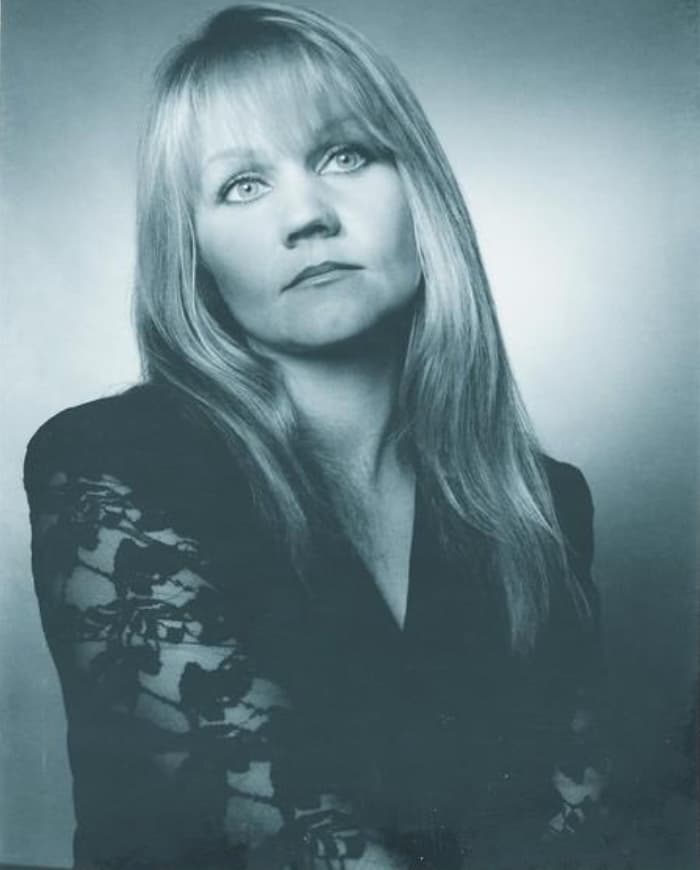
An unforgettable, heartbreaking elegy to lost love, sung with a transcendent, autumnal melancholy.
The Wistful Echo of Eva Cassidy‘s “Autumn Leaves”
There are songs that simply exist, and then there are those that settle into the very marrow of your being, becoming the soundtrack to memory and melancholy. Eva Cassidy‘s rendition of “Autumn Leaves” is undoubtedly one of the latter. Her recording is not merely a cover; it’s an emotional haunting, an intimate confession whispered from the edge of autumn itself.
This iconic version, recorded live at the intimate Blues Alley jazz club in Washington, D.C., in January 1996, was first released on her self-financed album, Live at Blues Alley, in May 1996, just a few months before her untimely death. However, its true arrival on the global stage came later. It was included on the posthumous compilation album Songbird (1998), which became a slow-burn international phenomenon after British radio airplay. While it’s the album that charted globally—reaching No. 1 on the UK Albums Chart almost three years after its initial release—the individual track “Autumn Leaves” itself eventually found its way onto the Official Singles Sales Chart (UK), peaking at No. 86 in April 2019, demonstrating the enduring, quiet power of her artistry decades after the fact. It’s a testament to a talent too profound to be ignored, even in death.
The story behind this particular recording is shot through with a poignancy that mirrors the song’s mournful theme. The original standard is an adaptation of the 1945 French song “Les Feuilles mortes” (“The Dead Leaves”), with music by Joseph Kosma and French lyrics by Jacques Prévert, later given English lyrics by Johnny Mercer. It’s a classic jazz standard, but Cassidy stripped away the typical swing and sophistication, bringing a raw, folk-blues vulnerability to the performance. What you hear is not a slick studio take, but the essence of a fragile moment.
The recording was fraught with difficulty: the tape from the first night’s session was technically unusable, putting immense pressure on the band for the second night. The greatest irony is that, according to producer Chris Biondo and others, Eva herself was struggling with a bad cold that night and was reportedly unhappy with her vocal performance, feeling it was not her best. Yet, this very rawness—the slight break in her voice, the almost unbearable fragility—is precisely what makes the track a masterpiece. Accompanied beautifully by Lenny Williams on piano (a contrast to her usual solo acoustic performance of the song), Cassidy’s voice seems to hover, an angelic, crystal-clear lament.
Lyrically, “Autumn Leaves” is a meditation on the cyclical nature of loss. “The falling leaves drift by my window… I see your lips, the summer kisses, the sunburned hands I used to hold.” It’s the moment of looking back at a vibrant summer love now gone, with the literal transition of the seasons serving as a powerful metaphor for heartbreak and decay. The English lyrics are particularly focused on missing a loved one most “When autumn leaves start to fall.”
For Eva Cassidy, the song held an added, almost heartbreaking layer of personal meaning. She was known to suffer from Seasonal Affective Disorder (SAD) and reportedly told her mother she couldn’t fully enjoy autumn because she knew the cold, dark winter was coming. Coupled with the fact that she passed away from melanoma in November 1996, just as the leaves were falling in Washington, her interpretation—which is less sultry torch song and more somber, heartfelt requiem—feels chillingly prophetic.
Her version of “Autumn Leaves” is an emotional lightning rod, a sound that instantly brings you back to a quieter, more reflective place. It is a moment of pure, unadorned feeling, captured live and preserved for those of us who appreciate music that speaks directly to the soul’s deepest regrets and tenderest memories. It’s a song that understands that loss doesn’t just happen in the spring of life, but in the inevitable, golden-red turning of the year.