
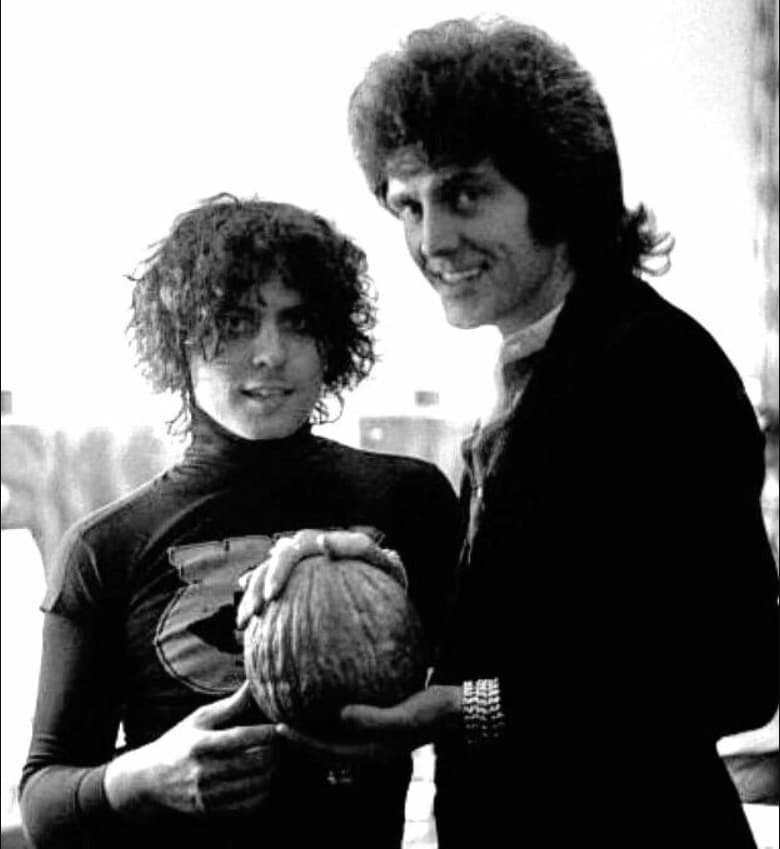
A bittersweet farewell to an era of pure-hearted rock ‘n’ roll.
There’s a certain kind of melody that, upon hearing the first few notes, transports you back to a specific place and time. It’s a feeling of bittersweet nostalgia, a longing for something you didn’t even realize you missed. For many, that feeling is perfectly encapsulated in Alvin Stardust’s 1984 hit, “I Feel Like Buddy Holly.” The song, written and produced by the brilliant Mike Batt, wasn’t just another pop single; it was a heartfelt tribute, a reflective nod to the golden age of rock ‘n’ roll. It was a song that resonated deeply, not just with those who remembered the ’50s, but with anyone who understood the weight of a broken heart.
Released on the Chrysalis Records label, the single quickly found its way into the hearts of the British public. It spent an impressive eleven weeks on the UK Singles Chart, climbing steadily to a peak position of number seven in 1984. This chart success was a testament to the song’s broad appeal, proving that even in the synth-pop-dominated ’80s, the spirit of classic rock could still shine through. The B-side, “Luxury,” penned by Alvin Stardust himself, offered a glimpse into his own songwriting craft, but it was the A-side that truly captured the imagination.
The story behind the song is a beautiful blend of melancholy and homage. Mike Batt crafted the lyrics to mirror the feeling of a profound, personal sadness, using the iconic figure of Buddy Holly as a metaphor for a deep sense of loss and loneliness. Holly, a pioneer whose career was tragically cut short, became the perfect symbol for a love that had ended too soon. The line, “I feel like Buddy Holly, ’cause it’s raining in my heart,” directly references one of Holly’s own songs, “Raining in My Heart,” creating a poignant and clever link that speaks to the true music connoisseur. It’s an emotional echo, a whispered memory of a simpler time when a broken heart could be expressed with a three-chord progression and a hiccup in the vocal.
For those of us who grew up with the sounds of the ’50s, the song felt like a warm embrace. It wasn’t about trying to be a rebellious rocker; it was about the soul of the music. Alvin Stardust’s distinctive voice, with its deep, resonant quality and subtle inflections, brought the song to life, making the melancholy feel almost comforting. He wasn’t just performing a song; he was sharing a feeling, a universal experience of heartache. The musical arrangement, a blend of ’50s rock and ’80s production, was a delicate dance between eras, proving that great music is timeless. It was a bridge between generations, a reminder that the emotions that drive us—love, loss, and nostalgia—are the same, no matter what decade we’re in. This song is more than just a hit; it’s a memento, a sonic photograph of an era that, like a faded memory, remains beautiful and true.
Video