
When Music Grounded a Movement: The Great Airplane Strike’s Enduring Resonance
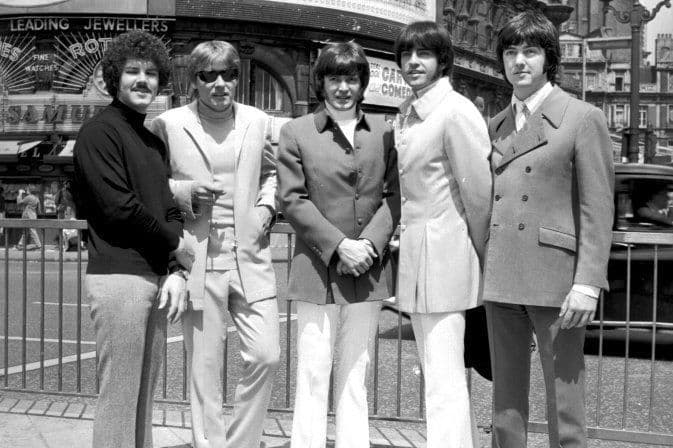
Ah, the 1960s. A decade of seismic shifts, of youthful rebellion, of a world seemingly spinning faster with each passing year. And amidst this whirlwind of change, music wasn’t just a soundtrack; it was a living, breathing commentary, often reflecting the anxieties and aspirations of a generation coming into its own. Today, we’re casting our minds back to one such musical artifact, a song that, while perhaps not a chart-topping behemoth in the way some of its contemporaries were, nonetheless holds a unique place in the annals of American rock and roll: Paul Revere & The Raiders‘ “The Great Airplane Strike.”
Released in 1966, a year simmering with social unrest and burgeoning counterculture, “The Great Airplane Strike” found its way onto the Billboard Hot 100, peaking at a respectable number 50. This wasn’t a “Louie Louie” or “Kicks” in terms of commercial dominance for the band, but its presence on the charts at all speaks to its immediate relevance and the public’s receptiveness to its message. It was featured on their album The Spirit of ’67, an album that, as its title suggests, aimed to capture the essence of a rapidly evolving America.
The story behind “The Great Airplane Strike” is as intriguing as the song itself, deeply rooted in the very real labor disputes that were gripping the nation in the mid-sixties. In the summer of 1966, five major airlines – Eastern, National, Northwest, Trans World (TWA), and United – were hit by a crippling strike by the International Association of Machinists. This wasn’t a minor inconvenience; it was a full-blown national crisis that stranded countless travelers, disrupted commerce, and dominated headlines for weeks. Flights were grounded, schedules thrown into chaos, and the once-glamorous world of air travel was brought to a screeching halt.
It was against this backdrop of national disruption that Paul Revere & The Raiders, always keen observers of the cultural landscape, penned “The Great Airplane Strike.” The song, with its distinctive siren-like opening and driving rhythm, wasn’t just a catchy tune; it was a direct, witty, and surprisingly empathetic narrative of the strike’s impact. It captured the frustration of the stranded traveler, the uncertainty of the situation, and perhaps, a subtle nod to the power of collective action. The lyrics, delivered with Mark Lindsay‘s characteristic sneer and theatrical flair, paint vivid pictures of empty runways and growing queues, all set to the band’s signature high-energy garage rock sound.
But “The Great Airplane Strike” is more than just a historical footnote about a labor dispute. Its meaning transcends the specific event it chronicles. At its heart, the song is an anthem of disruption, a musical expression of feeling stuck, of being at the mercy of forces beyond one’s control. For many, especially those of us who lived through that era, it evokes memories of a time when the world seemed to be in constant flux, when established norms were being questioned, and when even something as seemingly mundane as air travel could become a flashpoint for larger societal tensions. It speaks to the human experience of waiting, of uncertainty, and of the sometimes-absurd situations we find ourselves in.
For older listeners, “The Great Airplane Strike” might trigger a nostalgic chuckle, a remembering of news reports and travel woes, or perhaps a deeper reflection on the era’s spirit of protest and change. It’s a reminder that even pop songs, often dismissed as fleeting entertainment, can serve as powerful cultural markers, capturing the zeitgeist of their time with surprising accuracy. It’s a testament to Paul Revere & The Raiders’ ability to tap into the pulse of America, transforming everyday events into vibrant, memorable musical statements. So, take a moment, close your eyes, and let “The Great Airplane Strike” transport you back to a time when even the skies weren’t safe from the rumblings of change.