
An Operatic Power Struggle: When Glam Met Grandeur in “This Town Ain’t Big Enough for Both of Us”
Ah, the 1970s. A decade of seismic shifts, not just in society, but in the very fabric of popular music. And amidst the glam rock glitter and the burgeoning punk snarl, a band emerged that truly defied easy categorization. They were theatrical, they were quirky, and they possessed a singular vision that, for a glorious moment, captured the imagination of a nation. We’re talking, of course, about Sparks, and their undeniably iconic anthem, “This Town Ain’t Big Enough for Both of Us.”
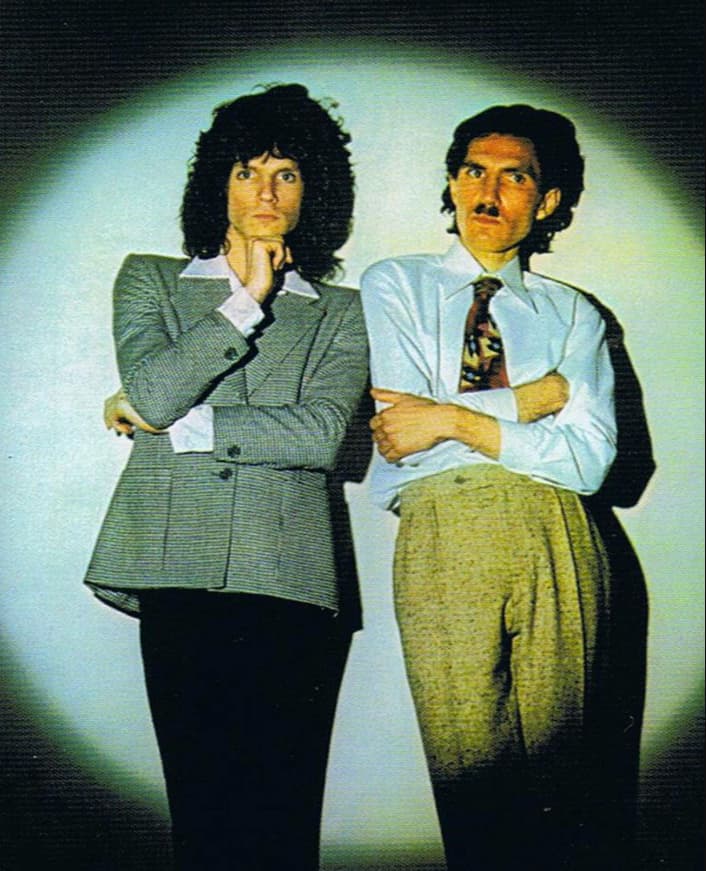
It was the summer of 1974 when this audacious track burst onto the British music scene, becoming an instant sensation. Reaching an impressive No. 2 on the UK Singles Chart, it was a commercial triumph that solidified Sparks‘ unique place in the musical landscape. For those of us who were there, tuning into Top of the Pops each week, it was a moment of genuine wonder. What was this extraordinary sound? Who were these two strikingly individual brothers, Ron and Russell Mael, responsible for such a dazzling spectacle?
The story behind “This Town Ain’t Big Enough for Both of Us” is as intriguing as the song itself, deeply rooted in the distinctive personalities and creative interplay of the Mael brothers. Ron Mael, the band’s principal songwriter and keyboardist, often presented as the enigmatic, stoic figure behind the keys, was the architect of the song’s incredibly complex and dramatic structure. He envisioned it as a mini-opera, a compact theatrical piece, rather than a conventional pop song. This ambitious concept was a hallmark of Sparks‘ approach, constantly pushing the boundaries of what pop music could be.
The lyrical content, delivered with unparalleled panache by the charismatic frontman Russell Mael, paints a vivid picture of a deeply dysfunctional and melodramatic relationship, rife with jealousy, competition, and an almost comically exaggerated sense of self-importance. It’s a battle of egos, a clash of wills, where neither party is willing to yield. The line, “This town ain’t big enough for both of us,” immediately evokes the classic Western trope, imbuing the domestic drama with a grand, almost cinematic scale. It’s not just a lovers’ spat; it’s a showdown of epic proportions, albeit one played out with glissandos and soaring falsettos rather than six-shooters.
But the meaning of the song extends beyond a simple relationship drama. It can also be seen as a playful, self-referential commentary on Sparks‘ own struggle for recognition and their refusal to conform to prevailing musical trends. In a music industry that often tries to pigeonhole artists, Sparks were undeniably an anomaly. Their unique blend of art-pop, glam rock, and theatricality made them stand out, and perhaps, in their own minds, “this town” of mainstream music wasn’t quite ready for the full force of their singular vision. The song, then, becomes a declaration of their distinctiveness, a playful warning to those who might try to dilute their artistic integrity.
Beyond the lyrical depth, the song’s musical arrangement is a masterclass in controlled chaos. The dramatic shifts in tempo, the sudden bursts of orchestral-like flourishes, and Russell Mael‘s remarkable vocal range – from almost conversational whispers to operatic high notes – all contribute to its unforgettable impact. It’s a sonic rollercoaster, a meticulously crafted piece of pop art that demands your full attention from its opening, instantly recognizable piano riff. The music video, a staple of our Top of the Pops viewing, further cemented its iconic status, with Russell‘s frenetic movements and Ron‘s stone-faced presence creating an unforgettable visual counterpoint to the song’s inherent drama.
Looking back, “This Town Ain’t Big Enough for Both of Us” is more than just a hit song; it’s a testament to Sparks‘ enduring originality and their unwavering commitment to their artistic vision. For many of us of a certain age, it conjures memories of a time when music felt bolder, more experimental, and wonderfully unpredictable. It reminds us that sometimes, the most enduring art comes from those who refuse to fit neatly into any box, those who are brave enough to declare, through their music, that “this town ain’t big enough” for anything less than their authentic, glorious selves. It’s a song that continues to resonate, a true gem from a golden era of pop music that still shines brightly today.