
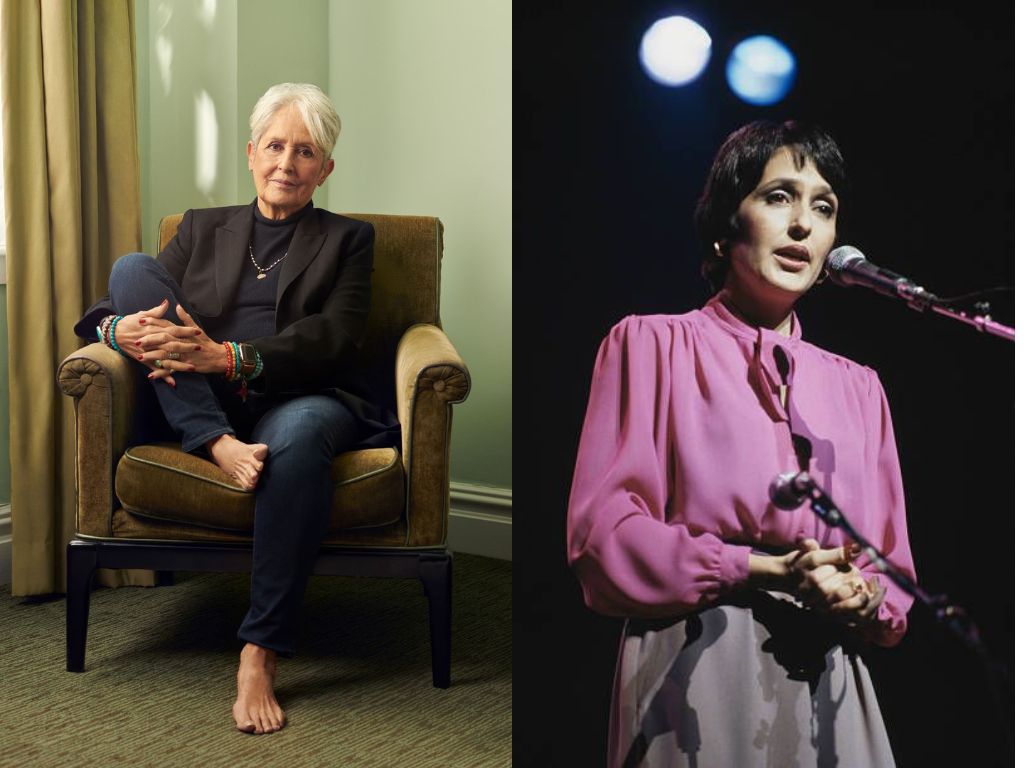
“All My Trials”: A Lullaby of Hope and Resilience in the Face of Adversity
Ah, the gentle strum of a guitar, the hushed reverence of a voice that speaks directly to the soul – such is the enduring power of Joan Baez. And among her vast, resonant catalog, few songs evoke a sense of quiet strength and profound solace quite like “All My Trials”. This spiritual, given new life and widespread recognition through Baez’s tender rendition, wasn’t a chart-topper in the conventional sense, as it was often an album track rather than a standalone single designed for radio dominance. However, its impact was immeasurable, finding a home in the hearts of listeners and becoming a staple in folk music circles, particularly following its inclusion on her seminal 1960 debut album, “Joan Baez”. While specific chart positions for individual album tracks from that era are difficult to pinpoint with the precision we associate with modern singles, the album itself was a critical success, reaching number 15 on the Billboard Top LPs chart, firmly establishing Baez as a significant voice in the burgeoning folk revival.
The story behind “All My Trials” is as rich and deeply rooted as the spiritual tradition from which it springs. This is not a song born of a single songwriter’s pen, but rather a traditional Bahamian lullaby, passed down through generations, often sung by mothers to their children. Its origins are steeped in the lived experiences of a people enduring hardship, a gentle balm for weary souls. The lyrics, seemingly simple, carry a profound weight, speaking of a promise of rest and freedom from tribulation when the “good Lord calls you home.” It’s a testament to the enduring human spirit, a quiet rebellion against despair, and a whispered assurance that trials, no matter how heavy, are ultimately finite.
For those of us who came of age during the tumultuous 1960s, Joan Baez was more than just a singer; she was a conscience, a clarion call for peace and justice. Her voice, pure and unwavering, became the soundtrack to a generation’s yearning for a better world. When she sang “All My Trials”, it wasn’t merely a performance; it was an invocation, a shared moment of vulnerability and hope. You could almost feel the collective sigh of relief in a concert hall, a quiet understanding that we were all, in our own ways, facing our own trials. Whether it was the specter of war, the struggle for civil rights, or simply the personal heartaches that life inevitably throws our way, the song offered a gentle embrace, a reminder that “all my trials, Lord, soon be over.”
The enduring meaning of “All My Trials” lies in its universal message of perseverance and faith. It’s a song that acknowledges the burdens we carry but simultaneously offers the promise of release. It speaks to the cyclical nature of life – the ebb and flow of joy and sorrow – and suggests that even in the darkest moments, there is a light at the end of the tunnel. For older readers, this song often conjures memories of a simpler time, perhaps a time when music was less about elaborate production and more about raw emotion and authentic storytelling. It reminds us of evenings spent around a crackling fire, or quiet moments of reflection, with Baez’s voice as a soothing companion. It’s a song that has journeyed with us through the decades, offering comfort during life’s inevitable storms and reaffirming the quiet strength found in acceptance and hope. It’s a lullaby not just for children, but for the soul, a timeless reminder that after the long day’s journey, rest will surely come.