
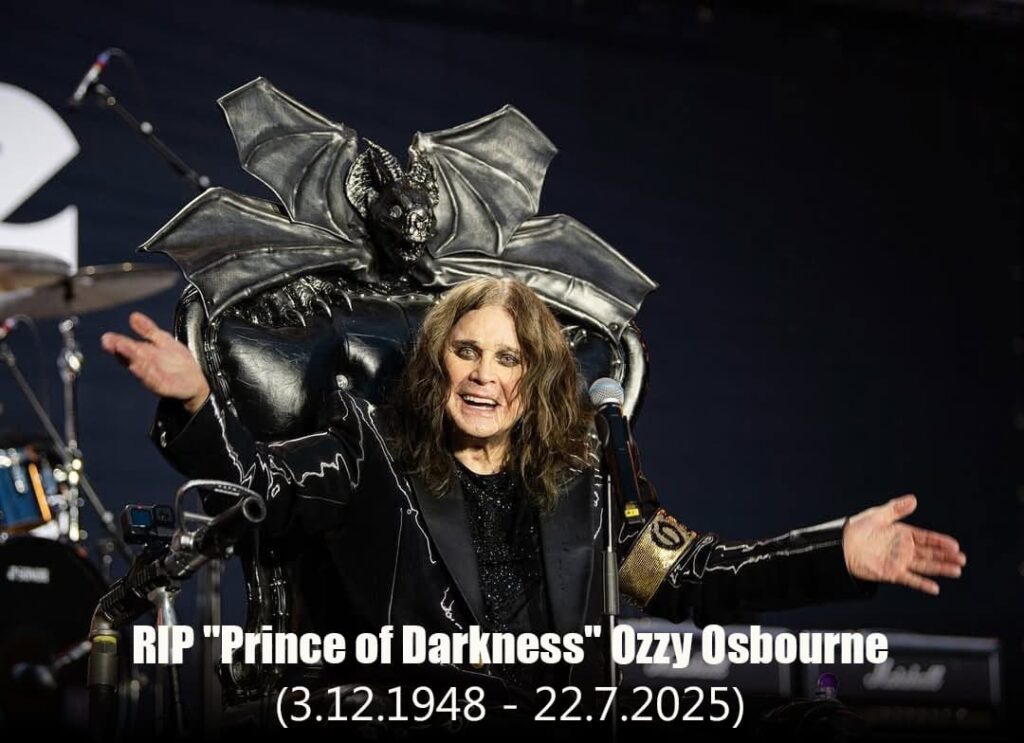
An Elegy to Darkness: The Enduring Allure of “Mr. Crowley”
For those of us who came of age amidst the swirling mists of hard rock and heavy metal in the late 1970s and early 1980s, few albums carved themselves into our collective consciousness quite like Ozzy Osbourne‘s debut solo masterpiece, Blizzard of Ozz. And within that frosty sonic landscape, one track stood out with an almost haunting luminescence, a beacon of theatrical darkness and musical prowess: “Mr. Crowley.” This wasn’t just another song; it was an experience, a journey into the enigmatic depths of a figure shrouded in controversy and fascination. It was released as a single in 1980, though its precise chart performance in the United States was somewhat overshadowed by the album’s overall success. While it may not have scaled the dizzying heights of the mainstream pop charts, it became an undeniable anthem within the burgeoning heavy metal scene, a track revered by fans and a staple of rock radio for decades to come. In the UK, it found more modest success, reaching number 46 on the singles chart, a testament to its cult following rather than a broad commercial appeal.
The story behind “Mr. Crowley” is as intriguing as the song itself, deeply rooted in the fascination that Ozzy Osbourne and particularly Randy Rhoads, his visionary guitarist, held for Aleister Crowley. Crowley, an English occultist, ceremonial magician, poet, and mountaineer, was a figure of immense notoriety in the early 20th century, often dubbed “the wickedest man in the world.” His life was a tapestry woven with threads of mysticism, rebellion, and a deliberate provocation of societal norms. For Ozzy, who had long cultivated an image steeped in the macabre and the theatrical during his time with Black Sabbath, Crowley represented an irresistible muse. It wasn’t about endorsing Crowley’s philosophies, but rather exploring the darker, more mysterious corners of human belief and the allure of forbidden knowledge.
Lyrically, “Mr. Crowley” is a direct address to the enigmatic figure, a series of questions posed to a man who, even from beyond the grave, continued to exert a powerful, almost unsettling influence. “Mr. Crowley, what went on in your head?” Ozzy intones, his voice dripping with a mixture of curiosity and a touch of trepidation. The lyrics delve into themes of good versus evil, the manipulation of faith, and the enduring legacy of those who challenge conventional morality. It’s a reflection on the power of belief, both for creation and destruction, and the often blurred lines between genius and madness. The song isn’t a glorification of Crowley; rather, it’s a contemplation of his impact and the questions he left unanswered. It invites the listener to ponder the nature of power, spirituality, and the seductive draw of the unknown.
Beyond the lyrical depth, what truly elevates “Mr. Crowley” to iconic status is the breathtaking musicality, especially the unforgettable guitar work of Randy Rhoads. The opening organ intro, played by Don Airey, immediately sets a somber, almost gothic tone, a perfect prelude to the impending sonic journey. But it’s Rhoads’s guitar solo that truly transcends. It’s not merely a series of notes; it’s a meticulously crafted narrative, a melodic conversation that ebbs and flows with incredible emotion and technical brilliance. His use of classical influences, particularly evident in the neo-classical flourishes, was revolutionary for its time, pushing the boundaries of heavy metal guitar playing and inspiring a generation of musicians. Every bend, every vibrato, every precisely articulated note speaks volumes, conveying a sense of melancholy, grandeur, and an undeniable touch of genius. For many of us, this solo became a benchmark, a moment of pure, unadulterated musical magic that we would rewind and re-listen to countless times, trying to decipher its secrets.
“Mr. Crowley” is more than just a song about an infamous occultist; it’s a testament to the collaborative brilliance of Ozzy Osbourne and Randy Rhoads, a pairing that, though tragically short-lived, left an indelible mark on the landscape of heavy metal. It’s a track that continues to resonate with fans, a dark jewel in the crown of Blizzard of Ozz, reminding us of a time when music pushed boundaries, explored the shadows, and offered a powerful, often cathartic, escape. For those of us who were there, listening to it still evokes a powerful sense of nostalgia, transporting us back to an era when the air crackled with raw energy and the promise of something truly groundbreaking. It stands as a timeless piece, a poignant elegy to a figure of darkness, and an enduring celebration of musical artistry.